
Livraison le jour même ou le lendemain

Qualité garantie

Débloquez vos offres de bienvenue: Livraison GRATUITE | Jusqu'à -80 % | 30 jours d'essai gratuits à JoyPlus
Téléchargez l'application
Choosing a new stock pot or Dutch oven can quickly become a headache. Between the materials, sizes, and marketing promises, it's easy to get lost. As a product expert at Joybuy, my mission is to help you see things more clearly and make a long-lasting choice that's genuinely suited to your daily life, far from the advertising jargon. Before you dive in, let's review the most common pitfalls to avoid.
Investing in good cookware is a long-term decision. Unfortunately, some features that look great on paper often prove disappointing in practice.
To avoid buyer's remorse, focus on concrete, objective features. Here are the three fundamental points to scrutinise.
The material determines not only the lifespan of your pot but also its cooking quality and safety.
Whether you cook on gas, ceramic, or induction hobs, the base of your pot is the deciding factor. For induction, ensure it is perfectly flat and thick to guarantee optimal contact and efficient heat transfer. The induction symbol (a coil) should be visible, but it's the build quality of the base that will make all the difference in use.
Think about your daily use. For a single person or a couple, a capacity of 2 to 3 litres is often sufficient. For a family of four, aim for 4 to 6 litres. Larger pots are reserved for big families or those who practice batch cooking. Also, consider the details that make all the difference: are the handles heat-resistant (made of silicone or bakelite) to prevent burns? Is the lid made of glass so you can monitor your cooking at a glance?
To move from theory to practice, here are a few models that perfectly illustrate these criteria, adapted to different profiles.
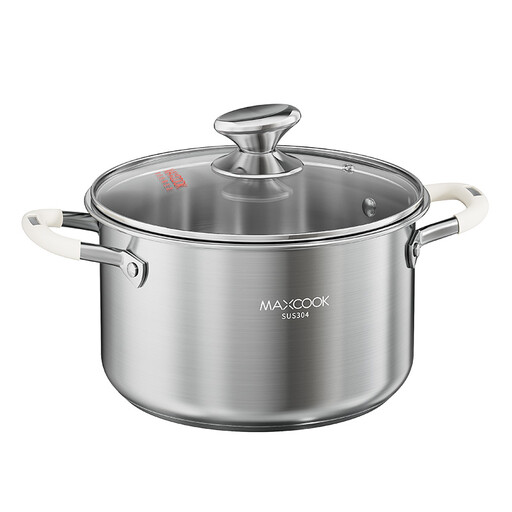
Why we love it: Its 4.3L capacity is ideal for families, and its 304 stainless steel construction ensures heavy-duty durability for intensive use. It's the ultimate all-rounder for soups, pasta, or saucy dishes.
Unlike products with questionable compatibility, its thick base is optimised for efficient heating on all hobs, including induction. Its silicone handles protect against burns—an ergonomic detail that makes a difference.
Food-grade 304 stainless steel; anti-scald silicone handles for a secure grip.
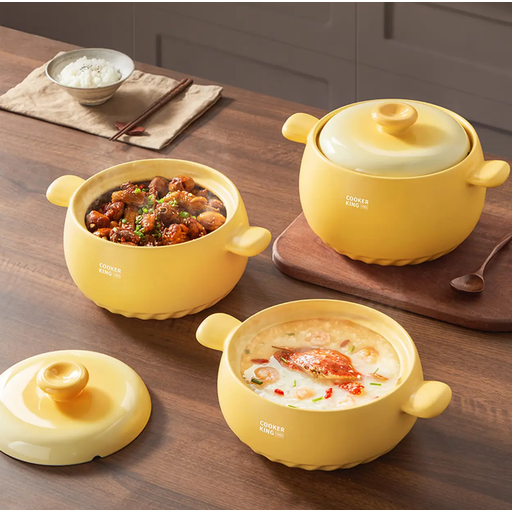
Why we love it: Perfect for stews, casseroles, or soups that require slow, even cooking. The ceramic retains and distributes heat gently, resulting in enhanced flavours.
This isn't a "do-it-all" material. It's a specialised ceramic Dutch oven that avoids the trap of slow-cooking in an unsuitable pot, which can alter the taste of food.
Natural material for healthy cooking; exceptional heat retention for tender and flavourful dishes.
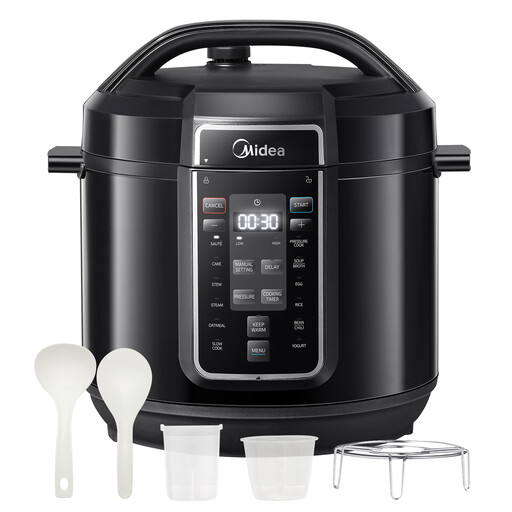
Why we love it: This **electric pressure cooker** is a true Swiss Army knife that replaces several appliances. Ideal for those short on time but not on ideas, from perfect rice to steamed dishes and homemade yoghurt.
It solves the "all-in-one" dilemma by offering reliable preset programs. No more cooking guesswork, a common pitfall of low-end multi-function appliances.
9-in-1 versatility (multi-cooker, yoghurt maker...) ; large 7.6L capacity, perfect for big family meals.
Discover our complete selection of products that meet our quality criteria and current safety standards.
The foolproof trick is the magnet test. If a magnet sticks firmly to the outer bottom of your cookware, you're good to go. Also, look for the coil-shaped pictogram on the packaging or engraved under the pot.
304 (or 18/10) stainless steel is the gold standard for quality kitchen utensils, offering excellent corrosion resistance. 316 stainless steel, sometimes called "surgical grade," contains molybdenum, which gives it even greater resistance, especially to salt and acidic foods. It's often found in more specific products like a milk pan or equipment for preparing baby food.
The golden rule: avoid thermal shock. Never run a hot pot under cold water; let it cool down gradually. For cleaning, a soft sponge and soapy water are sufficient. It's best to avoid the dishwasher unless explicitly authorised by the manufacturer to preserve the enamel in the long run.