
Livraison le jour même ou le lendemain

Qualité garantie

Débloquez vos offres de bienvenue: Livraison GRATUITE | Jusqu'à -80 % | 30 jours d'essai gratuits à JoyPlus
Téléchargez l'application
Switching from plastic to glass for your food storage is an excellent move, both for your health and for the planet. The problem is, the market is flooded with marketing promises that don't always deliver. An attractive design can hide deal-breaking flaws that render a product useless after just a few months. As Head of Product Selections at Joybuy, my mission is to help you avoid the most common pitfalls and make an informed, sustainable choice.
Before you make your choice, here are 3 often-overlooked weaknesses:
glass jar with wooden lid is very trendy for kitchen organisation. The problem? Poorly treated wood can crack, absorb odours, and even develop mould if not dried immediately after washing. Not to mention, it's rarely dishwasher-safe.To avoid these unpleasant surprises, focus on a few technical specifications that make all the difference.
The fundamental distinction is between soda-lime glass and borosilicate glass.
glass dish with lid made of borosilicate can safely go from the freezer to the oven (without its lid), then directly to the table before ending up in the dishwasher. It's a true guarantee of durability and safety.The entire effectiveness of a glass food storage container depends on its lid.
glass lunch box that you carry daily.Always check the manufacturer's instructions. A container, even if made of glass, may not be compatible with all your home appliances.
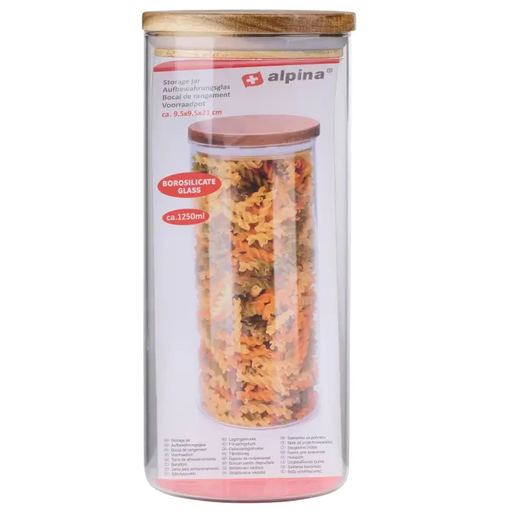
The ideal user: Perfect for those who want to combine practicality with style in the kitchen. This jar is ideal for storing and displaying your dry goods (pasta, rice, legumes), while adding a natural, warm touch to a countertop or shelf.
This jar is specifically designed for dry foods. It doesn't claim to be universal, which allows it to avoid the classic pitfall of a wooden lid unsuitable for liquids or moisture. The care instructions are clear: the lid must be washed by hand.
Its square shape optimises storage space and allows for stacking. The acacia wood lid, fitted with a gasket, ensures excellent preservation of dry goods.

The ideal user: The perfect partner for meal preppers and anyone who brings their lunch to the office. Its size is perfect for a single serving, and its versatility is a major asset: you can cook, store, transport, and reheat your meal in a single container.
It is made from borosilicate glass, which eliminates any risk of breakage from thermal shock (pitfall #2). Its 4-clip locking system with a silicone gasket addresses the problem of unfulfilled promises of a perfect seal (pitfall #1).
Its total versatility: it's oven, microwave, freezer, and dishwasher safe. Its seal is foolproof, even for transporting saucy dishes.

The ideal user: This `food storage container set` is the perfect solution for outfitting a family kitchen in one go. With its two sizes (370 ml and 1040 ml), it covers most needs, from storing leftovers to preparing several meals in advance.
By offering a complete set made of borosilicate glass with proven clip-on lids, this set directly tackles the weaknesses of entry-level products. The initial investment is quickly paid back by the durability and versatility of the collection.
Excellent value for money. It provides a cohesive and stackable storage solution, ideal for optimising kitchen space.
We have selected a full range of products for you that meet these quality and safety criteria.
Absolutely not, and this is a common mistake! Only containers made of borosilicate glass are designed to withstand the high temperatures of a conventional oven. It is therefore imperative to check this information on the product page or packaging. In any case, the lid (whether plastic, bamboo, or otherwise) must never, ever go in the oven.
A wooden or bamboo lid requires a little more care. Always wash it by hand with a soft sponge and neutral soap. Never let it soak in water and, crucially, dry it immediately and completely with a cloth. To prevent it from drying out or cracking over time, you can occasionally nourish it by applying a thin layer of food-grade mineral oil.
Most of the time, yes. Buying a food storage container set works out cheaper per unit than buying several containers separately. It's also the best way to ensure visual and practical consistency in your kitchen, as the containers in a single set are designed to stack and store easily together.