
Livraison le jour même ou le lendemain

Qualité garantie

Débloquez vos offres de bienvenue: Livraison GRATUITE | Jusqu'à -80 % | 30 jours d'essai gratuits à JoyPlus
Téléchargez l'application
A good food storage container is an essential ally for a healthy, well-organized kitchen. The problem? The market is saturated with products that rarely live up to their promises. Between lids that warp and plastics that stain, it's all too easy to make the wrong purchase. As the Head of Product Curation at Joybuy, my mission is to help you navigate the options. Let's review the common pitfalls and the essential criteria for making the right choice.
Before you check out, learn how to spot the false promises and design flaws that can render a product useless after just a few months.
To avoid making another mistake, focus on objective criteria. Here are the three things you absolutely must check.
The choice of material determines the container's use, durability, and maintenance.
A truly airtight container relies on two elements: a thick, removable silicone gasket (for perfect cleaning) and a robust four-sided clip-locking system. Simple press-on lids offer only illusory protection against liquids and air. For meal prep containers, a reliable seal is non-negotiable to prevent disasters in your bag.
Check the pictograms: is the product compatible with the freezer, microwave (often without the lid or with the vent open), oven (for glass only), and dishwasher? Regularly shaped (square, rectangular) and stackable containers optimize storage in your cupboards and refrigerator. A set of food containers in various sizes from the same product line is often the best way to get started.
Rather than an exhaustive list, here are options that meet specific needs, taking into account the criteria we've just discussed.

Why we chose it: Perfect for *batch cooking* and family-sized meals. Its large capacity and glass dish allow you to cook in the oven, store, and then reheat in the microwave—all without changing containers.
Its borosilicate glass is impervious to stains and odours (goodbye, pitfall #3). Its vented lid allows for safe microwaving without the risk of warping (pitfall #2 avoided).
Total versatility: oven, microwave, freezer, and refrigerator. The airtight lid ensures optimal preservation and leak-proof transport.
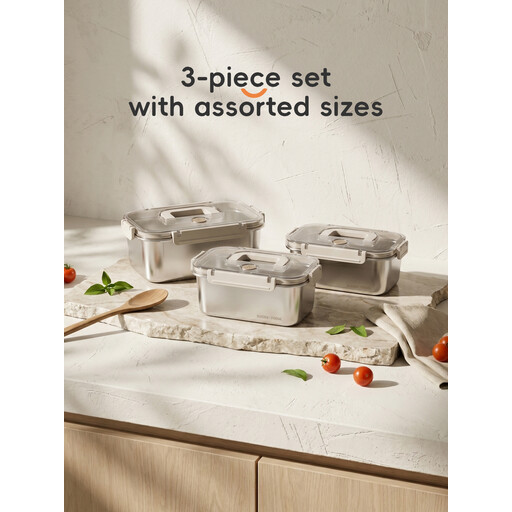
Why we chose it: The perfect alternative to plastic and glass. Stainless steel is lightweight, nearly indestructible, completely safe, and won't alter the taste of your food. This set of three sizes covers most daily needs.
It eliminates the drawbacks of plastic (stains, odours, BPA concerns—pitfall #3) and the fragility of glass (pitfall #2). The robust clips guarantee a foolproof seal (pitfall #1 avoided).
Exceptional durability. A long-lasting investment for healthy storage with no taste transfer. The material is also very easy to clean.
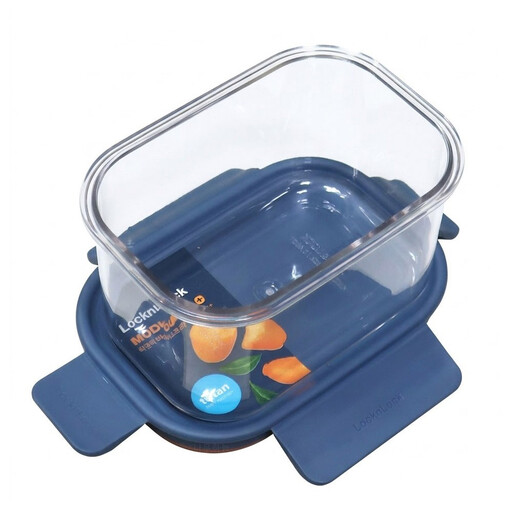
Why we chose it: Lightweight, compact, and 100% leak-proof, this is the ideal *lunch box*. Its size is perfect for a single serving, and its modular design allows it to stack easily with other containers from the same line.
Its four-clip locking system directly tackles pitfall #1: false promises of a leak-proof seal. Its high-quality plastic is durable and BPA-free (pitfall #3 handled).
Lightweight and flawlessly leak-proof—the winning combination for daily commutes. The modular design is a real bonus for optimizing storage in small kitchens or bags.
Explore our full selection of products that meet our strict selection criteria and current safety standards.
Absolutely not, and this is a critical point of caution. Only borosilicate glass is designed to withstand high oven temperatures. Above all, avoid thermal shock at all costs: never put a dish from the fridge or freezer directly into a preheated oven. Let it come to room temperature first. As for the plastic lid, it should NEVER go in the oven.
The secret? Remove the silicone gasket from the lid before each wash. Clean it by hand, along with the groove in the lid, with a little soapy water. Make sure everything is completely dry before putting it back. This will prevent mould growth and preserve the gasket's flexibility.
The BPA-free label is an essential prerequisite, but it's not an absolute guarantee of quality. For safe and long-lasting use, favour high-quality plastics like polypropylene (PP, symbol 5) or Tritan. As a precaution, avoid microwaving very fatty or sugary foods in plastic, as high temperatures can promote the migration of chemical compounds. When in doubt, remember that glass and stainless steel remain the safest and most neutral materials.