
Livraison le jour même ou le lendemain

Qualité garantie

Débloquez vos offres de bienvenue: Livraison GRATUITE | Jusqu'à -80 % | 30 jours d'essai gratuits à JoyPlus
Téléchargez l'application
A good food storage container is the key to a more organised kitchen, food that stays fresh longer, and a healthier daily diet. The problem? The market is a jungle of products with tempting claims that often fall short. Between lids that warp after the first wash and plastics that retain odours and tomato sauce stains, it's easy to make the wrong choice.
As the Head of Buyer's Guides at Joybuy, my mission is to help you navigate the options. Let's cut through the marketing jargon and focus on what really matters: making a useful and durable purchase. This guide breaks down the common pitfalls to avoid and points you toward the food storage container that truly fits your lifestyle.
Before you decide, let's review the design flaws that too often turn a bargain into something you'll throw away after just a few months.
To avoid these disappointments, focus on three criteria that make all the difference between a gimmick and a long-lasting investment for your food storage container.
The choice of material depends entirely on how you plan to use it. There's no one-size-fits-all solution, but there is an option suited to every need.
A leak-proof seal is a non-negotiable feature, whether for food preservation or for transport. A reliable system relies on a winning combination:
Your daily routine will dictate the essential features.
Rather than an endless list, we've matched products to specific user profiles. The goal? To help you find the container that's right for you.

Why we chose it: The ultimate solution for meal preppers who cook for the week. A single dish to bake a casserole, store it in the fridge, and then reheat it in the microwave. Its large capacity is ideal for family-sized meals.
Its borosilicate glass body resists thermal shock and never stains, unlike low-end plastics. The lid with a steam valve is designed for reheating, which prevents any warping.
Absolute versatility (oven, microwave, freezer) and a generous 2.3L size for hassle-free kitchen organisation.
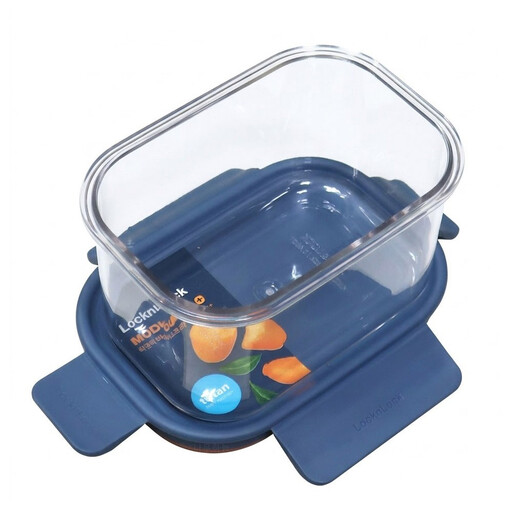
Why we chose it: The perfect solution for those who want to optimise every square inch of their fridge or cupboards. Its modular and stackable design is a real bonus. Lightweight and practical for leftovers, ingredients, or taking a snack on the go.
Its four-sided locking system and hollow silicone gasket guarantee a completely leak-proof seal. This is the Achilles' heel of most containers with simple press-on lids.
100% airtight and stackable for maximum space-saving. Lightweight and guaranteed BPA-free material.

Why we chose it: For those who want a durable and lightweight alternative to plastic. Perfect for on-the-go lunches, picnics, and storing dry foods. The set of three sizes adapts to all everyday needs.
316 stainless steel is an inert material: it doesn't retain odours or stains, and it won't degrade. A solution built to last, the opposite of the planned obsolescence of many plastic containers.
Ultra-durable and hygienic material, lightweight, unbreakable, and anti-corrosion. Dishwasher and freezer safe.
We have curated a complete selection of products that meet our quality criteria and current safety standards.
Rely on a four-sided clip-locking system combined with a soft, removable silicone gasket. The foolproof test? Fill the container with water, close it securely, and shake it over the sink. Not a single drop should escape.
No, and this is a classic trap! Only dishes made of borosilicate glass are designed to withstand the high temperatures of an oven (usually up to 400°C). The lid, which is almost always plastic, must be removed before placing the dish in the oven, or it will melt or warp permanently.
A freezer container uses materials (often a specific type of polypropylene) designed to remain flexible and not crack even at very low temperatures. A standard plastic, on the other hand, will harden and become brittle when frozen, risking breakage at the slightest touch. Models like the LocknLock Freezer Fit are specially designed to withstand extreme cold.