
Livraison le jour même ou le lendemain

Qualité garantie

Débloquez vos offres de bienvenue: Livraison GRATUITE | Jusqu'à -80 % | 30 jours d'essai gratuits à JoyPlus
Téléchargez l'application
A good food storage container can change everything: a more organized kitchen, food that stays fresh longer, and meals prepped in a flash. Yet, the market is flooded with models that fall far short of their promises. A lid that leaks in your bag, plastic that warps in the microwave, or containers that are impossible to stack in the cupboard... we all know these everyday frustrations.
To avoid throwing your money away, let's review the most common pitfalls.
To make the right choice, focus on these three features that make a real difference in daily use.
This is the number-one criterion. It determines your container's lifespan, its use cases, and its maintenance.
glass food container: Often made of borosilicate glass, it is praised for its impeccable hygiene. It doesn't retain odors or stains and can go from the oven to the microwave (without the lid). Its main drawback is its weight, a real handicap if you're looking for a lunch box to carry every day.plastic food container: Lightweight and budget-friendly, it's incredibly practical. But here's the crucial part: you must verify that it is certified BPA-free (Bisphenol A). Higher-quality models are much more resistant to stains and warping.A truly leak-proof seal relies on a winning combination: a removable silicone seal (essential for hygienic cleaning) and a 4-point locking clip system. This combination ensures perfect pressure on the lid, preventing air from getting in and liquids from getting out. It's a non-negotiable feature for transporting your beef stew without redecorating the inside of your bag.
Good kitchen organization relies on well-designed containers. A worthy food storage container set offers sizes that nest perfectly when empty and stack stably when full. Flat lids and aligned bases are the key to optimizing every square inch of your fridge or cupboards.
Rather than an endless list, here are a few models that caught our eye, each meeting a specific need while respecting our quality criteria.

WHY WE RECOMMEND IT: Ideal for meal prep enthusiasts who prepare their meals for the week. The borosilicate glass allows you to go directly from the fridge to the microwave or oven, safely and without altering the taste. The set of two sizes (1040 ml and 370 ml) offers excellent versatility.
The high-resistance glass won't stain or retain any odors (pitfall #2). The 4-clip lids with silicone seals guarantee a leak-proof seal for transport (pitfall #1).
A healthy and durable material. A complete 10-piece set with two very practical sizes for top-notch organization.

WHY WE RECOMMEND IT: Perfect for families who want to store leftovers, prepare large salads, or stock bulk ingredients. Stainless steel is virtually indestructible, lightweight, and impact-resistant. The three sizes (600 ml, 1100 ml, 2200 ml) cover all needs, from snacks to family-sized dishes.
316 food-grade stainless steel is a material that won't warp or ever stain (pitfall #2). Its design is engineered for stable stacking and optimized storage (pitfall #3).
Exceptional durability and lightness. It resists corrosion and is freezer and dishwasher safe.
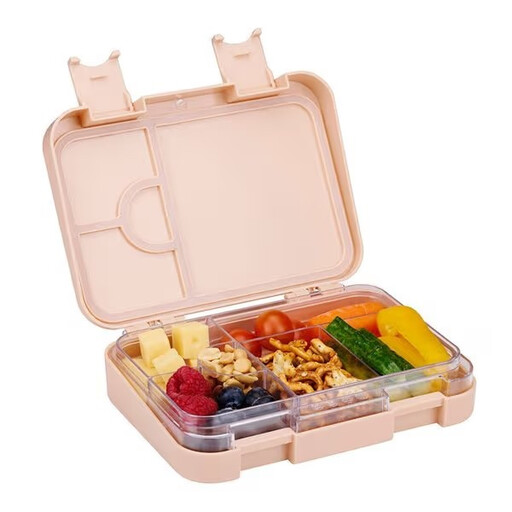
WHY WE RECOMMEND IT: The perfect solution for students or professionals who like to pack a varied lunch. Its 6 compartments allow you to separate the main course, raw veggies, fruits, and snacks without the flavors mixing.
This model tackles a recurring problem with lunch boxes: food mixing together. Its clever design ensures that each item stays in its place, for a fresh and appetizing meal upon arrival.
Perfect meal organization. A compact format that's easy to slip into a bag. The internal compartments are removable for ultra-simple cleaning.
Explore our full selection of products that meet our quality criteria and current safety standards.
Yes, but only if it has the microwave-safe symbol. It's recommended to always remove or vent the lid to let steam escape. Always prioritize quality plastics certified as BPA-free. Avoid heating very fatty or sugary foods at high power, as they can reach temperatures that damage the plastic.
The best way is to rinse the container with cold water immediately after use, before washing it with hot, soapy water. Cold water prevents the sauce pigments from setting into the plastic. For stubborn stains, a paste made of baking soda and water, left inside for a few hours, often works wonders.
A glass food container is indeed much heavier than a plastic model of the same volume. For example, a 1L glass container weighs around 700-800g empty, compared to 150-200g for its plastic equivalent. It's a trade-off to consider: weight versus superior hygiene and durability. For daily transport, many prefer the lightness of plastic or stainless steel.