
Livraison le jour même ou le lendemain

Qualité garantie

Débloquez vos offres de bienvenue: Livraison GRATUITE | Jusqu'à -80 % | 30 jours d'essai gratuits à JoyPlus
Téléchargez l'application
A food cover prevents splashes, limits the mixing of odours and makes storing leftovers simpler. However, not all models are suited to the same uses. A protector designed for the fridge won't necessarily work for reheating, while a 27 cm lid may prove too large or too shallow for certain dishes.
Before you buy, three common pitfalls keep cropping up:
Here are the criteria to examine so you can choose a solution that's genuinely right for your kitchen.
Measure the diameter of your most-used plates and bowls. For a plate cover, allow enough margin so the lid sits properly without touching the food.
Stretchy models can cover several sizes, but their effectiveness depends on the tension of the material and the shape of the rim. Stretchy silicone lids generally work well for bowls, containers and already-cut food. However, they are less suited to very uneven surfaces or dishes with sharp edges.
With a rigid lid, also check the available height. A model that's too shallow may touch the food, while one that's too tall will take up more space in the fridge.
Each material serves a particular purpose:
A product that's labelled as microwave-safe isn't necessarily suitable for a conventional oven, hob or direct flame. Always follow the maximum temperature and the pictograms on the packaging.
When reheating a dish, a splash guard fitted with vents can let some steam escape and reduce condensation. Just make sure you don't block these openings.
For storing food, a soft, well-fitted closure helps protect the contents from dust and limits the transfer of odours. It doesn't replace an airtight container when the dish needs to be transported or turned upside down.
Finally, check whether the lid is dishwasher-safe. A model that can be washed in warm water with washing-up liquid may also work, as long as you let it dry completely before storing it. Regularly inspect for cracks, warping, tears and sticky areas.
The options below cater to different needs: a first purchase, a versatile all-rounder, or heavy daily use.
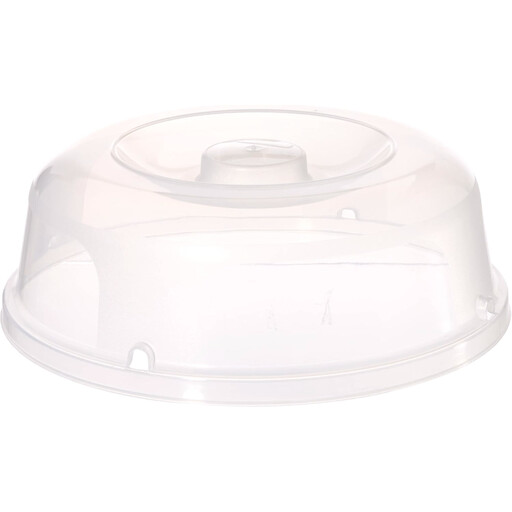
Why this choice suits this profile: This lid is ideal for everyday use, covering a standard plate or bowl in the microwave without any complicated setup or handling.
Its stated dimensions of 27 × 25 × 9 cm and built-in openings let you check compatibility before buying, rather than relying solely on the term "universal".
Polypropylene plastic, transparent design, dishwasher-safe and reusable for everyday reheating.
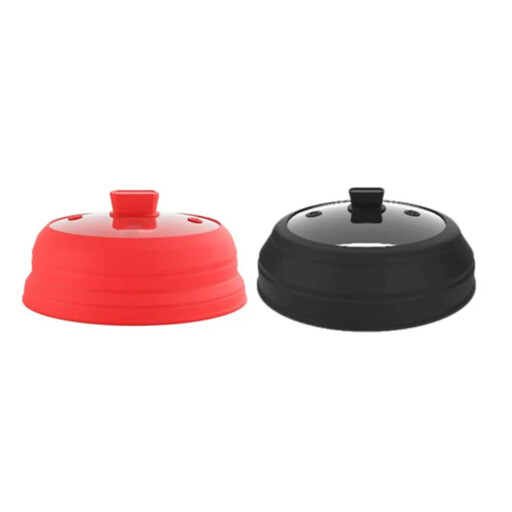
Why this choice suits this profile: Its foldable design, transparent glass section and 3-in-1 use are ideal for kitchens where you want to save space while keeping a neat presentation.
The stated maximum temperature of 200 °C comes with a clear limit: no direct flame. In the microwave, the ventilation must also remain unobstructed.
27 cm diameter, silicone with glass section, silicone handle, built-in vent, foldable design and dishwasher-safe.
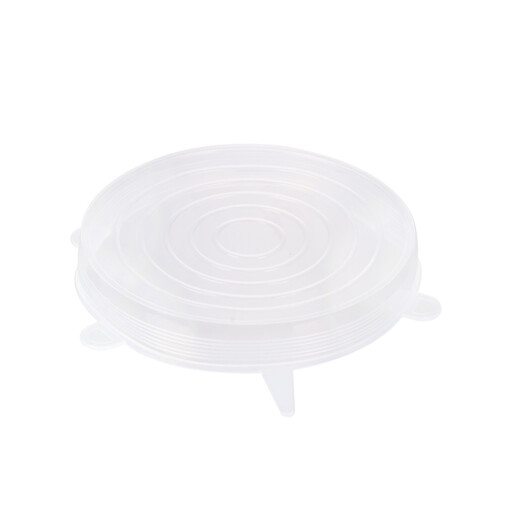
Why this choice suits this profile: This set is ideal for people who often cover bowls, containers or cut fruit and vegetables, whether in the fridge or when reheating.
The three stated diameters — 14.5, 16.5 and 20.5 cm — let you choose the right size. However, you should regularly check the condition of the silicone and avoid sharp utensils.
Three silicone lids, soft closure, stated compatibility with dishwasher and microwave, with ventilation needed during reheating.
Stretchy PE protectors, such as the Maxcook Disposable Elastic Plastic Wrap Covers, are handy for quickly covering bowls, plates or food stored in the fridge. The pack contains 200 pieces and the elastic opening means you don't have to cut from a roll.
However, the description contains conflicting information regarding the microwave and reuse. To avoid any misuse, treat them as intended for cold storage and single use only, unless the packaging you receive states otherwise. Do not place them in the oven, on a hob or near a flame.
To extend the life of a reusable food cover:
A washable food cover doesn't have a universal lifespan. It depends on how often you use it, the temperature, how you clean it and how you handle it.
We've put together a comprehensive, real-time updated list of products that fully meet these demanding selection criteria and European safety regulations.
No. Only use models in the microwave if their compatibility is clearly stated. Also check for vents and temperature limits. A product intended for the fridge, especially a single-use PE model, should not be heated without specific instructions.
Measure the outer diameter of the plate or bowl, including the rim. For a rigid model, compare this measurement with the usable diameter of the lid. For a stretchy lid, check the stated size range as well as the available height in your microwave or fridge.
They can provide a snug fit on certain smooth containers, but they don't always replace an airtight box, especially for transporting liquids. Their effectiveness depends on the diameter, how clean the rim is, and whether there are any warps or tears.