
Livraison le jour même ou le lendemain

Qualité garantie

Débloquez vos offres de bienvenue: Livraison GRATUITE | Jusqu'à -80 % | 30 jours d'essai gratuits à JoyPlus
Téléchargez l'application
A microwave food cover stops sauce splatters, cuts down on mess and makes reheating far more pleasant. However, not all models are created equal, depending on how you plan to use them. From a simple plate cover to a lid with a steam vent and a stretchy silicone version that also doubles up for food storage, the design differences really matter.
For families, students or anyone who regularly reheats leftovers, three mistakes crop up time and again.
A microwave plate cover is first and foremost there to protect the inside of your appliance while you reheat food. That means it doesn't necessarily replace an airtight container for storing leftovers. Conversely, a reusable silicone food cover can hug a bowl or dish more closely – provided you choose the right size.
A completely sealed lid can trap steam, making it difficult to remove. The pressure and heat can also cause splatters when you open it. For microwave use, go for a cover with ventilation or a model whose instructions clearly explain how to let steam escape.
A stretchy opening can fit several bowls, but a rigid cover depends much more on the diameter and height available inside your microwave. Before you order, measure your widest plates and check the clearance under the turntable.
The words "microwave-safe" must appear on the product page or in its instructions. This doesn't mean the cover can be used in a conventional oven, on a hob or near a flame. Always stick to the maximum temperature stated, remove the cover if the manufacturer advises it, and never block the vents.
Plastic models designed for the microwave should only be used under the conditions intended. It's best to discard any item that is warped, cracked or shows signs of surface damage.
Polypropylene, food-grade silicone and certain heat-resistant glasses are commonly used. The product page should state the material as well as the care instructions. A "BPA-free" label can be reassuring, but it doesn't replace checking the heat tolerance and permitted uses.
Soft and practical, stretchy silicone covers are great for covering bowls, cut fruit or containers of different shapes. However, they must be kept away from flames and sharp objects.
A kitchen accessory you use every day needs to be easy to wash. A dishwasher-safe cover makes maintenance simple, while a foldable model is easier to store in a small kitchen. Always let the cover cool down before cleaning it, and dry it thoroughly to prevent lingering odours.
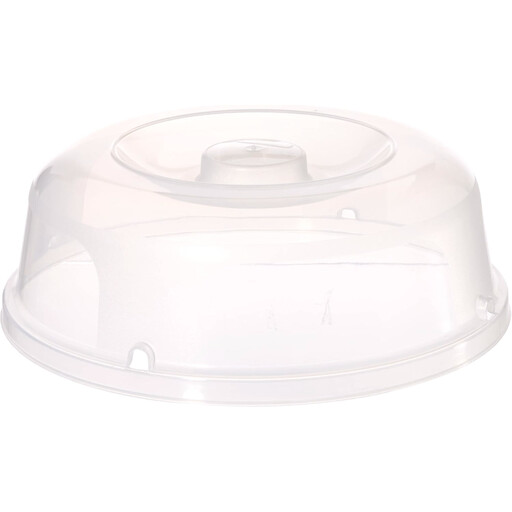
Why this suits this profile: Its 27 × 25 × 9 cm size fits most standard plates and bowls. It meets a simple need: reheating quickly without dirtying the microwave walls.
Its built-in vents stop you from choosing a completely sealed lid, while the transparent design lets you keep an eye on your dish as it reheats.
Plastic stated as microwave-safe, reusable and dishwasher-safe.
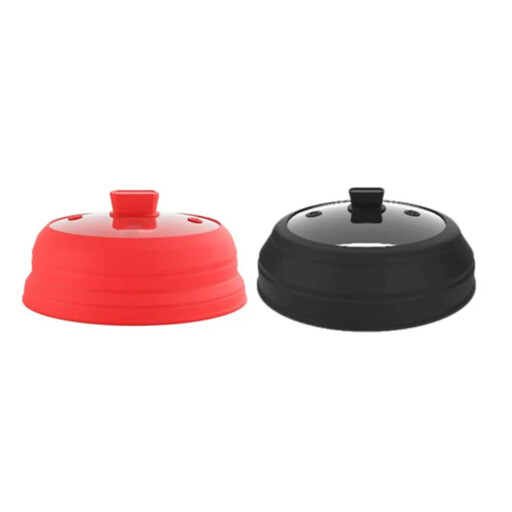
Why this suits this profile: Its silicone and glass construction combines good visibility, compact storage and versatility. It can also double as a saucepan lid or serving dome.
The built-in ventilation limits condensation, while the foldable design reduces the bulk you usually get with rigid covers.
27 cm diameter, stated heat resistance up to 200 °C, silicone handle and dishwasher-safe.
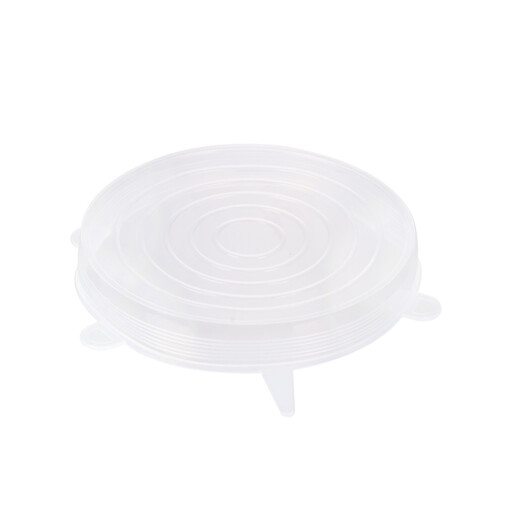
Why this suits this profile: The three diameters – 14.5, 16.5 and 20.5 cm – work well for bowls, containers and half-used food you want to keep in the fridge.
The different sizes mean you don't have to rely on a single supposedly universal opening. For microwave reheating, though, you'll need to allow for steam to escape.
Soft food-grade silicone, set of three, reusable and dishwasher-safe.
We've put together a full, real-time updated list of products that meet these exacting criteria as well as European safety requirements.
No. The container must be microwave-safe and the cover must sit properly without being forced. Check its diameter, height and whether it has a ventilation system. Don't force a stretchy cover onto a container that's too large.
Wash it after each use in warm water with a mild detergent, or put it in the dishwasher if the product page allows. Avoid knives and abrasive sponges on silicone. Replace the cover if it develops a crack, warp, tear or persistent odour.
Not always. It mainly protects the microwave during reheating. For food storage, especially in the fridge, a stretchy silicone cover or an airtight container is usually more suitable. Single-use items, such as certain PE covers, should be used according to their instructions and should not be assumed to be heat-safe by default.