
Livraison le jour même ou le lendemain

Qualité garantie

Débloquez vos offres de bienvenue: Livraison GRATUITE | Jusqu'à -80 % | 30 jours d'essai gratuits à JoyPlus
Téléchargez l'application
A repair that doesn't hold, a tarp tearing in a storm, or a heavy object falling off the wall: a bad experience with adhesive tape can quickly turn into a nightmare. Faced with packaging that promises "extreme" or "indestructible" strength, it's easy to feel lost. As a product expert at Joybuy, my mission is to help you see things more clearly and make the right choice. Let's break down the pitfalls to avoid and the criteria that truly matter to find the perfect adhesive tape for your needs.
The market is flooded with products making tempting promises. The problem? Some on-paper qualities hide weaknesses that only reveal themselves once the tape is applied.
To avoid these disappointments, three technical criteria must be scrutinized. They are what determine the real-world performance of an adhesive.
The heart of a tape lies in its adhesive and backing combination.
For an outdoor tape, the mere mention of "waterproof" is not enough. Check that the product is designed to withstand UV rays, temperature variations, and persistent humidity. A quality waterproof adhesive tape, often butyl-based, will create a durable, hermetic seal. This is essential for repairing a roof, a tarp, or outdoor equipment.
For heavy-duty mounting, check the load capacity stated by the manufacturer, but keep in mind that this is a maximum value obtained under optimal conditions. The crucial point is the compatibility of the multi-surface adhesive. Some tapes excel on wood and metal but are ineffective on plastic or tile. Verify compatibility with your materials and, most importantly, prepare the surface: it must be perfectly clean and dry.
For every need, there's a tape. Here is our selection, designed to meet specific situations while avoiding the classic pitfalls.
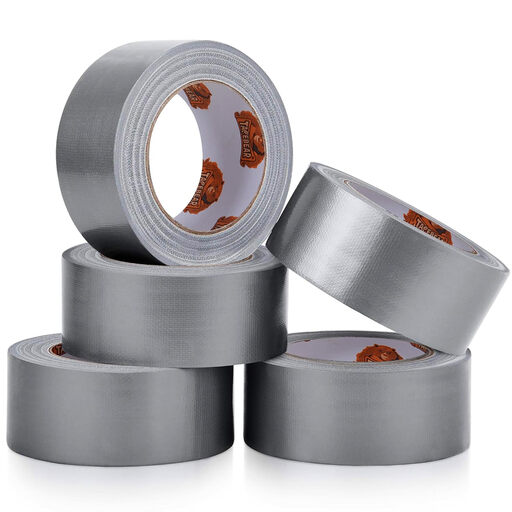
Why we chose it: An affordable and reliable solution for small, everyday DIY tasks: bundling cables, patching a tear, reinforcing a package... Its versatility makes it a toolbox essential.
The manufacturer states that it removes cleanly from most surfaces, helping you avoid the nightmare of sticky residue that damages your items.
Its strong suit? A great balance of strength and flexibility. It tears by hand, making it incredibly practical for on-the-fly repairs without needing scissors.
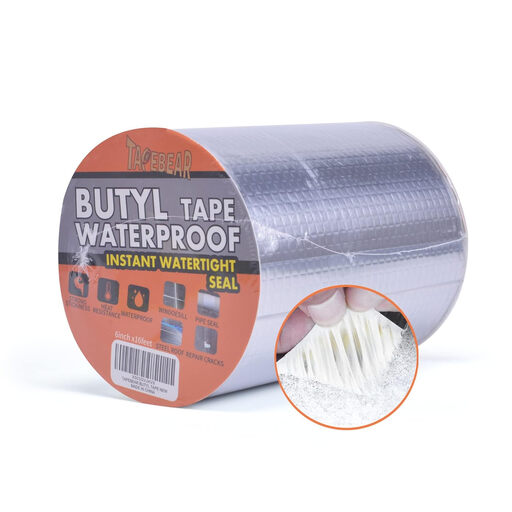
Why we chose it: Perfect for sealing a leak on an RV roof, gutter, window, or even a boat hull. Its wide format allows it to cover significant cracks in a single application.
Unlike conventional tapes, its butyl composition and aluminium foil backing provide a truly waterproof and durable barrier against the elements, sidestepping the false promise of mere surface-level waterproofing.
Its adhesion is excellent on many materials (PVC, metal, glass), and its resistance to both UV and heat ensures a repair that lasts.
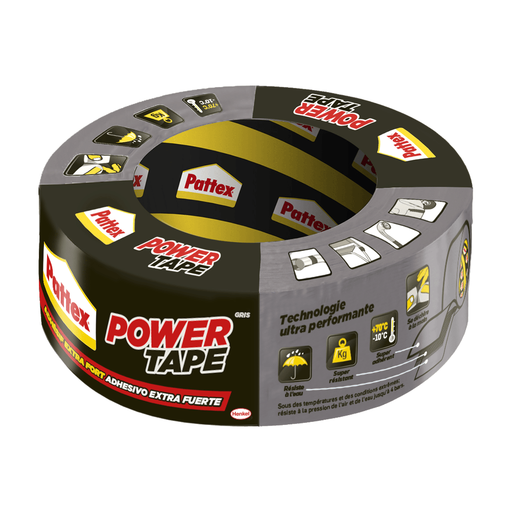
Why we chose it: When it comes to mounting heavy objects or making a repair under high stress (like a garden hose or a taut tarp), this reinforced duct tape stands out as a benchmark product.
Its 3-layer technology and holding power (up to 17 kg according to Henkel) are a direct answer to the pitfall of overstated strength ratings.
Henkel advertises it as 100% waterproof and airtight, making it suitable for the most demanding jobs, both indoors and out.
Explore our full selection of adhesive tapes, all chosen for their performance and reliability.
The method depends on the surface. For non-porous surfaces (metal, glass), gently heating the tape with a hairdryer can soften the adhesive. Then, pull slowly and at a low angle. For stubborn residue, a little oil (like cooking oil) or a commercial adhesive remover will do the trick. Always test on an inconspicuous area first to avoid any surprises.
A quality duct tape has an outer layer of polyethylene (PE) that makes it water-resistant (creating a water-repellent effect). However, it is generally not designed for complete and lasting waterproofing underwater. To fix a water leak or for a submerged application, a butyl tape is the preferred solution.
The longevity depends on three factors: the quality of the tape, the preparation of the surface, and the exposure to the elements. A high-quality, UV-resistant outdoor tape applied to a clean, dry surface can last for several years. Of course, intense, south-facing sun exposure and freeze/thaw cycles will reduce this lifespan.