
Livraison le jour même ou le lendemain

Qualité garantie

Débloquez vos offres de bienvenue: Livraison GRATUITE | Jusqu'à -80 % | 30 jours d'essai gratuits à JoyPlus
Téléchargez l'application
Fixing a picture frame, fitting a skirting board or repairing a tarpaulin without drilling might sound straightforward. Yet a poorly chosen extra-strong double-sided tape can peel off, leave sticky residue or damage the surface. The right product depends less on the "ultra-powerful" promise and more on the intended use, the surface and the conditions the fixing will face.
The capacity stated on the packaging doesn't guarantee results in every situation. It depends on the length of tape used, the contact surface area, the temperature and the quality of the substrate. A heavy object fixed to flaky paint or an uneven wall can fall, even with a strong double-sided adhesive.
To minimise risk, check whether the weight capacity is given per roll, per metre or per pad, then build in a safety margin. Dynamic loads — a coat hook that's used regularly or an object subject to vibrations in a car, for example — are far more demanding than a stationary item.
Reusable nano-gel tape is handy for decorations, cables, small accessories and installations you plan to move. The fact that it can be washed and removed without leaving residue is a real plus, but that doesn't mean it's suitable for heavy loads or prolonged immersion.
For a long-lasting installation, opt for a wall-mounting adhesive or a permanent tape designed for the weight and surface in question. In a rented property, always test the product on a small, inconspicuous area, especially on matt paint, wallpaper or a delicate surface.
An outdoor tape must withstand moisture, temperature changes, UV rays and sometimes wind. But a weather-resistant tape isn't necessarily suitable for a constantly wet or submerged surface. The condition of the substrate, heavy rain and sun exposure all directly affect its hold.
For a repair exposed to water, look for a formulation that's explicitly waterproof or a bitumen-based product. For an outdoor fixing, also check the maximum weight capacity stated and the recommended curing time before moving or putting weight on the object.
Colour can also make a difference. A black tape will be more discreet on a fence or dark outdoor equipment, while a clear one is preferable for decorations or a picture frame.
A width of 19 to 20 mm works well for many small fixings. For carpet, vinyl flooring or a skirting board, a 50 mm strip makes application easier and distributes adhesion better. Check the total length to work out the real cost per metre and avoid running out mid-project.
Thickness affects the tape's ability to adapt to surfaces. A foam tape can compensate for slight differences in level, whereas a thinner film requires both surfaces to be perfectly flat and clean.
Before application, the surface must be dry, clean, degreased and dust-free. Glass, metal, smooth wood and some plastics are generally easier to prepare than a porous or rough wall. Polyethylene and polypropylene may require a specifically compatible product.
Measure, cut, remove the protective film without touching the adhesive side, then press firmly along the entire length. For some fixing pads, maximum adhesion is only reached after 24 hours. So avoid loading the installation immediately.
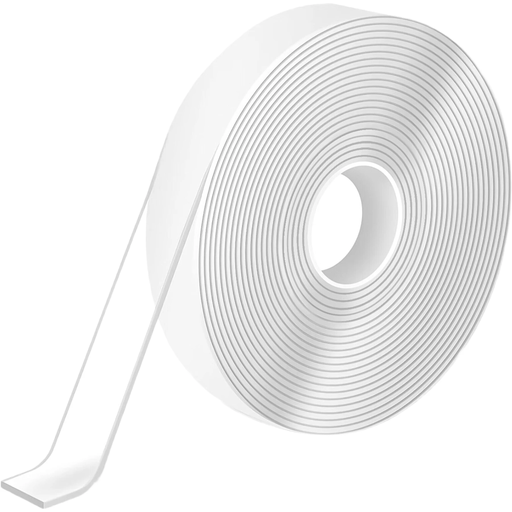
Why this suits this profile: With its 3-metre length, this roll is ideal for small household projects, the office or the car, without forcing you to buy a large quantity.
Its removable, washable design reduces the risk of residue, provided you use it on a smooth surface and for a suitable load.
Acrylic gel, 3-metre length, claimed residue-free removal and washable for reuse.
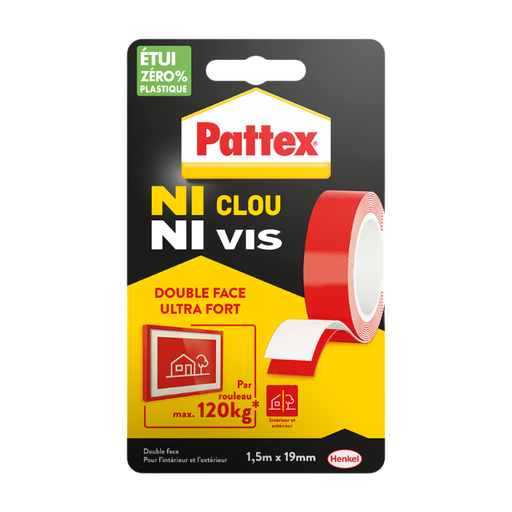
Why this suits this profile: This 1.5-metre roll is designed for demanding installations on glass, metal, wood, stone or plastic, indoors and outdoors.
The stated capacity of up to 120 kg per roll must be considered alongside the actual length applied, the surface and the application instructions.
19 mm width, claimed instant adhesion and resistance to moisture and high temperatures.
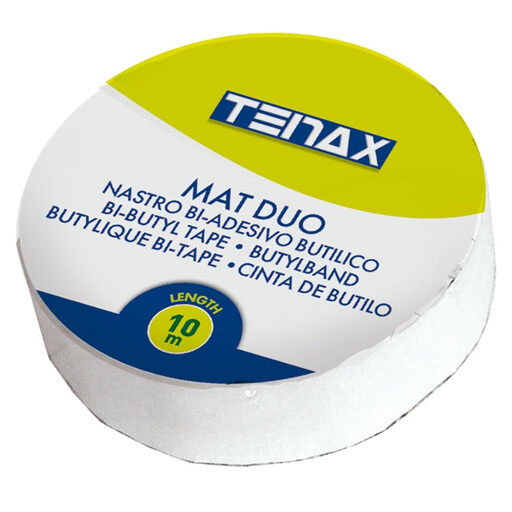
Why this suits this profile: Its long format and bitumen composition are suited to repair, sealing and waterproofing jobs around the house, in the garden or during renovation.
It is presented as a waterproofing tape resistant to weather and UV rays, not as a simple decorative adhesive.
Bitumen backing, 10-metre length, double-sided adhesion and claimed use for ensuring water and air tightness.
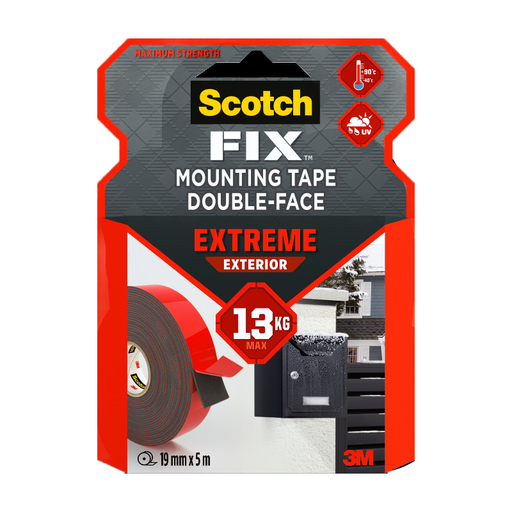
Why this suits this profile: This 5-metre black roll is designed for decorations, signs and fixings on a fence or outdoor structure.
Its claimed resistance to rain, sun and UV makes it suitable for outdoor use, without replacing a mechanical fixing for moving loads.
5-metre length, 19 mm width and claimed capacity of up to 13 kg, depending on application conditions.
We've put together a comprehensive, real-time updated list of products that fully meet these strict selection criteria and European safety regulations.
Clean and degrease both surfaces, let them dry, then cut a sufficient length. Apply the tape without stretching it, press firmly and respect the stated curing time. Avoid dusty, damp, crumbly or heavily textured surfaces.
The lifespan varies depending on the material, temperature, humidity, UV exposure and load. An indoor tape can last a long time on a stable surface, whereas an outdoor fixing faces more stress. Regularly inspect the edges and replace the tape at the first signs of peeling.
A double-sided tape for carpet and vinyl that is 50 mm wide is generally more suitable than a thin wall-mounting tape. Dedicated models distribute adhesion better and make application over long lengths easier. The floor must be clean, dry, dust-free and compatible with the product.