
Livraison le jour même ou le lendemain

Qualité garantie

Débloquez vos offres de bienvenue: Livraison GRATUITE | Jusqu'à -80 % | 30 jours d'essai gratuits à JoyPlus
Téléchargez l'application
The electric fat bike is gaining serious traction, and it's easy to see why: with their oversized tyres, they promise comfort, versatility, and the ability to tackle any terrain, from the urban jungle to forest trails. The problem? The market is flooded with models making tempting promises that sometimes hide critical flaws. As a product expert at Joybuy, my mission is to help you decode the spec sheets to make an informed choice, far from the siren song of marketing. Here are the pitfalls to avoid and the essential criteria to scrutinise.
Before you fall for a bold design, let's review the most common disappointments that await uninformed buyers.
To avoid these traps, focus on the technical specifications that truly matter when judging the performance of an electric fat bike.
Instead of relying on the range in kilometres, which is often fanciful, look at the battery's capacity, expressed in watt-hours (Wh). The calculation is simple: Voltage (V) x Amp-hours (Ah).
The higher this number, the more range your long-range electric bike will have. For daily commutes and weekend rides, a capacity of at least 500?Wh is a good starting point. Also, check if the battery is removable—this is essential for easy charging at home or in the office.
European regulations limit the nominal power of e-bike motors to 250W. But the real difference on hills or during acceleration comes down to motor torque, measured in newton-metres (Nm).
Wheel size is a crucial factor. A 20-inch fat bike is often synonymous with a folding electric bike. This setup offers excellent manoeuvrability in the city and makes storage and transport much easier. Models with 26-inch wheels are closer to a traditional MTB, offering better clearance over larger obstacles.
The frame material (usually aluminium or steel) affects the bike's weight and rigidity. Aluminium is lighter and resistant to corrosion, while steel, though heavier, is known for better vibration absorption.
Here is our selection of models that cater to specific user profiles, taking into account the performance and practicality criteria we've just discussed.
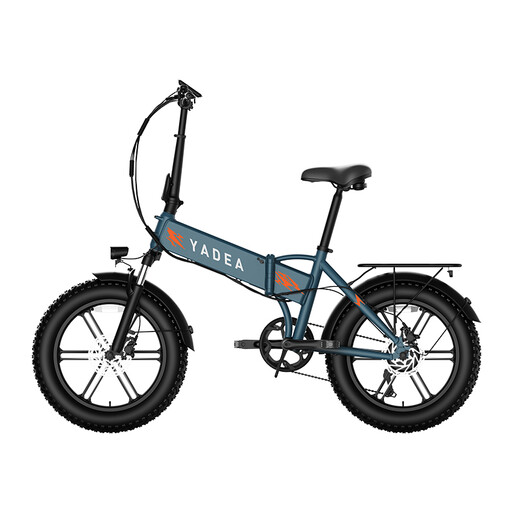
Ideal for: For riders who juggle daily city commutes with weekend getaways. Its folding design solves the problem of apartment storage, while its 20 x 4.0-inch tyres and front suspension smooth out imperfections on roads and trails.
It avoids the pitfall of weight and bulk. Its folding system and aluminium alloy frame make it easy to manage daily, even in the city.
Hydraulic disc brakes for powerful and safe stopping. Modern features like NFC unlocking and a USB-C charging port.
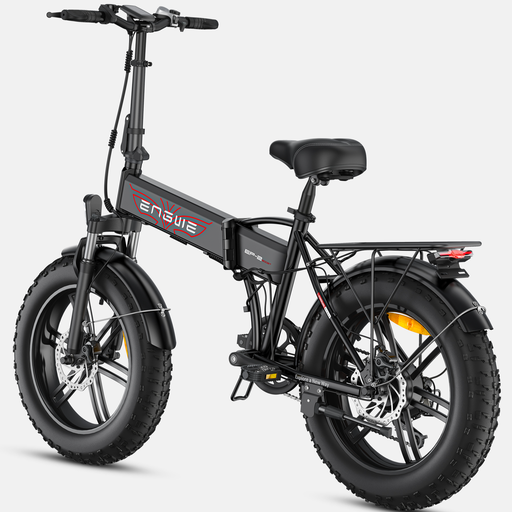
Ideal for: For adventurers who never want to run out of battery. It's built for long rides on varied terrain, from country paths to coastal trails.
It tackles the problem of unrealistic range claims by incorporating a high-capacity battery (48V 13Ah, or 624 Wh), providing a solid foundation for a comfortable real-world range.
Removable high-capacity battery for convenient charging. Versatility thanks to its folding frame and all-purpose wide tyres.
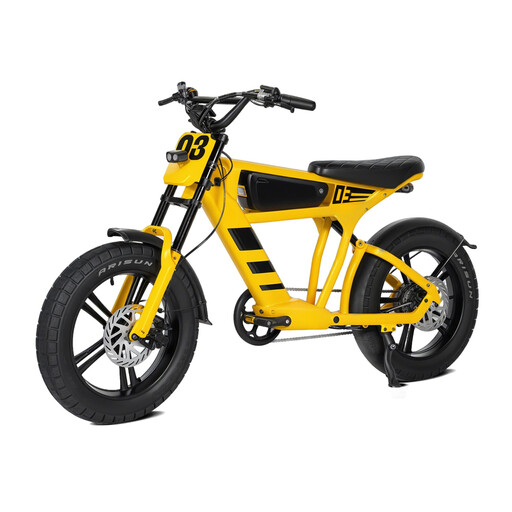
Ideal for: For adventurers who prioritise durability and performance on demanding terrain. Its extra-wide tyres and dual suspension are designed for maximum comfort and stability off the beaten path.
It doesn't just claim to be "all-terrain"—it proves it with its equipment: dual suspension, 20 x 4.5-inch tyres, and hydraulic disc brakes, which ensure true shock absorption capabilities.
Supreme comfort thanks to the dual suspension. Very high-capacity battery (48V 18.2Ah, or 873.6 Wh) for rock-solid power and range.
We have curated a complete selection of products that meet our selection criteria and European safety standards.
As a rule, a well-maintained lithium-ion battery has a lifespan of 3 to 5 years, or about 500 to 1,000 full charge cycles. To maximise its longevity, avoid fully depleting it, do not store it in extreme temperatures (too hot or too cold), and always use the original charger.
Maintenance is similar to that of a standard e-bike, but with a few key points to watch. The pressure of the fat tyres should be checked regularly and adjusted according to the terrain (lower on sand or snow, higher on asphalt). After a ride in mud or sand, a thorough cleaning is essential to preserve the drivetrain (chain, derailleur) and brakes. The brakes, which are under more stress due to the bike's weight, require frequent inspection.
Absolutely. The comfort of the wide tyres is a major advantage in the city, as they effectively absorb potholes, cobblestones, and small kerbs. However, their weight and size can be a drawback. If you're short on storage space or have to carry it up stairs, a folding electric fat bike is the ideal compromise between comfort and practicality.