
Livraison le jour même ou le lendemain

Qualité garantie

Débloquez vos offres de bienvenue: Livraison GRATUITE | Jusqu'à -80 % | 30 jours d'essai gratuits à JoyPlus
Téléchargez l'application
Crowded public transport, parking nightmares, no room for a standard bike... Are these urban mobility headaches part of your daily life? A folding electric bike could be the perfect solution. Compact, practical, and efficient, it gives a real boost to your daily commutes and weekend getaways alike.
As our editorial team's product expert, my mission is simple: to guide you. Forget the marketing jargon and incomprehensible spec sheets. This guide gets straight to the point to help you choose THE folding bike that truly fits your needs.
Before you jump on the first sale you see, let's review the key factors that will make all the difference in your daily use.
The main advantage of a compact folding e-bike is, of course, being able to take it anywhere. If you plan to carry it on a train, in the metro, or up to your flat without a lift, weight becomes your number one criterion. A lightweight folding e-bike (usually under 20 kg) will be infinitely easier to handle. Also, check its dimensions when folded. A compact model will slide effortlessly under a desk, into a car boot, or in the storage bay of a camper van.
The advertised range in kilometres (km) is one thing; real-world performance is another. It depends not only on the battery's capacity (in Amp-hours, Ah) but also on your weight, the terrain's incline, and the level of assistance you use. For an urban folding e-bike intended for short commutes (less than 15 km per day), a 5-10 Ah battery is often sufficient. For longer distances, or if you don't want to recharge every night, a capacity over 10 Ah will offer greater peace of mind. As for the motor, power is capped at 250W to comply with European legislation for e-bikes, ensuring effective pedal assistance up to 25 km/h.
The choice of tyres is no small detail: it determines your comfort and the bike's versatility.
We've scoured the market to select three models that stand out from the crowd, each catering to a specific user profile.

Why it stands out?: Its minimalist design and 14-inch wheels make it a champion of compactness, built for multimodal travel.
Key features?:
Who is it for?? Ideal for the commuter who combines train or metro travel with cycling to cover the famous "last mile". Its small size makes it perfect for those with very limited storage space.
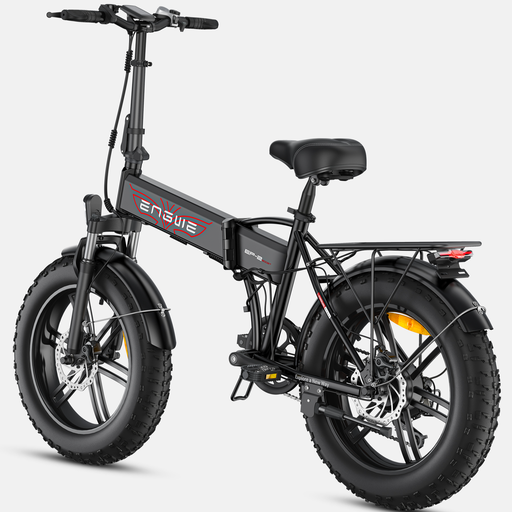
Why it stands out?: Its wide tyres and generous battery give it remarkable versatility. It's just as comfortable on tarmac as it is on trails.
Key features?:
Who is it for?? Perfect for camper van owners, weekend adventurers, or anyone looking for a folding bike that can go off the beaten path without sacrificing comfort.
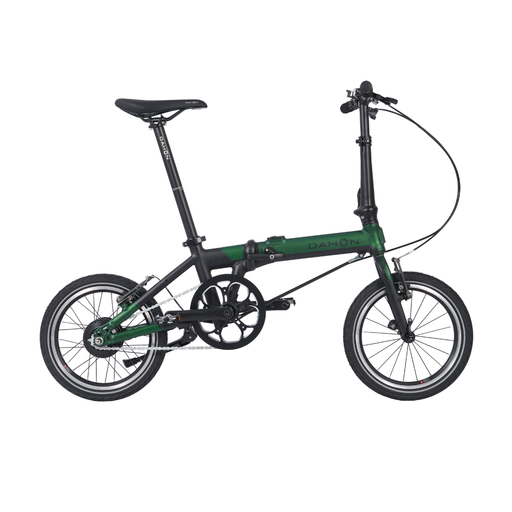
Why it stands out?: This model goes all-in on lightness with its aluminium frame and hand-picked components, without compromising on the build quality that DAHON is known for.
Key features?:
Who is it for?? The obvious choice for users for whom weight is the absolute priority. It's perfectly suited for those who frequently need to carry their bike up stairs or onto public transport.
The heart of an e-bike is its motor. For DIY enthusiasts or those curious about mechanics who are considering building their own kit or upgrading an existing bike, taking a look at our selection of electric bike motors is an excellent starting point for understanding the different technologies.
The range advertised by brands is often... optimistic. In real-world conditions, it varies greatly depending on the rider's weight, the terrain's incline, temperature, tyre pressure, and the level of assistance used. For moderate use, it's safer to plan for 70-80% of the maximum advertised value to avoid any unpleasant surprises.
Don't worry, maintenance is almost identical to that of a standard bike: regularly check tyre pressure, ensure the brakes are working correctly, and clean the chain. The electrical components require very little maintenance. The only real point of attention is the battery: it's advisable to store it in a dry place at room temperature and to avoid fully depleting it to maximise its lifespan.
Yes, most models are designed to handle a downpour. Electronic components like the motor and battery are generally well-sealed. Just avoid submerging it or cleaning it with a pressure washer! As with any two-wheeled vehicle, caution is still advised on wet roads.