
Livraison le jour même ou le lendemain

Qualité garantie

Débloquez vos offres de bienvenue: Livraison GRATUITE | Jusqu'à -80 % | 30 jours d'essai gratuits à JoyPlus
Téléchargez l'application
The versatility of a mountain bike, the convenience of a folding bike, and the comfort of electric assistance, all in one machine? An impossible mission? Not quite. The folding electric fat bike brilliantly rises to the challenge. Perfect for commuting, weekend getaways, or as a reliable companion in the storage bay of an RV, this compact all-terrain bike is winning over more and more fans.
But with a booming market, how do you find your way? This guide is here to help you navigate the options by breaking down the key criteria and presenting our selection of models that stand out from the crowd.
Before you dive into our top picks, let's review the crucial points for finding the model that's perfectly suited to your needs.
This is the number one criterion. Expressed in amp-hours (Ah) or watt-hours (Wh), the battery's capacity determines how far you can travel on a single charge. For short daily commutes, a standard battery may suffice. However, if you're dreaming of long rides or want to charge as infrequently as possible, a long-range electric bike is a must. Also, don't overlook the convenience of a removable battery, which is much easier to charge at home or in the office.
In France, for a bike to be certified as a VAE (e-bike), its nominal power must not exceed 250W and the assistance must cut off above 25 km/h. A 250W electric fat bike is therefore the legal standard. Most folding models feature a rear hub motor. This common setup provides efficient and responsive propulsion, which is especially noticeable on hills or when starting from a standstill.
The signature feature of a fat bike is, of course, its oversized tires. A folding electric bike with fat tires (usually 4 inches wide) offers exceptional ride comfort and grip on all surfaces: cobblestones, dirt paths, sand, or even light snow. The wheel size, often 20 inches on folding models, strikes the ideal balance between stability and compactness. Be sure to check the folded dimensions and weight—a crucial detail if you plan to slide it into a car trunk, store it in an apartment, or take it along in your electric bike for an RV.
Here are the models that caught our eye, each catering to a specific type of rider.
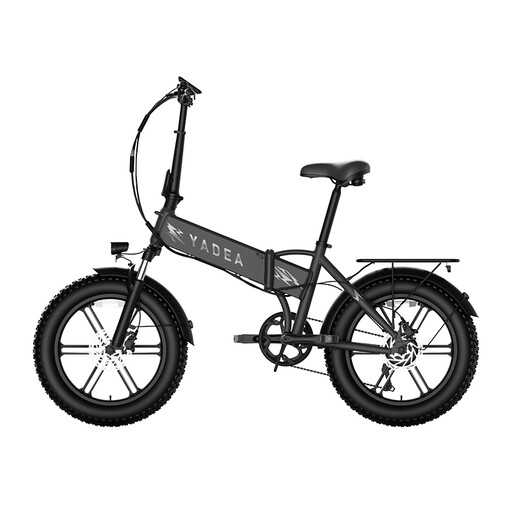
Why it stands out: The Yadea Rover distinguishes itself with a sleek design and thoughtful features. Its aluminium alloy frame ensures both lightness and durability, while additions like NFC unlocking and a USB-C charging port bring a welcome modern touch to daily use.
Pros:
Who is it for?: For urban commuters and weekend adventurers looking for a folding all-terrain electric bike that combines performance, style, and a touch of tech.
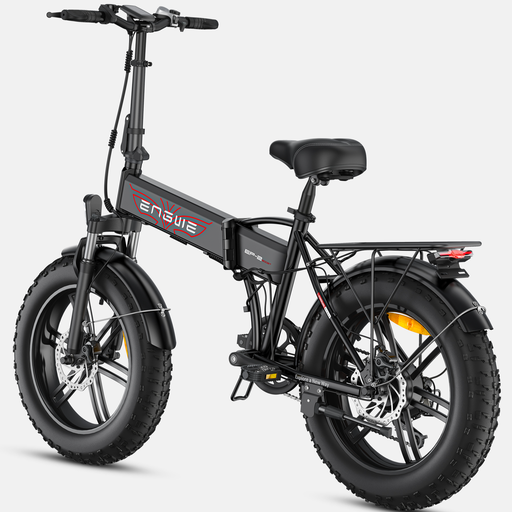
Why it stands out: The Engwe EP-2 Boost is all about endurance. With its removable 48V 13Ah battery, it's designed for those who want to forget about charging constraints. Its versatility makes it the ideal companion for eating up the miles.
Pros:
Who is it for?: Ideal for high-mileage riders, long-distance tourers, and daily commuters looking for a tireless long-range electric bike.
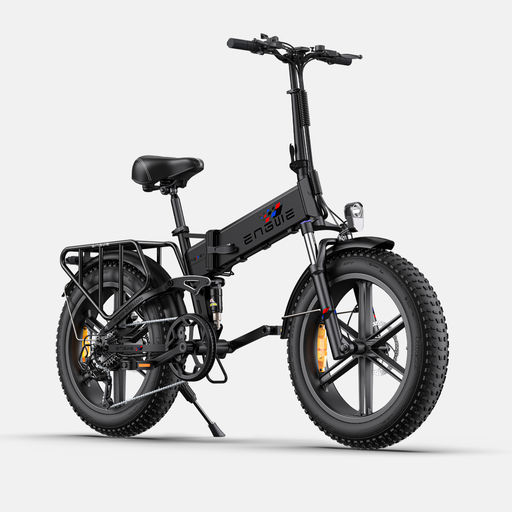
Why it stands out: The Engwe Engine X is the perfect compromise—a versatile and high-performing adventurer. It combines a high-capacity battery with a robust build, making it a reliable choice for mixed use.
Pros:
Who is it for?: The smart choice for those who want a do-it-all bike: efficient in the city during the week and ready for adventure on the trails on the weekend.
Didn't find your perfect match in this selection? Every cyclist is unique. To discover a wider range of bikes ready to tackle any terrain, from purebred mountain bikes to more urban models, feel free to explore our complete collection.
? Discover our All-Terrain Bike Collection
The range advertised by manufacturers is a theoretical value, often measured under ideal conditions (flat terrain, light rider, minimal assistance). In the real world, it depends on a multitude of factors: your weight, the incline, the outside temperature, tire pressure, and the level of assistance you choose. For a model with a 13Ah battery, you can expect a realistic range of 50 to 80 km in mixed use.
Definitely, yes. A folding electric fat bike has some heft, typically weighing between 25 and 35 kg—much more than a classic folding bike. This extra weight comes from the motor, the battery, and the robust frame and tires. However, the trade-off is worth it: once folded, its compact size allows it to be stored in a small space. And when you're riding, the electric assistance makes you completely forget about the weight.
Absolutely. An electric fat bike is perfectly legal on French roads and bike paths, as long as it complies with VAE (e-bike) legislation: a maximum nominal power of 250W and assistance that cuts off at 25 km/h. Their wide tires even offer extra stability and superb comfort on asphalt, including on poorly maintained pavement.