
Livraison le jour même ou le lendemain

Qualité garantie

Débloquez vos offres de bienvenue: Livraison GRATUITE | Jusqu'à -80 % | 30 jours d'essai gratuits à JoyPlus
Téléchargez l'application
Juggling urban commutes, limited home storage, and the need for flexibility can be a real headache. For city dwellers and commuters who mix different modes of transport, the folding bike has quickly emerged as a game-changing solution. But when you add electric assistance, it transforms into the ultimate ally for both daily commutes and weekend getaways.
This guide breaks down the essential criteria to consider before choosing your electric folding bike and presents a selection of models for every type of rider, from the ultra-practical city commuter to the all-terrain adventurer.
The market is packed with models offering a wide variety of features. To help you cut through the noise and find the perfect bike for your needs, here are the key points to check.
The motor is obviously the game-changer compared to a standard folding bike. Battery range is therefore a critical factor. If your daily commutes are short (less than 15?km), a standard battery will suffice. However, for those planning longer journeys or weekend rides, opt for a long-range folding bike (over 80?km). Also consider the motor's power, expressed in Watts (W) and especially in Newton-metres (Nm) for torque. High torque will ensure brisk acceleration and help you climb hills effortlessly.
The main advantage of a folding bike is, of course, how easy it is to transport and store. Check the bike's folded dimensions to make sure it will fit in your car boot, under your desk, or in a cupboard. Weight is also a decisive factor, especially if you need to carry it upstairs or on public transport. A compact folding bike that is also lightweight will be a daily game-changer, particularly if you live in an apartment. Most models use 20-inch wheels, an excellent balance between compactness and riding comfort.
How you plan to use your bike will dictate the type you should choose. For purely urban use, a model with slim tyres and simple components will be sufficient. If you dream of getaways on country lanes or forest paths, an all-terrain electric folding bike is a must. These models, often folding fat bikes, are equipped with large, knobbly tyres for perfect grip and cushioning on loose or uneven surfaces.
To guide you, we've reviewed several representative models based on their design, components, and target audience.
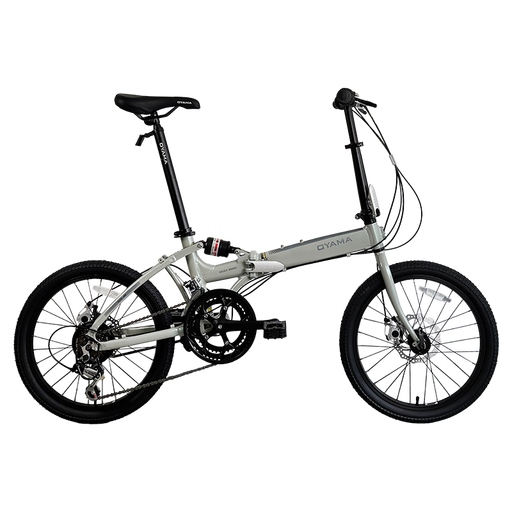
Why It Stands Out The OYAMA Dazzle 500 is a powerhouse of simplicity and efficiency for purely urban journeys. Its aluminium alloy frame makes it both lightweight (around 13.8?kg) and corrosion-resistant. Its quick-folding system makes it an excellent choice for those who combine cycling with public transport.
Pros
Who Is It For? Ideal for the commuter looking for an agile "last mile" solution who values the lightness and simplicity of a classic (non-electric) bike.
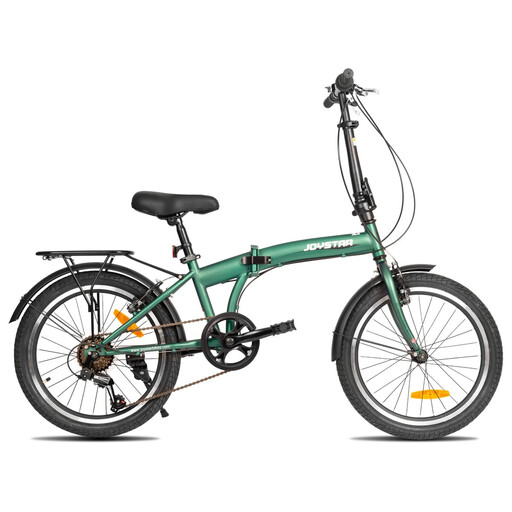
Why It Stands Out The JoyStar Super focuses on robustness and ease of use. Its low-step, high-carbon steel frame makes it easy to get on and off, making it accessible to a wide audience. The twist-grip gear shifting system is intuitive and simple to operate.
Pros
Who Is It For? Perfect for occasional cyclists or those looking for a simple, functional folding bike for leisure rides, camping, or short trips, without the extra cost and weight of electric assistance.
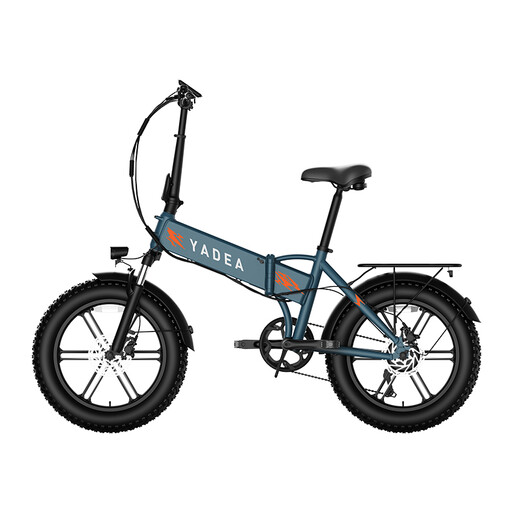
Why It Stands Out The Yadea Rover is a true electric folding bike built for adventure. It combines the practicality of a folding frame with the capabilities of a folding fat bike. Its wide 20 x 4.0-inch tyres and lockable suspension fork allow it to tackle everything from tarmac to the roughest trails.
Pros
Who Is It For? The ideal companion for adventurers and commuters who don't want to compromise. It's perfect for those seeking an all-terrain electric bike that can take them to work during the week and out on country trails at the weekend, while remaining surprisingly easy to store.
Our selection is just a glimpse into the rich folding bike market. To explore a wider range, including other electric-assist bikes or classic models, take a look at our full category.
? Discover Our Green Bikes Collection
1. What is the average weight of an electric folding bike? The weight can vary significantly depending on the materials and battery capacity. A folding e-bike generally weighs between 18 and 25?kg. Heavier models, like those with fat bike tyres and large batteries, can exceed 30?kg, like the Yadea Rover (31.9?kg gross weight).
2. What kind of range can you expect from a good folding e-bike? The range depends on the battery capacity (expressed in Watt-hours, Wh), the level of assistance used, the rider's weight, and the terrain. An entry-level model will typically offer a range of 30 to 50?km, while a long-range folding bike can reach or even exceed 100?km, as promised by the Yadea Rover (90-120?km).
3. Is a folding bike as sturdy as a conventional bike? Yes, modern folding bikes are designed to be robust and durable. The hinge mechanisms are subject to strict safety standards (like the European standard EN 15194 for e-bikes). A quality aluminium or steel frame, like those featured here, offers rigidity and reliability comparable to that of a non-folding bike under normal use.