
Livraison le jour même ou le lendemain

Qualité garantie

Débloquez vos offres de bienvenue: Livraison GRATUITE | Jusqu'à -80 % | 30 jours d'essai gratuits à JoyPlus
Téléchargez l'application
Whether for a long holiday road trip, a camper van getaway, or simply keeping drinks cool at the office, the electric cooler has become an essential accessory. However, behind the marketing promises lies a real minefield. A device that drains your car battery overnight, an advertised capacity that can't even fit a water bottle standing up… these disappointments are unfortunately all too common.
As a Product Expert at Joybuy, my mission is to guide you through this jungle. Let's cut the technical jargon and get straight to the point: together, we'll break down the criteria that truly matter for making a smart purchase that's perfectly suited to your needs.
Before you even start comparing models, it's crucial to know the classic mistakes that turn a promising purchase into a regret.
To avoid these setbacks, three technical parameters demand your full attention.
This is the game-changer, the criterion that defines the device's true performance.
A good portable cooler must be a true chameleon. Dual power is a decisive advantage:
A model equipped with both ensures unbeatable versatility.
Don't be fooled by the volume in litres. Before buying, ask yourself the right questions: What will I store in it? Cans? Bottles? Food containers? Check the internal dimensions, especially the usable height, to ensure your usual containers will fit upright.
To help you see more clearly, here are a few products tailored to specific uses.
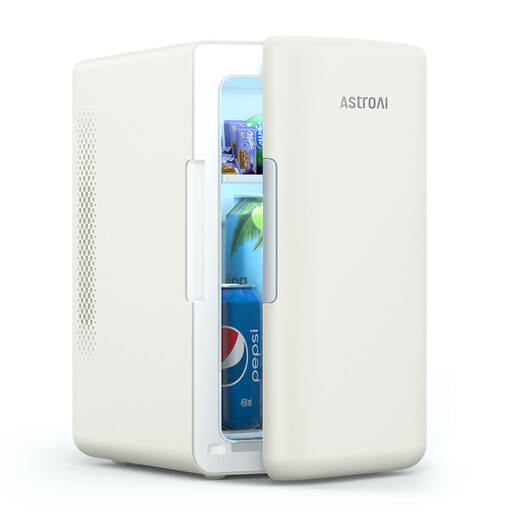
Why we chose it: Ideal for keeping a lunch, a few drinks, or even skincare products cool. Its compact size and feather-light weight make it the perfect companion for the office, car, or bedroom.
This thermoelectric model embraces its primary function: cooling. It doesn't promise to freeze, so there are no false expectations or disappointments.
Its dual AC/DC power supply makes it ultra-versatile, switching effortlessly from the car to a wall socket. The warming function is a nice bonus.

Why we chose it: For those who travel for several days and demand a reliable cooling solution. For truckers, van owners, or RV enthusiasts, this is the gear that ensures both fresh and frozen foods are preserved.
Its compressor cooler technology guarantees a stable and adjustable temperature (down to -18°C), no matter how hot it is outside. Say goodbye to disappointing, lacklustre performance.
True refrigeration/freezing performance and a well-designed 22L capacity. The dual 12/24V DC and 100-240V AC power supply offers complete flexibility.
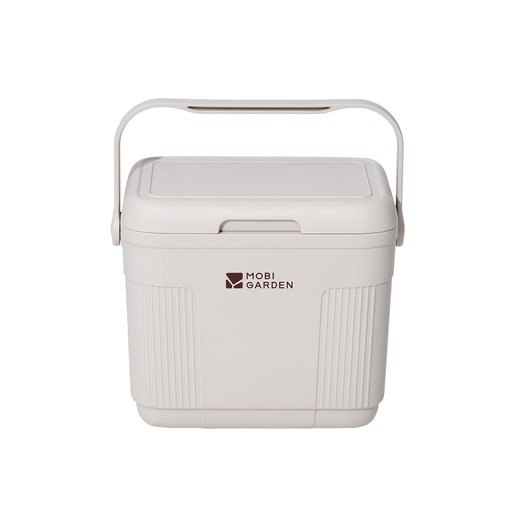
Why we chose it: For fans of self-sufficiency and simplicity. Perfect for camping, fishing, or picnics where access to a power outlet is a distant memory.
This passive model eliminates any risk of a dead battery or power dependency. Its performance relies solely on quality insulation and good ice packs.
The high-density PU foam insulation and silicone seal ensure long-lasting cold (or heat) retention, up to 36-48 hours depending on conditions.
We have selected a full range of products that meet our quality criteria and current safety standards.
It all depends on the model and your vehicle. A compressor cooler consumes power in cycles and often includes a protection feature that cuts power if the battery voltage drops too low. Conversely, a thermoelectric model consumes power continuously. It is therefore strongly advised not to leave it plugged in overnight on a stationary car's battery, unless you have a dedicated auxiliary battery.
Consumption varies greatly. A small 6L thermoelectric model consumes about 30-50W continuously. A 22L compressor cooler might consume 45-60W, but only when its compressor is running. Ultimately, over 24 hours, its average consumption is often lower than that of a thermoelectric model of the same size.
With proper maintenance (regular cleaning, unobstructed ventilation), a well-made compressor cooler is an investment built to last. Its compressor is a robust mechanical part, similar to that of a kitchen refrigerator, and can easily serve you for many years.