
Livraison le jour même ou le lendemain

Qualité garantie

Débloquez vos offres de bienvenue: Livraison GRATUITE | Jusqu'à -80 % | 30 jours d'essai gratuits à JoyPlus
Téléchargez l'application
A spontaneous weekend, a van getaway or a day by the water doesn’t necessarily require a lot of kit. However, every accessory needs to be suited to its purpose. In the camping and road trip gear category, two products that look similar can differ significantly in how they’re powered, their size, their weather resistance or their safety in use.
So it’s worth taking a close look at the marketing claims before you head to the checkout.
A 12 V electric cooler that uses thermoelectric technology can chill food or keep it warm, but its operation is nothing like that of a compressor fridge. Its temperature depends much more on the outside conditions, and it rarely achieves the same level of performance.
If you need to keep food for several days, or even freeze it, a compressor model will generally be far more suitable.
A device advertised as compatible with a car may not work with every setup. Check for a 12 V socket, compatibility with a 24 V socket in a lorry, and the power consumption when the engine is off.
A 12 V to 220 V inverter can power certain appliances, provided it delivers enough continuous power and is connected with correctly sized cables.
In a boot or a motorhome, a few centimetres can completely change how you organise your storage. A cooling or heating appliance also needs clear space around its vents.
Blocked ventilation reduces performance and increases the risk of overheating. With a diesel heater for a motorhome, air circulation and exhaust gas extraction are safety essentials, not just minor technical details.
For a picnic or a daily commute, a compact cooler of 6 to 10 litres may be enough. For several people, a portable car fridge of 20 litres or more will give you greater capacity. Also look carefully at the stated temperature range:
Before you buy, add up the power of the appliances that might run at the same time. For a 12 V to 220 V inverter, be sure to distinguish between the continuous rated power and the peak power. The first is the load the inverter can handle over time; the second is used to absorb the surge needed to start certain motors or compressors.
Avoid leaving a cooler or fridge plugged in for hours on a starter battery without protection against deep discharge. For extended use, an auxiliary battery, a portable power station or a solar panel will often be more suitable.
For sleeping outdoors, a foldable camping mat should limit contact with cold, damp ground. When stated, the R-value gives a good indication of the level of thermal insulation. However, it doesn’t replace the need to consider the weather and the type of ground.
A foam insulating groundsheet is easy to carry, but uneven ground and stones can quickly affect comfort.
For a short break, a foldable hiking cushion will be more practical than a full mat. As for a rechargeable camping lamp, it should clearly state its battery life, charging method, weight and, if possible, whether the battery can be replaced.
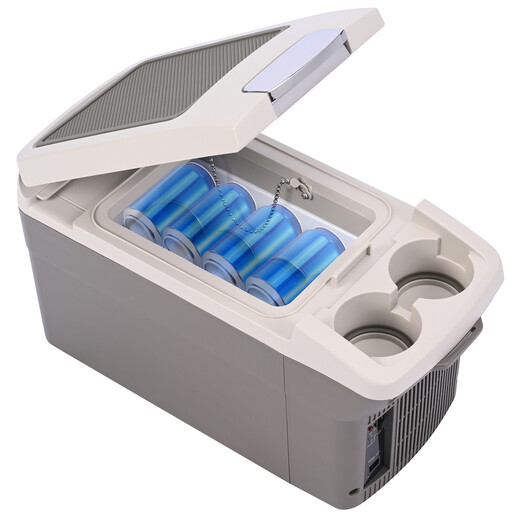
Why this choice suits this profile: its compact size, shoulder strap and 12 V power supply make it a practical, low-cost solution for getting kitted out, going on a picnic or making short trips.
The product page mentions the cooling and warming functions, as well as a supplied 12 V cable. The 220–240 V mains adapter is listed as optional, so you’ll need to buy it separately to use the appliance at home.
Cooling stated at around 4 °C depending on conditions, warming up to 60 °C, built-in cup holders and a noise level stated at around 40 dB.

Why this choice suits this profile: with its 22 litres and versatile power supply, it’s designed for longer trips, motorhome use and the needs of several occupants.
The stated adjustment range goes from −18 °C to +15 °C. The manual recommends placing the appliance on a flat surface, leaving at least 10 cm of space around the vents and securing it during transport.
Compressor technology, 12/24 V DC and 100–240 V AC power supply, 22-litre capacity and adjustable settings allowing use as a fridge or freezer.
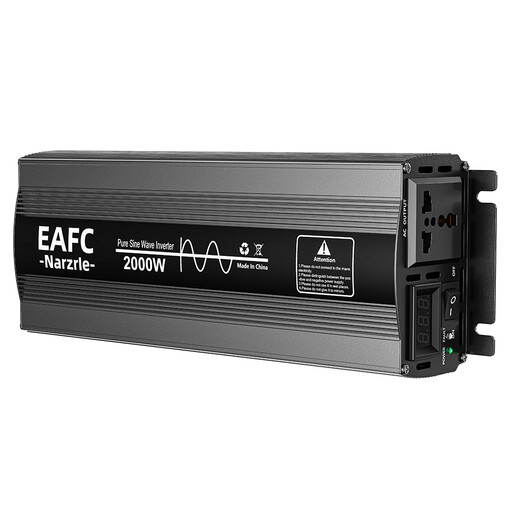
Why this choice suits this profile: this inverter is aimed at van, motorhome or converted vehicle users who want to power several appliances from a 12 V battery.
The stated continuous power is 1,000 W, with a peak power of 2,000 W. This distinction helps avoid sizing errors and overloads. The manual also requires adequate ventilation and suitable cables.
Pure sine wave output, digital display, protection against overloads, overvoltages, undervoltages, overheating and reverse polarity.
To complete your setup, a Mobi Garden insulating groundsheet can boost insulation under your sleeping bag. The 183 × 63 × 2.6 cm model weighs around 750 g and has a stated R-value of 2.6. For lightweight hiking, the more compact 183 × 55 × 1.7 cm model weighs around 500 g. The foldable cushion measuring 40 × 30.5 cm weighs just 45 g. A rechargeable camping lamp with 200 lumens, USB-C charging and a solar panel can also accompany you during meals or night-time movements.
We’ve put together a complete, real-time updated selection of products that meet these demanding criteria and European safety standards.
Yes, but its battery life depends on the battery capacity, the fridge’s power consumption and the outside temperature. To avoid draining the starter battery, it’s best to use an auxiliary battery or a power supply with under-voltage protection.
It all depends on the continuous power available, the power needed for start-up and the type of electrical signal required. For sensitive electronic devices, choose a pure sine wave output. Never exceed the inverter’s rated power and make sure ventilation is adequate.
Choose a power supply compatible with your setup, a compressor motorhome fridge for longer stays, a sufficiently insulating mat and rechargeable lighting. For a diesel heater, strictly follow the instructions regarding ventilation, exhaust gas extraction and refuelling.