
Livraison le jour même ou le lendemain

Qualité garantie

Débloquez vos offres de bienvenue: Livraison GRATUITE | Jusqu'à -80 % | 30 jours d'essai gratuits à JoyPlus
Téléchargez l'application
Far more than a simple piece of cookware, the Dutch oven is an institution in French cuisine, synonymous with comforting slow-cooked dishes and large family meals. However, when faced with the jungle of available models, choosing the right one can quickly become a headache. Between marketing promises and sometimes obscure technical jargon, the risk of making the wrong choice and regretting your purchase is very real. This guide is here to help you see things more clearly and find the Dutch oven that truly meets your needs.
Before comparing models, let's review the common mistakes that lead straight to disappointment.
To make the right choice, three essential criteria must be considered. They will determine the performance and lifespan of your Dutch oven.
The choice of material has a direct impact on heat distribution and retention.
The volume of your Dutch oven should be adapted to the size of your household and your habits.
This is a non-negotiable point. You must verify that the Dutch oven is compatible with your type of hob. Most recent cast iron and stainless steel models are compatible with induction, but it's always wise to double-check. The compatibility symbol (a coil icon) is usually engraved on the bottom of the pot. Also, consider oven compatibility (oven-safe dish), which is essential if you plan on long bakes or gratins.
To move from theory to practice, here are a few models that suit different profiles, selected based on our criteria.
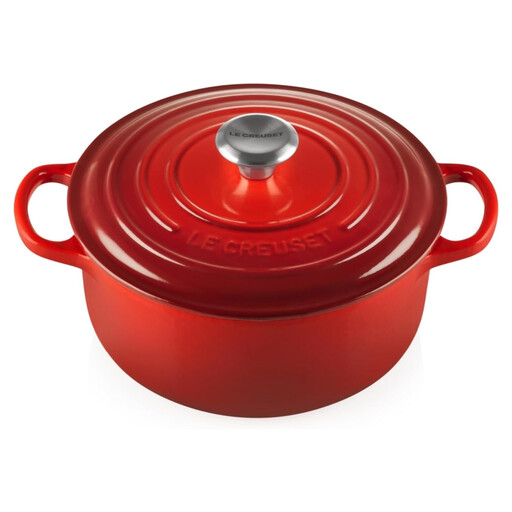
Why it's the right choice: This is the archetype of the enamelled cast iron Dutch oven, an item designed to be passed down through generations. It's ideal for those who see cooking as an art and are looking for an ultra-high-performance tool for simmering, braising, or even baking bread. Its 2.4 L capacity is perfect for a couple or a small family.
This isn't a budget "all-purpose" product. It's a pure specialist in slow cooking, with performance rooted in the quality of its dense cast iron, which ensures unparalleled thermal inertia.
Exceptional heat retention and distribution for perfectly simmered dishes. Compatible with all hobs (including induction) and comes with a lifetime guarantee.
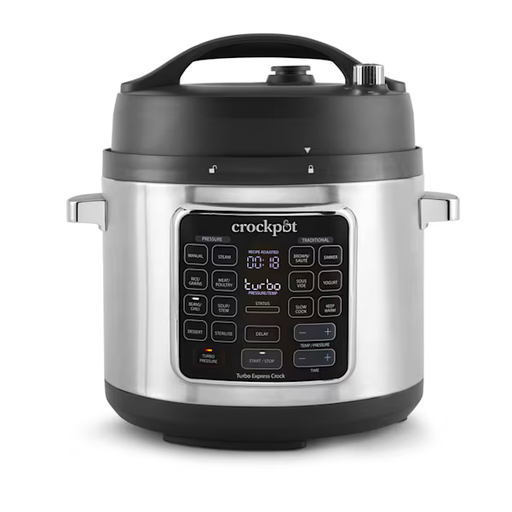
Why it's the right choice: For those who are short on time but not on appetite. This large-capacity (5.6 L) electric slow cooker lets you prepare meals for the whole family with zero supervision. Just add the ingredients in the morning to enjoy a hot, comforting meal when you get home in the evening.
It doesn't pretend to replace a traditional Dutch oven for searing meat. It's a specialised appliance for low-temperature cooking, a task it performs with formidable efficiency, safety, and simplicity.
Unsupervised cooking and an automatic keep-warm function. Its removable ceramic pot can be served at the table and is very easy to clean.
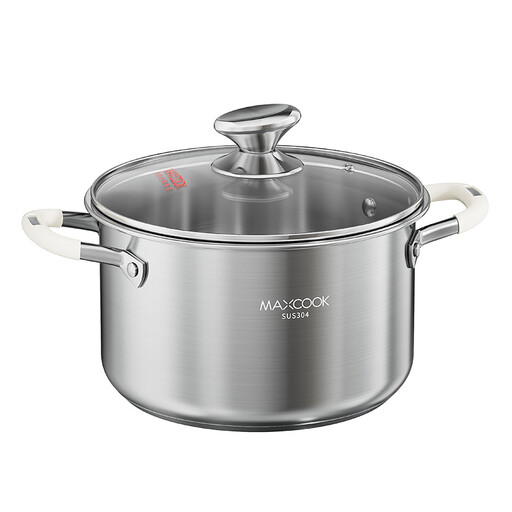
Why it's the right choice: This stainless steel stockpot is a reliable and affordable solution for everyday cooking. Its 4.3 L capacity is perfectly sized for a family. It's ideal for soups, pasta, quick stews, and any dish that doesn't require the thermal inertia of a cast iron Dutch oven.
It doesn't pretend to be something it's not. It's an honest stainless steel stockpot that relies on the durability of 304 stainless steel and all-hob compatibility (including induction), without promising the performance of a heavy cast iron Dutch oven.
Excellent capacity-to-price ratio. A healthy, durable, and easy-to-clean material. Its silicone handles ensure a safe and comfortable grip.
Discover our complete and up-to-date selection of products that meet our selection criteria and current safety standards.
Yes, cast iron is a ferromagnetic material, which makes it inherently compatible with induction hobs. However, for older models or certain unique designs, it's always safer to check for the "induction" pictogram (a coil-shaped icon) on the bottom of the pot or its packaging.
To preserve the enamel and extend the life of your Dutch oven, avoid thermal shock (never run a hot pot under cold water). Use wooden or silicone utensils to avoid scratching the surface. For cleaning, hot water and a non-abrasive sponge are usually sufficient. If food is stuck on, simply let it soak.
A Dutch oven is a cooking vessel (most often cast iron) used on a hob and/or in an oven. It requires some supervision (adjusting the heat, stirring, etc.). An electric slow cooker, on the other hand, is a self-contained appliance that cooks food at a low temperature for hours without any intervention. It cannot sear meats at high temperatures, unlike a Dutch oven used on a hob. Therefore, they are two tools that are far more complementary than they are competitors.