
Livraison le jour même ou le lendemain

Qualité garantie

Débloquez vos offres de bienvenue: Livraison GRATUITE | Jusqu'à -80 % | 30 jours d'essai gratuits à JoyPlus
Téléchargez l'application
Hanging a picture frame, organising kitchen utensils, or putting up a towel shouldn't have to involve drills, wall anchors, and dust. Whether you're a renter dreading the move-out inspection or simply DIY-averse, the drill-free wall hook is the go-to solution. However, the market is saturated with promises that are rarely kept. Between adhesive that rips off paint and hooks that give way under the weight of a simple tea towel, it's easy to make a mistake.
As the Head of Product Curation at Joybuy, I'm here to help you make sense of it all. Let's break down the pitfalls to avoid and the criteria that truly matter when choosing a no-hole wall mounting solution that is both reliable and gentle on your walls.
Marketing often boasts impressive weight capacities or incredibly simple installation. Yet, the biggest disappointments are hidden in the details.
To avoid being misled, check these three fundamental points before you buy.
A hook's performance depends as much on its design as on the wall it's attached to.
Not all drill-free systems are created equal.
For a wall-mounted coat hook in an entryway or a hook in the kitchen, aesthetics and durability matter. Stainless steel, aluminum, or refined finishes (brushed nickel, matte black) resist corrosion and wear much better than simple white plastic.
Rather than an endless list, here are our recommendations, each meeting a specific need while sidestepping the common pitfalls.
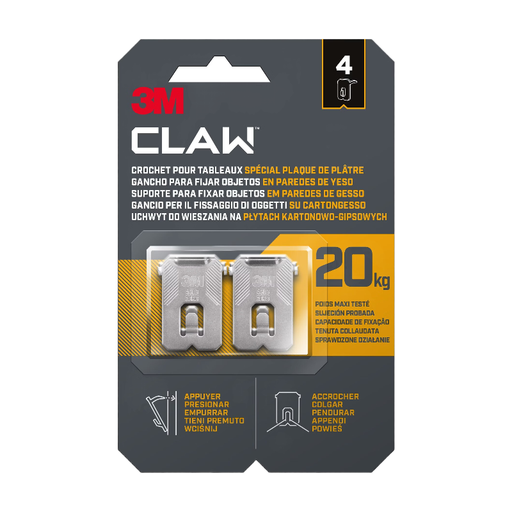
Why we love it: Perfect for hanging heavy items (large mirror, artwork) on a drywall wall, without needing to find a stud. Installation takes just a few seconds with a simple push of the thumb.
It bypasses the unrealistic weight capacity issue by relying on a mechanical fastener (its steel claws) rather than just adhesive. The result: a rock-solid hold for heavy loads.
Holds up to 20 kg on drywall. Installs without any tools.
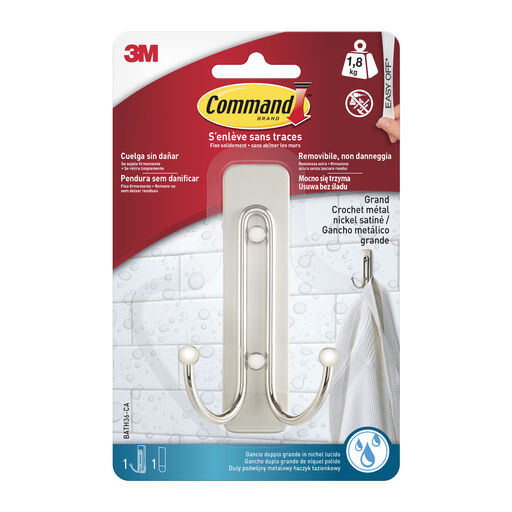
Why we love it: Specifically designed for wet areas, it's perfect for bathrobes and towels on tile or a shower screen. Its satin nickel finish combines elegance with durability.
It tackles the moisture problem with water-resistant adhesive strips and a rust-proof design.
Holds firmly in humid environments (up to 1.8 kg) and removes without leaving a trace or sticky residue.
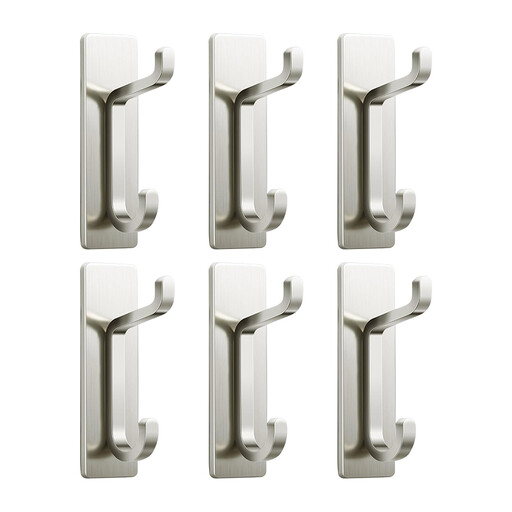
Why we love it: A budget-friendly and ultra-versatile pack for everyday needs. Ideal for keys in the entryway, tea towels in the kitchen, or office accessories, all with a sleek stainless steel design.
It offers a smart, affordable solution for lightweight items without sacrificing quality. The multi-pack format lets you get equipped without breaking the bank on single hooks.
Excellent value for this 6-pack. Durable stainless steel material.
Explore our full selection of products that meet our strict criteria for a reliable, damage-free hold.
For models with a stretch-release tab, it's a breeze: hold the hook firmly and pull the tab slowly downwards, parallel to the wall, until it releases. If the tab breaks or for a classic hook, bring out the hairdryer! Gently heat the adhesive on a low setting to soften the glue. Then, you can carefully slide a piece of dental floss or an old credit card between the wall and the hook to pry it off.
The hook itself, yes, most of the time. The adhesive strip, however, is almost always single-use. To reuse the hook, you'll need to buy replacement adhesive strips, which are often sold separately. Be sure to check the size and type of strip (standard, water-resistant, etc.).
It's all about the mechanism and the intended surface. A hook for tile is a classic adhesive hook that sticks to a smooth, non-porous surface. A hook for drywall, like the CLAW model, uses steel claws that penetrate slightly into the plasterboard to anchor themselves securely. Trying to use a claw hook on tile would be useless, while even a strong adhesive might be ineffective or too aggressive on a painted drywall wall. The choice, therefore, depends 100% on your wall.