
Livraison le jour même ou le lendemain

Qualité garantie

Débloquez vos offres de bienvenue: Livraison GRATUITE | Jusqu'à -80 % | 30 jours d'essai gratuits à JoyPlus
Téléchargez l'application
A wall-mounted bathroom hook can easily free up space around the washbasin, shower or behind a door. However, choosing the right model is essential. Peeling adhesive, stained metal, unsuitable fixings or a hook that is too small for a damp bathrobe: there are plenty of potential disappointments.
Before choosing a wall-mounted hook, it is therefore worth looking beyond the colour and price. Here are the criteria to check, the common mistakes to avoid and a selection of models suited to different uses.
A bathroom is exposed to steam, splashes and temperature changes. A moisture-resistant hook may be suitable near a washbasin, but that does not mean it can be installed directly beneath the shower spray.
Check the material and the manufacturer’s specifications. Aluminium, stainless steel, treated plastic or a corrosion-resistant finish are generally better suited to humid rooms than unprotected metal.
A no-drill adhesive hook is practical for renters and tiled walls. However, its maximum load depends on several factors:
The stated load is not a margin that can be exceeded. For a heavy bathrobe or several towels, a fixing with suitable screws and wall plugs is generally more reliable.
A single hook is sufficient for a lightweight towel or a few accessories. A double hook can, for example, keep a hand towel and a bathrobe separate. Conversely, a hook that is too open may allow clothing to fall off, while an angular end could catch on fabrics.
In a hallway, a wall-mounted coat rack should also leave enough space between the hooks to prevent jackets from overlapping.
In the bathroom, choose a surface that is easy to clean and designed to withstand moisture. Stainless steel and aluminium are suitable for many uses. A wooden hook should have a protective finish clearly specified by the manufacturer.
In the kitchen, also consider splashes of grease. A wall-mounted kitchen hook should be easy to clean with a soft cloth without trapping dirt.
On a plasterboard wall, choose wall plugs designed for this type of surface. On tiles, do not drill without checking the position of the grout lines, pipes and cables.
Measure the available space before choosing a wall-mounted towel holder. A model that is too deep could obstruct a door or restrict access beside the washbasin. With an adhesive hook, follow the maximum load stated on the product page precisely.
Models with several hanging points help optimise space, but their total load also depends on the strength of the wall and the quality of the fixing. Remember to check the screws, wall plugs and adhesive regularly.
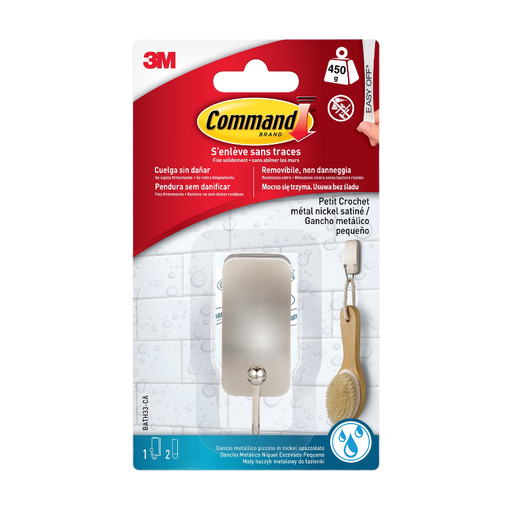
Why this choice suits this profile : This single hook can be installed without tools on a smooth surface. It is suitable for small towels, accessories and flannels, making it an appealing option for renters who want to avoid drilling into their walls.
Its stated maximum load is 0,450 kg : it is therefore best reserved for lightweight items rather than a thick bathrobe.
A satin nickel finish, stated water resistance and removal without drilling or leaving residue on compatible surfaces.
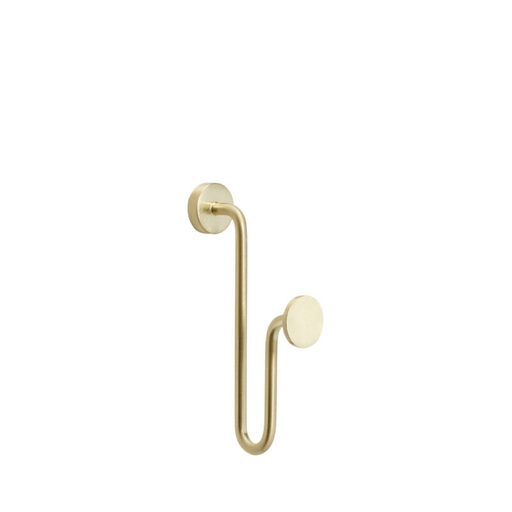
Why this choice suits this profile : Its brass finish and compact 7 × 2,5 × 13 cm format fit easily into a stylish bathroom, bedroom or hallway where appearance matters as much as practicality.
Check its dimensions and capacity before buying : this model is intended for lightweight items, not a pile of damp laundry.
Iron with a polished brass finish, a stated weight of 80 g and a swivelling arm for adjusting the position of hanging items.
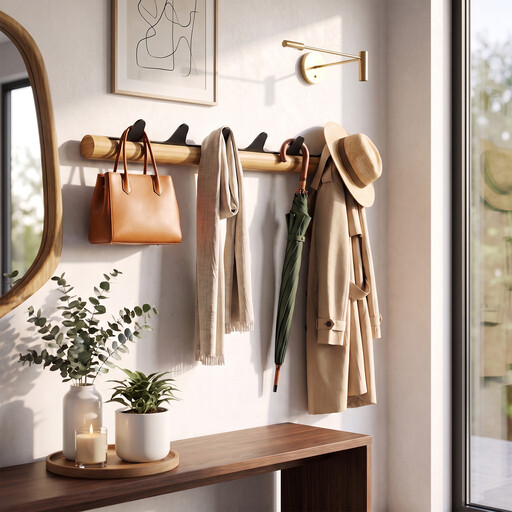
Why this choice suits this profile : With its six hooks, this wall-mounted coat rack is suitable for a family, a busy hallway or a bathroom that needs to hold several towels and bathrobes.
The screw-and-wall-plug fixing means it does not rely solely on adhesive. Nevertheless, you must choose wall plugs suitable for the surface and follow the stated total load.
FSC-certified solid rubberwood, aluminium alloy hooks, six hanging points and a stated maximum load of 66 lb, or approximately 30 kg.
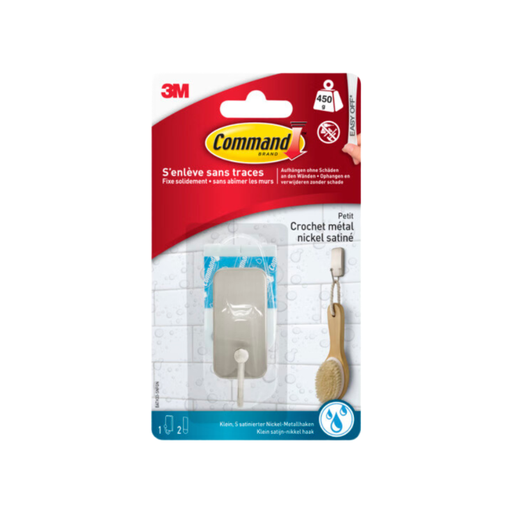
Why this choice suits this profile : This double hook lets you hang a towel and an accessory without drilling into compatible tiles or painted walls.
The product information recommends applying it to a clean, dry surface and waiting for the specified period after installation. Textured walls and wallpaper are not recommended.
Water-resistant adhesive technology, a satin nickel finish, two hanging points and a stated maximum load of 1,8 kg.
We have put together a complete, real-time updated list of products that fully meet these strict selection criteria and European safety regulations.
For an adhesive fixing, clean the surface according to the manufacturer’s instructions, dry it completely and then press the base firmly into place. Wait for the recommended period before hanging a towel from it. To remove the hook, slowly pull the tab in the direction indicated without tearing the surface covering.
For a screw-mounted model, locate any pipes and cables, drill using a diameter suitable for the wall plugs and then check that the hook is level. Clean it afterwards with a soft cloth. Avoid abrasive products, which can dull black, brass or nickel-plated finishes.
An adhesive model may be suitable if the tiles are smooth, clean, dry and in good condition. Check the maximum load and avoid uneven grout lines, porous surfaces and areas directly exposed to heavy splashing.
Its lifespan depends on humidity, how the surface was prepared, the weight being hung and how often it is handled. Inspect the adhesive regularly and replace the hook as soon as it starts to lift or loses its grip.
A towel holder has a bar that is better suited to laundry that needs to dry flat. A hook takes up less space and is more suitable for bathrobes, accessories or folded towels. The right choice therefore depends on the space available and the type of item you want to hang.