
Livraison le jour même ou le lendemain

Qualité garantie

Débloquez vos offres de bienvenue: Livraison GRATUITE | Jusqu'à -80 % | 30 jours d'essai gratuits à JoyPlus
Téléchargez l'application
Looking for a surface for pencil, ink, gouache or markers, but all the pads seem to have the same descriptions? Clairefontaine mixed-media drawing paper is available in several weights, sizes, shades and textures. Choosing the wrong type can lead to tide marks, buckled sheets or a surface that starts to shed fibres after repeated corrections.
Before buying a Clairefontaine drawing paper pad, there are three pitfalls to avoid.
Paper weight refers to the weight of the paper per square metre. It provides an initial indication of the sheet’s rigidity and resistance, but its composition and sizing also play a decisive role.
Even thick paper can warp when it absorbs a lot of water. For generous washes, it is best to secure the sheet with masking tape or stretch it beforehand.
Texture directly affects the appearance of your lines and how well the medium adheres to the paper.
Some Paint’ON pads offer two different sides: one with a pronounced grain and the other with a light grain. This allows you to adapt the surface to your project without changing pads.
The A5 size is ideal for quick studies, travelling and small sketchbooks. A4 provides a versatile working area for school projects, illustrations and regular practice. A3 gives you more freedom for compositions, manga pages and posters.
When using alcohol markers, check that a protective sheet is included. It limits transfer onto the next page, although it does not completely eliminate the risk of bleed-through: place it underneath the sheet you are working on. For projects intended for long-term preservation, also look for acid-free and pH-neutral descriptions, found on some Clairefontaine Bristol papers.
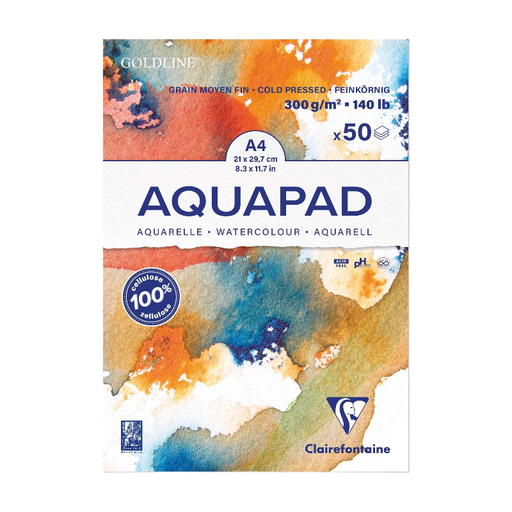
Why this choice suits this profile: With its A4 size and 50 sheets, this pad lets you practise watercolour, gouache or washes regularly without having to buy several specialist paper pads.
Its 300 g/m² weight and double sizing make it more suitable for wet techniques than lightweight drawing paper.
Natural white paper, medium to fine grain, 100% cellulose composition, acid-free and vegan.
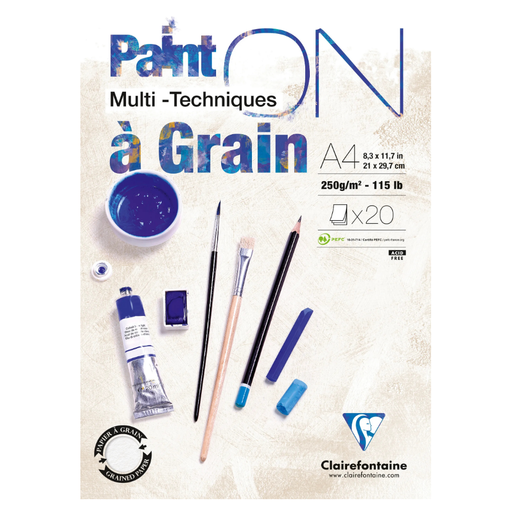
Why this choice suits this profile: This pad is designed for artists who like to move from detailed drawing to exploring textures without changing their surface.
Its two differently textured sides save you from having to settle for a single finish when your projects range from precise sketches to more expressive drawings.
A4 size, 250 g/m², extra-white cellulose, pronounced grain on one side and light grain on the other.
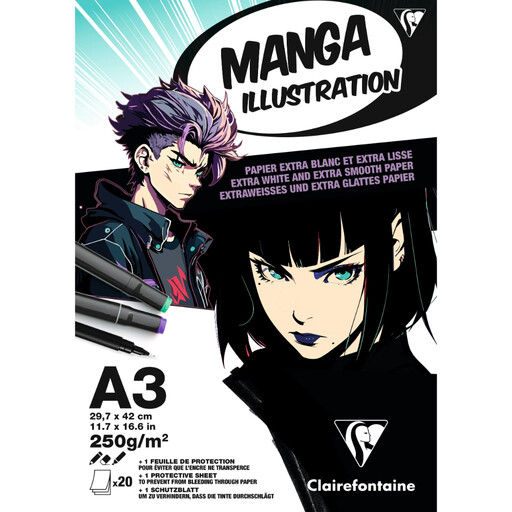
Why this choice suits this profile: Its large size makes it easier to create manga pages, detailed illustrations and compositions intended for digitisation or display.
Its smooth Bristol surface and protective sheet meet the demands of alcohol markers and repeated corrections.
Extra-white 250 g/m² Bristol paper, smooth surface, acid-free and pH-neutral paper, with protection against transfer.
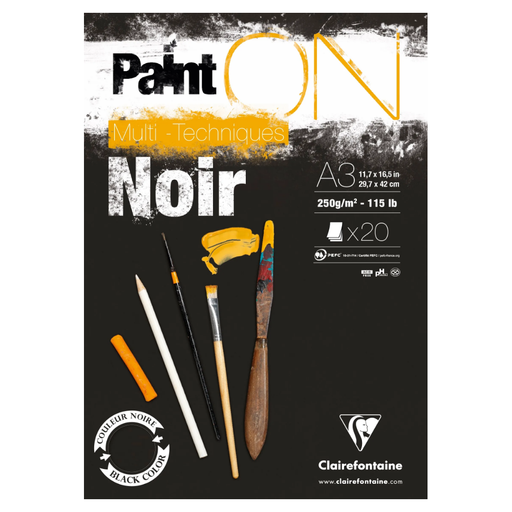
Why this choice suits this profile: Black paper is ideal for graphic artwork, lettering and illustrations created with light or metallic mediums.
Do not expect the traditional look of white paper: its deep shade is designed to make white pencils, light-coloured inks and gouache stand out.
A3 size, 250 g/m², cellulose, lightly rough grain, compatible with pencil, pen, marker, ink, gouache and acrylic.
We have brought together a complete, real-time updated selection of products that meet these exacting criteria, in compliance with European safety regulations.
For gouache and acrylic, choose a sheet of 250 g/m² or more, and avoid applying too much water if the surface is not specifically designed for watercolour. For ink and markers, a smooth or lightly textured surface makes it easier to achieve clean outlines. If you enjoy combining several mediums, a mixed-media pad with two different sides can be particularly practical.
The size should also suit the intended use: A5 for studies and travelling, A4 for everyday practice, and A3 for pages and large compositions. The Paint’ON MIX11 pad, available in A4, A5 or A3, can be used to test different surfaces and shades before choosing your final paper.
It can be suitable for moderate washes, but it is less specialised than 300 g/m² watercolour paper. For substantial layers of water, 300 g/m² Aquapad offers better stability. When using a very wet technique, securing the sheet is still recommended.
A smooth 250 g/m² Bristol surface is generally the most practical choice for achieving clean outlines, working on details and making several corrections. If your pad includes one, place the protective sheet underneath the page you are using to limit marker transfer onto the next one.
Store it flat in a dry place, away from moisture and direct sunlight. Close the pad properly after use and avoid leaving damp sheets stuck together. For artwork intended for long-term preservation, acid-free and pH-neutral papers are preferable.