
Livraison le jour même ou le lendemain

Qualité garantie

Débloquez vos offres de bienvenue: Livraison GRATUITE | Jusqu'à -80 % | 30 jours d'essai gratuits à JoyPlus
Téléchargez l'application
Choosing fine art paper isn't just about checking the weight or the words "multi-technique" on the cover. An unsuitable surface can buckle when it meets water, absorb ink too quickly, or make detailed work difficult. For artists, illustrators, art students and hobbyists, the Clairefontaine Paint'ON multi-technique drawing paper really stands out thanks to its range of formats, shades and finishes.
However, there are a few pitfalls to watch out for before you place your order.
A 250 gsm fine art paper is noticeably thicker than a standard 80 gsm sketch paper. It generally copes better with wet media, but that doesn't mean it will stay perfectly flat after several very wet applications or many layers of acrylic.
According to the stated specifications, Paint'ON is suitable for gouache, acrylic and Indian ink. For very wet work, though, it's best to limit the amount of water, temporarily hold the sheet in place, or opt for a paper specifically designed for watercolour.
A black paper pad doesn't behave like a white sheet. Standard graphite pencils offer little contrast, whereas white pencils, metallic inks, light markers and luminous paints stand out much more.
The slightly rough grain of Paint'ON Black adds texture to both flat areas and lines. However, a textured surface won't necessarily suit those looking for perfectly regular lines with a very fine technical pen.
A5 format slips easily into a bag and is ideal for quick studies, travel sketchbooks and studio exercises. An A4 pad offers more space for detailed illustrations. As for A3 format, it's better suited to large compositions and requires adequate workspace and storage.
The glued top binding keeps the sheets together while you draw. If you want to remove each creation without damaging it, though, check how the sheets detach from the pad.
For versatile use, start by looking at the weight, expressed in gsm. The Paint'ON references featured here use 250 gsm paper, made from 100% cellulose according to the available information. This thickness works well for dry techniques — pencil, technical pen or marker — as well as several wet techniques.
In contrast, an 80 gsm paper, like that in Clairefontaine Zap Book notebooks, is more suited to writing and light sketching. It doesn't replace a 250 gsm paper intended for gouache and acrylic.
Deep black paper forms a background in its own right, integrated directly into the composition. It allows you to work on light values without having to cover the whole sheet in dark paint. With a white pencil, light pastels or metallic inks, the contrast will also depend on the opacity and pigmentation of the materials you use.
For a piece intended for display or preservation, also check the information regarding acidity and conservation. The Paint'ON pad product sheets mainly detail the composition, weight, colour and uses, without mentioning any particular archival certification here.
A textured drawing paper grips the pencil lead more and produces a textured finish. It lends itself well to texture effects, worked shadows and expressive backgrounds. The Paint'ON Black has a slightly rough grain. Its product sheet also mentions good ink absorption and the possibility of making corrections — what artists call "repentir".
Always test on a sheet before starting an important piece, especially with a heavily loaded marker or fluid ink.
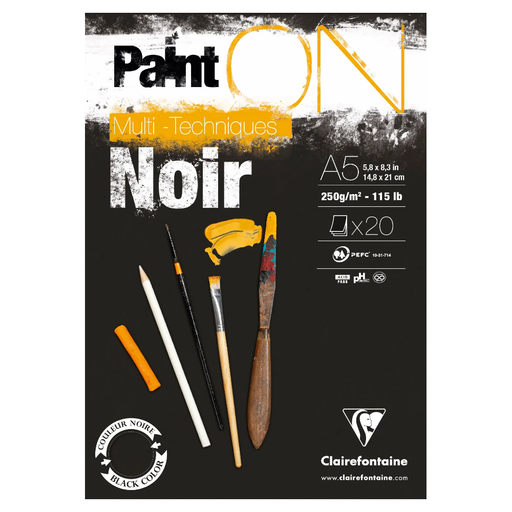
Why this choice suits this profile: its A5 format is easy to carry between home, studio and classes. It lets you try out white pencil, marker or ink without taking up a large surface area.
Its 250 gsm weight stops you starting with a simple notebook paper, while its 20 sheets keep the initial outlay low.
Deep black paper, slightly rough grain, 100% cellulose composition and stated compatibility with dry and wet techniques.
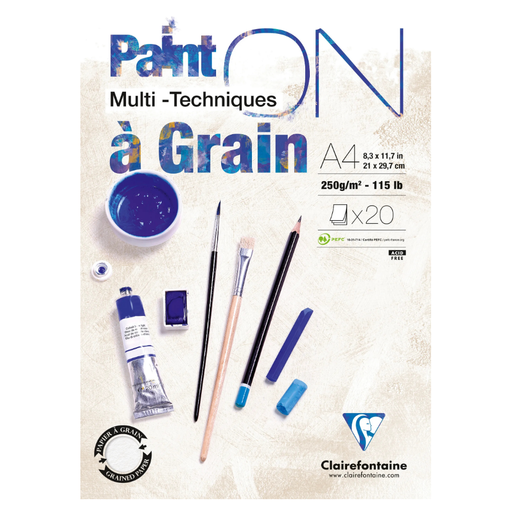
Why this choice suits this profile: this extra-white pad offers two levels of grain, so you can switch between texture effects and more precise lines.
The product sheet clearly states the grain of each side, rather than leaving this essential point in a vague description.
Two textured sides, 100% cellulose paper, A4 format and stated uses for pencil, marker, ink, gouache and acrylic.
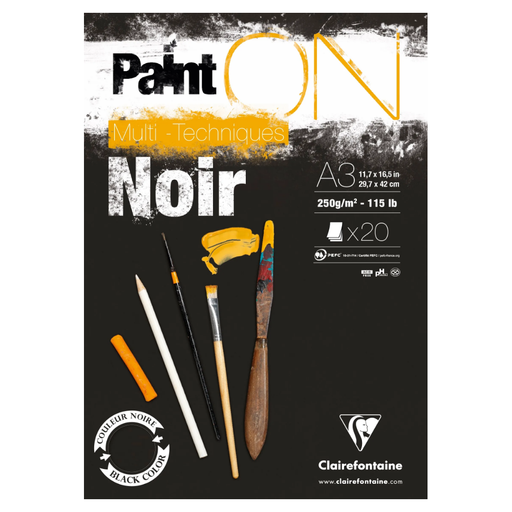
Why this choice suits this profile: the A3 format offers a comfortable surface for posters, detailed illustrations and highly contrasted compositions, whether flat on a table or set up on an easel.
The large format and 20 sheets are clearly stated, making it easy to estimate the available volume before purchase.
A3 format, deep black shade, slightly textured grain and stated compatibility with ink, gouache and acrylic.
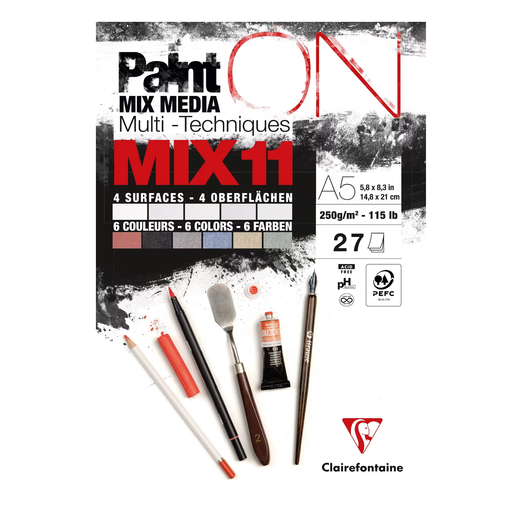
Why this choice suits this profile: this assortment lets you test several shades and surfaces before committing to a dedicated pad for a series of illustrations.
It stops you buying several pads before you've found the shade and grain that suit your drawing style.
Assortment of 11 papers, 27 sheets in total, A5 format, 250 gsm weight and stated 100% cellulose composition.
For sharp contrast, start by reserving the lightest areas using a white pencil or opaque paint. Metallic inks and light markers can then be used to add details. With gouache or acrylic, apply thin layers and let them dry between coats to limit moisture build-up.
Store the pad flat in a dry place, away from heat sources and direct light. Close the packaging after use to prevent the sheets from getting dirty or absorbing moisture.
Find an updated selection of creative products and accessories available on Joybuy France.
The product sheets indicate compatibility with gouache and acrylic. At 250 gsm, this paper is better equipped for wet media than an 80 gsm paper. For very wet applications, test it first and avoid saturating the sheet.
Choose A5 for studies, exercises and portability. A4 is suitable for everyday illustrations and student work. A3 offers a more generous surface for detailed compositions, but requires a larger workspace.
Yes. The black background is specifically designed to make light media stand out. However, the result will depend on the opacity and pigmentation of the white pencil, marker or paint you use. To compare different effects, the MIX11 pad can serve as a test surface before buying a black or extra-white pad.