
Livraison le jour même ou le lendemain

Qualité garantie

Débloquez vos offres de bienvenue: Livraison GRATUITE | Jusqu'à -80 % | 30 jours d'essai gratuits à JoyPlus
Téléchargez l'application
Double-sided tape promises drill-free mounting: clean, fast, and almost magical. Except when that magic turns into a nightmare: the picture frame that crashes to the floor at 3 a.m., the chunk of paint ripped off the wall upon removal… we've all been there. The market is flooded with products making dazzling promises, but in reality, not all of them hold up.
Our editorial mission is to sort through the noise for you. Let's cut through the marketing fluff and get straight to the point: how to choose the right double-sided tape for a bond that lasts, without turning your wall into a wreck. Here are the pitfalls to avoid and the criteria that truly matter.
To sidestep these traps, you only need to check a few key points on the packaging or product description. Here they are.
Load capacity is the first number people look at, but it should be taken with a grain of salt. This value, in kilos or pounds, is almost always measured in a lab on a perfect surface. In the real world, give yourself a safety margin: aim for a stated capacity well above your object's actual weight.
The type of adhesive is just as crucial?:
Nano Tape): An innovative solution that is often washable and reusable, adhering through micro-suction without leaving residue. Ideal for temporary fixtures or on delicate surfaces.The success of your project is 50% tape and 50% preparation. The surface must be impeccable: clean, dry, and degreased. A quick wipe with rubbing alcohol often works wonders. Next, check which materials the tape is designed for?:
Ask yourself if your fixture is for life or just for now.
Rather than an endless list, here are targeted solutions for specific needs, chosen for their effectiveness and relevance.
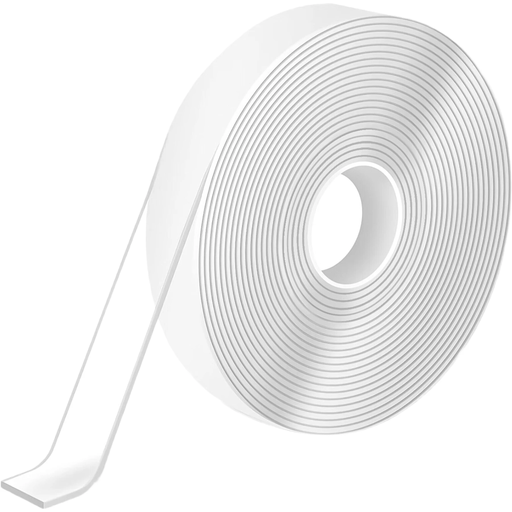
Why it's the right choice: Perfect for decorating without commitment. Ideal for renters who love to change their decor and want their security deposit back. It lets you hang frames, small mirrors, and various objects without leaving a single trace when you move out.
It debunks the myth of "easy removal" that often ends in disaster. Its nano-gel technology ensures a clean peel, with no gummy residue or paint chips.
Washable and reusable: a quick rinse under water restores its stickiness. Versatile: effective on most smooth surfaces.
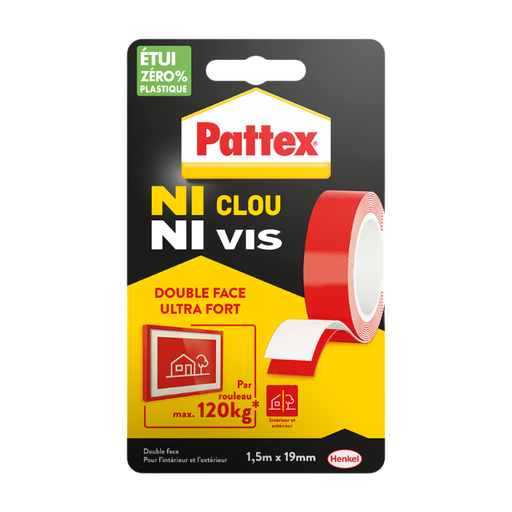
Why it's the right choice: For missions where strength is non-negotiable. Mounting a mailbox, a large mirror, or heavy outdoor accessories demands rock-solid reliability. This tape is built for heavy loads and extreme conditions.
Here, the "extra-strong" promise isn't just marketing hype. Its load capacity (up to 120 kg per roll, according to the manufacturer) is designed for serious applications and provides true peace of mind.
Very high load capacity: perfect for genuinely heavy objects. Withstands anything: weather, humidity, UV… it's at home indoors or out.
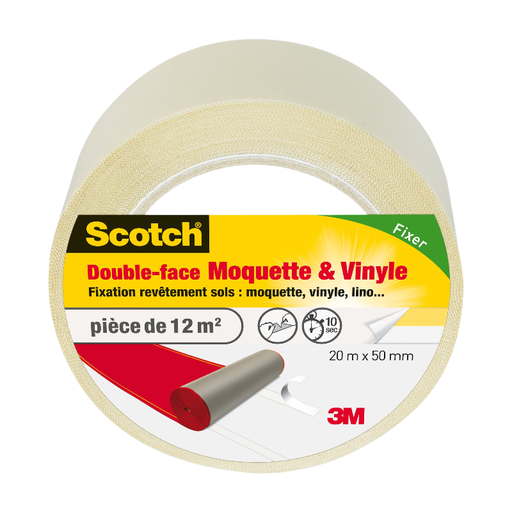
Why it's the right choice: For anyone tackling a flooring installation. Trying to secure a carpet with standard adhesive is a guarantee that it will buckle or peel up within weeks. This product is specifically formulated for the job.
It avoids the classic trap of incompatibility. Its formula is designed for a durable grip on carpet or vinyl backings, as well as on subfloors like concrete or wood.
Flooring-specific: guarantees a hold that won't budge. Easy application: tears by hand, no scissors or utility knife needed.
We have curated a complete range of products that meet our selection criteria and current standards.
For permanent adhesives, gentleness is key. Heat the tape with a hairdryer (not too close!) to soften the glue. Then, slide a piece of fishing line or a thin plastic spatula behind the object to gradually pry it off. If any residue remains, a cloth soaked in isopropyl alcohol usually does the trick. In any case, always test on an inconspicuous area before you start!
Yes, but only if it's a true, dedicated product. A good exterior adhesive tape has a formula that resists UV rays (which "bake" the adhesive), temperature changes, and moisture. The secret to making it last for years: a perfectly clean and dry surface at the time of application, and firm pressure applied along the entire length to force out any air and prevent water from seeping in.
Consider it a peak performance achieved in a laboratory. In reality, the result depends on the wall's texture, its cleanliness, the temperature... in short, a lot of factors. Our pro tip: always use a safety margin. Choose a tape rated to hold 1.5 to 2 times the actual weight of your object. It's the best insurance against nasty surprises.