
Livraison le jour même ou le lendemain

Qualité garantie

Débloquez vos offres de bienvenue: Livraison GRATUITE | Jusqu'à -80 % | 30 jours d'essai gratuits à JoyPlus
Téléchargez l'application
A double-sided tape can save you from getting out the drill, keep your décor in place or quickly fix an object. But not all types are interchangeable. A repositionable wall tape has nothing in common with a bitumen tape for roofing, and a product designed for carpet won't necessarily work on a painted wall.
Before you place an order, it's worth taking a close look at the intended use, the type of surface, the weight to be held and the exposure to moisture. This check will save you a lot of disappointment, especially if you're a tenant, a weekend DIYer, or you're kitting out your car and outdoor spaces.
Some products grab hold very firmly as soon as they're applied. That doesn't mean they'll support a heavy load for several weeks. The hold also depends on contact time, temperature, the texture of the surface and the actual area that's stuck.
A very strong double-sided tape can be ideal for a permanent fixing, but removing it could be laborious and may even leave marks. On the other hand, a reusable nano tape is more practical for lightweight objects or an installation that's likely to change.
Dust, grease, moisture, flaking paint or a textured wall can significantly reduce adhesion. Porous and uneven surfaces require careful reading of the instructions. Fragile wallpaper, certain plasters and freshly painted walls can also be marked when the tape is removed.
So take the claim "all surfaces" with a pinch of salt. Instead, look for the materials that are explicitly listed: glass, metal, wood, tiles, plastic, stone or floor coverings.
A waterproof double-sided tape or a moisture-resistant repair tape can be used to seal, protect or hold an item exposed to rain. That doesn't mean it's designed to stay underwater or withstand permanent seepage.
For outdoor use, check the resistance to rain, UV rays, temperature fluctuations and ageing separately. These criteria aren't covered by a simple moisture-resistance rating.
Acrylic gel tapes are flexible and can suit certain wall, decorative or automotive fixings. Foam-based tapes absorb small irregularities better. Bitumen tapes, on the other hand, are more suited to waterproofing, sealing and repairing materials such as metal, wood or roofing membranes.
For a nail-free and screw-free fixing, compare:
The load stated on the packaging should always be interpreted in light of the conditions of use. The stated value can depend on the length of tape used, the temperature, the surface and the time allowed before applying the load.
Pattex Fix & Défix pads, for example, claim up to 2 kg per pad after 24 hours, on a clean, smooth, degreased and dust-free surface. This waiting time matters when fixing a lightweight shelf, a hook or a picture frame. So avoid immediately hanging an object that matches the maximum stated load.
For permanent tapes, spread the weight over a sufficient length and press firmly over the entire bonded area. The figures provided by manufacturers don't replace a preliminary test on a small part of the surface.
The width directly affects how the load is distributed. A 19 mm tape may be enough for a discreet fixing, while a 50 mm width will be more suitable for carpet, vinyl flooring or a skirting board.
Also think about the total length:
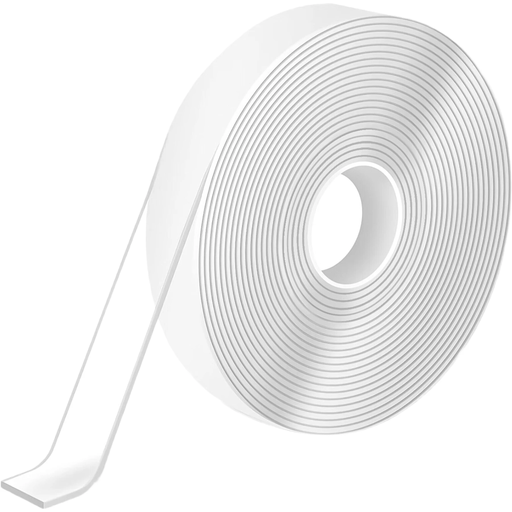
Why this choice fits: Its format suits small installations in a flat, office or car, particularly for picture frames, hooks and lightweight decorative items.
The product is described as removable, washable and reusable. Nevertheless, test the removal on an inconspicuous area and avoid fragile or heavily textured surfaces.
3 m roll, 1.3 cm width and 0.2 cm thickness according to the product sheet. The gel can be rinsed with water before being reused.
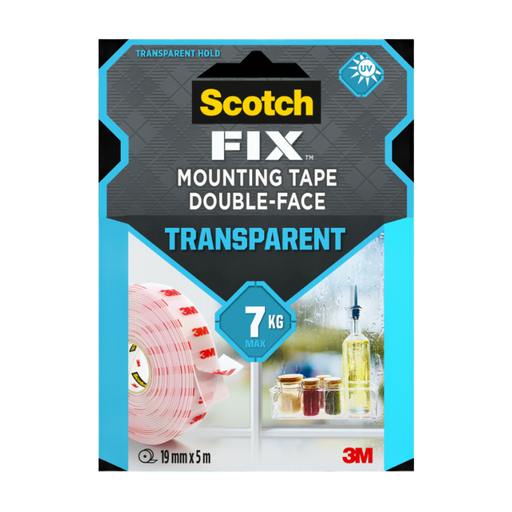
Why this choice fits: Its translucent colour is discreet when the tape needs to stay unobtrusive on glass, metal, tiles or a painted wall.
The product sheet states permanent adhesion and a load capacity of up to 7 kg. This model isn't the best choice if you plan to change your décor often.
5 m roll, 19 mm wide, with stated resistance to UV and heat. Still, check compatibility on a small area.
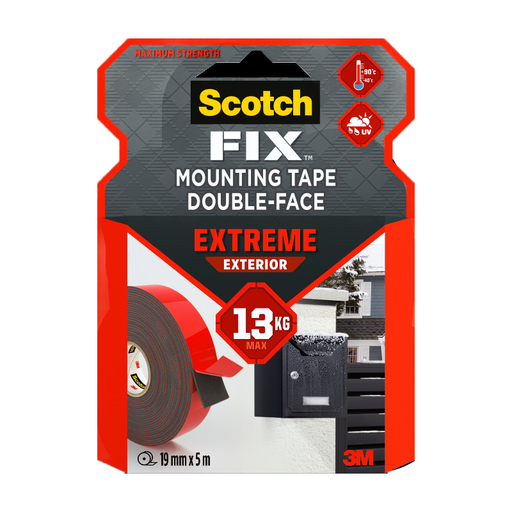
Why this choice fits: This outdoor tape is designed for decorations, signage and items fixed to structures exposed to rain, sun and UV.
The stated load capacity can reach 13 kg, but it depends on the surface and the length applied. Don't use it to fix an object that could injure someone if it falls off.
Black tape, 5 m long and 19 mm wide, described as weather-resistant, rain-resistant, sun-resistant and UV-resistant.
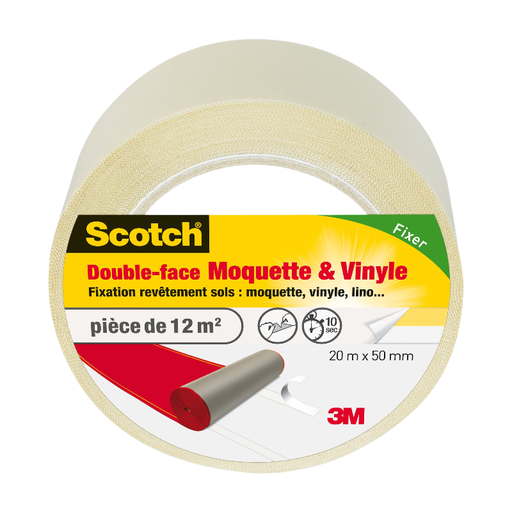
Why this choice fits: Its 50 mm width and 20 m length are suitable for laying carpet, vinyl and lino in a home or commercial space.
This tape is designed for floor coverings, not for wall fixing. The floor must be clean, dry, degreased and dust-free before application.
50 mm wide, 20 m long and described as hand-tearable for easier installation.
We've put together an up-to-date selection of products suited to different fixing, repair and installation needs.
On delicate surfaces, always do a preliminary test. In a car, on a painted wall or on a varnished piece of furniture, the tape's compatibility matters just as much as its adhesive strength.
Yes, some wall adhesives are designed for painted walls, provided the paint is well-adhered, dry and clean. A permanent tape can pull off a layer of paint when removed. If you're renting, go for a removable solution when the weight and surface allow it.
The lifespan varies depending on the product, exposure to UV, temperature changes, humidity, the load and the quality of the surface. A permanent outdoor tape or a bitumen tape may be designed to stay in place for a long time, whereas a washable nano tape is better suited to reusable and adjustable installations.
A waterproof repair tape or a bitumen tape is better for sealing and waterproofing than a standard wall adhesive. Tenax Mat Duo, for example, is described as a double-sided bitumen tape intended for sealing and water protection. However, check compatibility with the surface, the application temperature and that it won't be immersed for long periods before you buy it.