
Livraison le jour même ou le lendemain

Qualité garantie

Débloquez vos offres de bienvenue: Livraison GRATUITE | Jusqu'à -80 % | 30 jours d'essai gratuits à JoyPlus
Téléchargez l'application
An insulating door draught excluder helps to reduce draughts, dust, damp and, to some extent, noise. However, you need to choose a model that suits your needs: a poorly sized seal can obstruct the door, come unstuck quickly or let air through despite an appealing product description.
Before buying a door bottom seal, check three essential points: how even the floor is, the actual height of the gap to be filled and the fixing system. These criteria matter far more than the colour or marketing claims.
A rigid strip is generally suitable for a smooth floor, such as tiles, parquet or perfectly level laminate flooring. On a concrete slab, terracotta tiles or an uneven stone floor, it may leave gaps beneath the door.
In this case, it is better to choose a model fitted with soft brushes, a flexible membrane or an articulated profile that can compensate for differences in level. A seal for uneven floors should follow the contours of the surface without restricting the door’s movement.
A length of 80 or 93 cm does not mean that the product will automatically fit your door. Measure its width, then allow for a clean cut if necessary. Also check the height of the gap between the bottom of the door and the floor.
Depending on the model, product descriptions may state a closing capacity of up to 15, 20, 25, 27, 30 or 60 mm. This is the limit specified for a particular configuration, not a guarantee that it will be compatible with every door.
An adhesive door seal must be fitted to a clean, dry, degreased and sufficiently even surface. Dust, damp or flaking paint can significantly reduce adhesion.
For a long-lasting installation, a screw-fixed model is often preferable on a heavily used door. Conversely, an adhesive or magnetic fixing can be practical in a rented property, provided the surface is compatible.
A door draught excluder can be installed in seconds, but it is often less discreet and less practical in busy walkways. A profile fixed directly to the door generally provides a neater, better-integrated finish.
The right choice depends on the door, how frequently it is used and your drilling requirements:
A screw-fixed door bottom seal requires accurate measurements and careful drilling. On a front door or service door that is opened frequently, this fixing prevents the seal from gradually shifting.
Painted aluminium, rubber, transparent membrane and brushes do not respond to everyday use in the same way. A flexible strip is easy to clean with a damp cloth, while brushes tend to trap more dust.
The lifespans stated in product descriptions — five or ten years depending on the reference — correspond to the manufacturer’s indications. They may vary depending on the number of openings, the weight of the door, the type of floor and the conditions of use.
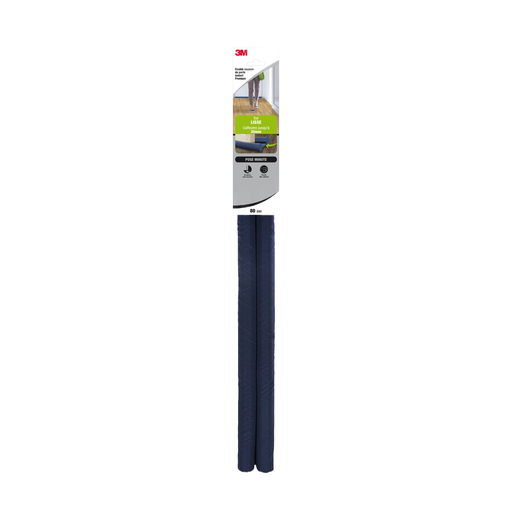
Why this choice suits this profile : its quick installation is ideal for an interior door or a property where you want to avoid building work. According to the product description, it is designed for smooth floors and gaps of up to 20 mm.
Its compatibility with smooth floors is clearly stated. This helps you avoid fitting it on a very uneven surface, where it could allow draughts through.
A length of 0.80 m and installation described as quick, with no drilling mentioned.
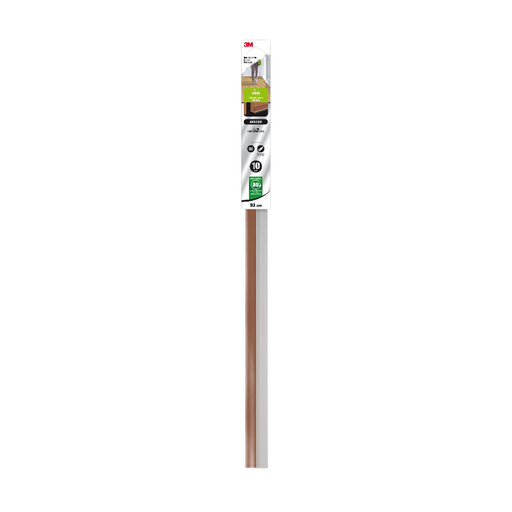
Why this choice suits this profile : this model combines a brown profile, a transparent strip and an adhesive fixing for a discreet finish on parquet, tiles or evenly laid laminate flooring.
The stated 15 mm limit is a reminder to measure the gap before ordering rather than assuming that the seal will fit every door.
A length of 93 cm, can be cut to size and a stated minimum lifespan of ten years according to the product description.
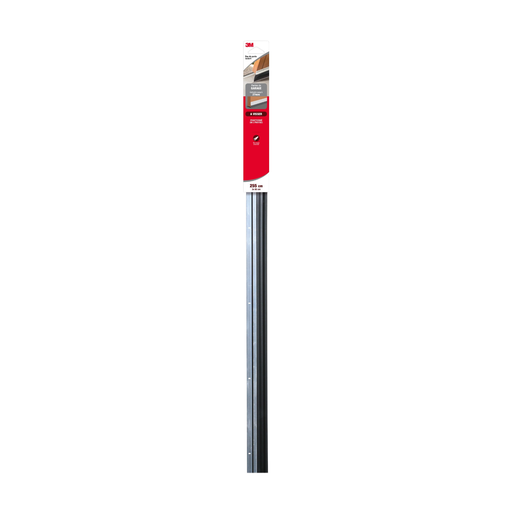
Why this choice suits this profile : its articulated aluminium profile and rubber flap are designed for garage doors exposed to dust, damp and uneven floors.
Its articulated design is intended to follow an uneven surface rather than forcing a rigid strip onto an irregular floor.
A stated capacity of up to 27 mm and a pack containing three 0.85 m pieces.
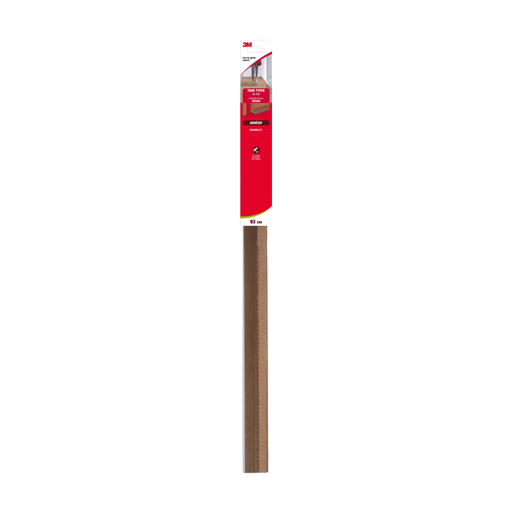
Why this choice suits this profile : its double row of brushes and thin membrane are designed for very uneven floors in a home, workshop or commercial premises.
It does not rely on a simple rigid strip : the brushes are designed to remain in contact with a very uneven surface.
A stated closing capacity of up to 30 mm and can be cut with a saw or scissors, according to the instructions.
We have put together a complete, real-time updated selection of products that meet these selection criteria as well as European safety requirements.
Good thermal insulation for a door also depends on the frame, sides and lock. If air is getting through around the frame, add a perimeter seal to complement the door bottom seal.
Choose a model with soft brushes, a flexible membrane or an articulated profile. Measure the maximum gap and select a product whose stated capacity covers it. For a garage door, also check its resistance to damp and dust.
Its lifespan depends on how the surface is prepared, the temperature, humidity and how frequently the door is opened. A clean, dry surface promotes good adhesion. In a high-traffic area, a screw-fixed door bottom seal will generally provide a more stable fixing.
No. A magnetic door bottom seal must be able to meet a metal plate or a surface compatible with its closing system. It is generally suitable for smooth floors and must be cut to the exact width of the door. Also check that the mechanism does not interfere with opening or closing.