
Same-day & Next-day Delivery

Quality Guaranteed

Unlock Your Welcome Offers: FREE Delivery | Up to 80% OFF | Free 30-day JoyPlus trial
Download the APP
An under-door draught excluder helps to limit draughts, dust and moisture seeping in under a door. But you need to choose the right model. Too short, and it will let air through at the sides; too thick, and it may rub against the floor, making the door difficult to open. The right choice depends mainly on the type of floor, the gap to fill and the fixing system — far more than on colour or price.
A door bottom seal that is too short leaves uncovered areas at the ends. Conversely, a model that is too thick can catch on the floor and make the door awkward to open or close. Measure the width of the door, but also the gap between its bottom edge and the floor, at several points.
The models shown here are mainly 80 or 93 cm. Some can be cut to fit a specific width. However, check the recommended tool: saw, scissors or craft knife, depending on the material.
A rigid lip draught excluder generally works well on a flat surface, such as tiles, wooden flooring, laminate or polished concrete. On an older floor, tiles with pronounced grout lines or a slightly uneven surface, a flexible lip or a double row of brushes will follow the variations better.
A door draught excluder designed for an uneven floor does not work the same way as one intended for a perfectly flat surface. Installing the wrong product can create air gaps and accelerate brush wear.
An adhesive door seal is convenient, especially in rented accommodation, as it avoids drilling. However, its hold depends directly on surface preparation. A dusty, greasy, damp door or one covered in flaking paint will quickly compromise adhesion.
For heavy use, a screw-on door draught excluder offers a more reliable mechanical fixing. Installation requires a bit more preparation, but this choice is justified for a front door, a commercial premises or a very frequently used passage.
These figures correspond to the capacities stated in the product specifications. They do not guarantee the same level of sealing on all doors: the flatness of the floor, the pressure exerted by the seal and the alignment of the door also play a role.
An adhesive fixing is quick to install, but requires a clean, dry and stable surface. Screws hold the profile better when the door is opened and closed several times a day. A magnetic system may suit some interior doors installed on a smooth floor, provided both contact surfaces are compatible.
For a lasting installation:
Regularly remove dust accumulated on the brushes or sealing lip using a damp cloth. If cutting is necessary, wear suitable gloves and hold the profile firmly. Rigid models should be kept out of reach of young children. Also avoid installing them near a significant heat source.
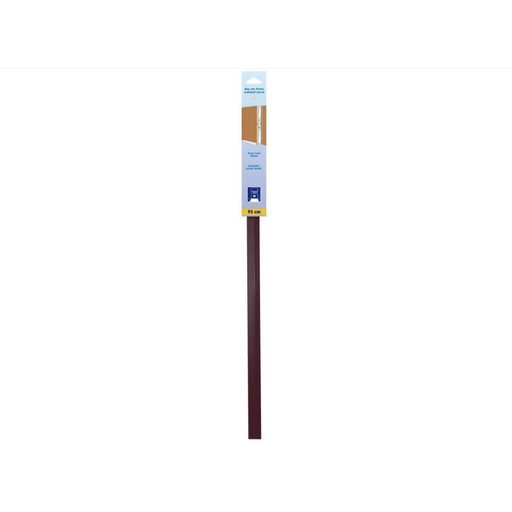
Why this choice suits this profile: This adhesive seal is easy to fit on a smooth floor, without drilling. Its 93 cm length can be adjusted to suit a standard door.
It avoids jumping into a too-complex installation for a first fit. The trade-off is that the surface must be perfectly clean and flat.
PVC profile, flexible lip, coverage stated up to 15 mm and 3M high-tack adhesive, according to the product sheet.
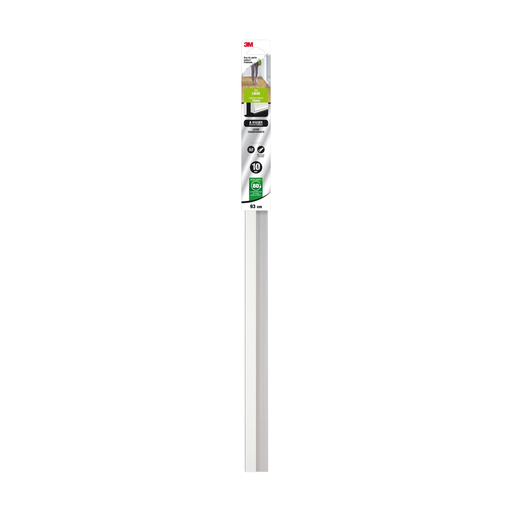
Why this choice suits this profile: This screw-on model combines a white profile with a transparent flap, for a discreet finish on a smooth floor.
The mechanical fixing reduces the risk of peeling due to imperfect surface preparation.
Screw fixing, can be cut with a saw and coverage stated up to 15 mm on a smooth floor.
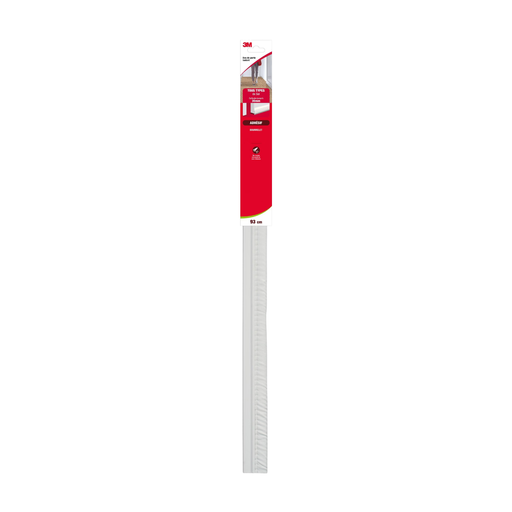
Why this choice suits this profile: Its double row of brushes and thin membrane are designed for very uneven floors, in a home or premises subject to repeated traffic.
It avoids the problem of a seal that is too rigid on an uneven floor. However, the adhesive must be applied to a sufficiently stable area.
Sealing stated up to 30 mm, flexible brushes and can be cut with a saw or scissors, according to the product sheet.
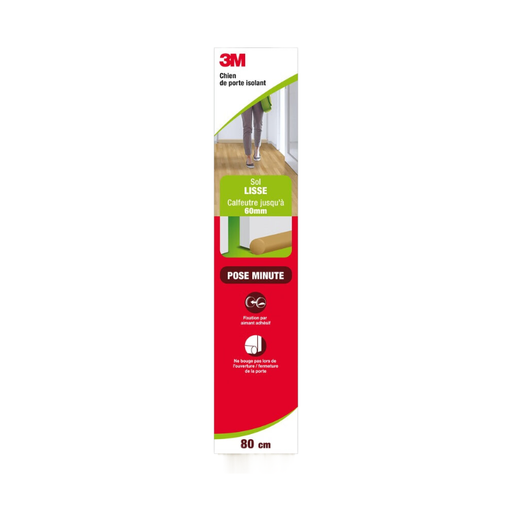
Why this choice suits this profile: It suits doors opening onto a smooth floor and users looking for a screw fixing with a white profile that is easy to adjust.
It avoids fitting a brush designed for an uneven floor on a flat surface, where a lip will provide more consistent contact.
Length of 93 cm, can be cut with a saw and coverage stated up to 15 mm on a smooth surface.
We have put together a comprehensive selection, updated in real time, of products meeting these demanding criteria as well as European safety regulations.
Thoroughly clean and dry the bottom of the door and the contact area. Measure, cut if necessary, then gradually apply the strip without stretching it. Apply even pressure along its entire length. On a textured or dusty surface, the adhesive fixing may not hold as long.
It depends on the material, frequency of use and friction with the floor. Some product sheets state a minimum lifespan of five years, while others mention a longer period for specific models. These indications remain dependent on the quality of installation and conditions of use. Regular cleaning limits dust build-up and premature wear.
It can limit draughts under a door and improve the feeling of thermal comfort. However, its effect on consumption depends on the overall insulation of the home, the heating system, ventilation and the airtightness of windows. An under-door draught excluder is therefore a targeted measure for door thermal insulation, not a substitute for a full energy renovation.