
Livraison le jour même ou le lendemain

Qualité garantie

Débloquez vos offres de bienvenue: Livraison GRATUITE | Jusqu'à -80 % | 30 jours d'essai gratuits à JoyPlus
Téléchargez l'application
A door draught excluder can reduce draughts, prevent dust from getting in and make a room more comfortable. However, you need to choose a model that suits the door. A poorly sized seal may come loose within a few days, scrape against the floor or let air through despite having been fitted recently.
Before ordering, check the type of flooring, the height of the gap beneath the door and the fixing method. These few criteria are generally enough to avoid unpleasant surprises.
The gap between a door and the floor may be just a few millimetres or several centimetres high. A model designed to cover a maximum gap of 15 mm will not properly block an opening of 25 or 30 mm. Conversely, a draught excluder that is too thick may make the door difficult to open and close.
Measure the gap at several points with the door closed. This is particularly important with older doors, where the door leaf or floor may not be perfectly straight.
A seal for smooth floors generally uses a flexible flap or profile that must remain in contact with a flat surface. On textured tiles, a warped wooden floor or a threshold with bumps and uneven areas, it may let air through in places.
In this case, a door draught excluder with double brushes will follow changes in the floor more effectively. The brushes remain flexible enough to adapt to uneven surfaces, while an additional membrane helps limit the entry of air, dust or moisture.
The lifespan of a door draught excluder also depends on how the surface was prepared, how often the door is used and the amount of friction. An adhesive door draught excluder fitted to a dusty or greasy surface may come loose well before the stated lifespan. Screw-fixed models require a little more work, but generally provide a more reliable hold when the surface is suitable.
Claims about lifespan or reducing airflow are based on tests carried out under specific conditions. It is better to treat them as product information rather than a guarantee that applies in every home.
Start by examining the surface beneath the door:
Most models are 80 or 93 cm long. A standard door may therefore need to be trimmed. Check whether the seal can be cut with a saw, scissors or a utility knife. Also wear suitable gloves during this operation.
An adhesive door draught excluder is the simplest solution for quick installation without drilling. It is best suited to clean, dry and smooth surfaces. Before fitting it, carefully degrease the area, allow it to dry and then apply even pressure along the entire length.
A screw-fixed door draught excluder requires careful positioning and a few tools, but offers a more durable fixing. It is a sensible choice for a door that is used frequently or where adhesive does not bond well to the material.
A magnetic model attaches itself to a metal plate or magnetic surface. Make sure the door has the required configuration and that there is enough available space before buying.
The product information should specify the maximum gap the seal can cover. Several of the models featured below claim coverage of up to 15 mm, while a magnetic model reaches up to 60 mm. These figures do not remove the need to measure on site: the door must be able to open and close without force, and the seal must not create excessive resistance.
To improve a door’s thermal insulation, contact with the floor should be continuous but not overly compressed. A seal that is too tight will wear out more quickly and may make the door difficult to operate.
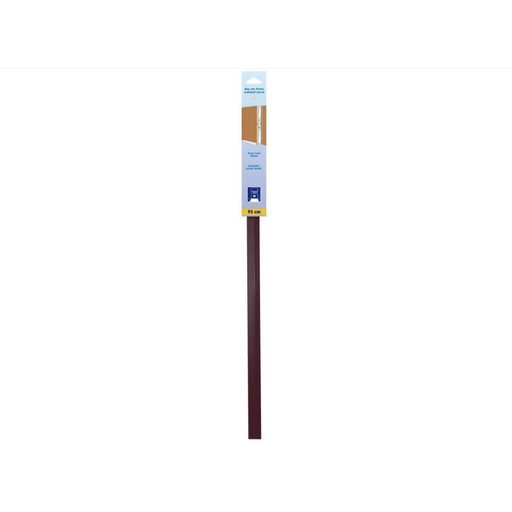
Why this choice suits this profile : Its adhesive fitting and 93 cm length make it a straightforward option for a first installation on a smooth indoor floor.
The product information confirms its suitability for smooth floors and coverage of gaps up to 15 mm, making it easy to check whether it is suitable before ordering.
PVC profile, high-adhesion adhesive as stated in the product information, and can be trimmed to fit the width of the door.
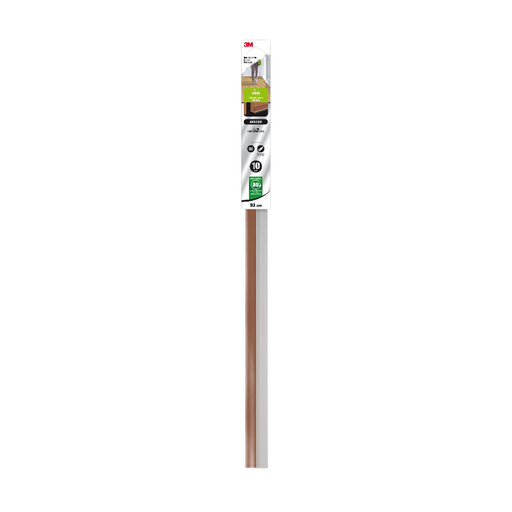
Why this choice suits this profile : This model combines a discreet brown profile, a transparent flap and adhesive fitting designed for smooth floors.
The product information clearly distinguishes smooth floors and specifies cutting with a saw, helping you avoid attempting an unsuitable installation on an uneven surface.
Coverage stated up to 15 mm, 93 cm length and a flap that can be cleaned with a simple damp cloth.
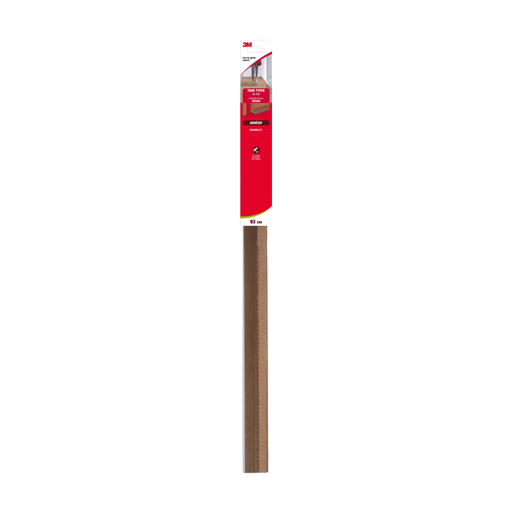
Why this choice suits this profile : Its design for very uneven floors makes it suitable for older doors, pronounced thresholds and rooms where the floor has significant variations.
It does not rely solely on a rigid flap : its double row of brushes is designed to follow more pronounced uneven surfaces.
Coverage stated up to 30 mm, a slim membrane and can be adjusted with a saw or scissors, according to the product information.
We have brought together a complete, up-to-date selection of products that meet these criteria and European safety requirements.
For adhesive fitting, follow these steps in order:
With a screw-fixed model, check that the door can be drilled and choose screws suitable for the material. The seal should touch the floor evenly without obstructing the door’s movement.
Regular cleaning with a damp cloth is enough to remove accumulated dust. Avoid abrasive products on the flaps and check the condition of the adhesive, brushes and fixings from time to time.
Choose a model fitted with soft brushes or one that clearly states that it is suitable for uneven floors. You should still measure the gap to be covered : a brush designed for 15 mm will not necessarily be suitable for a 30 mm gap.
Its staying power depends on the cleanliness, flatness and degreasing of the surface, as well as the number of times the door is opened each day. For a door that is used frequently, a screw-fixed model may provide a more secure fixing. Check the stated lifespan in the product information, bearing in mind that it depends on the conditions of use.
Yes, provided it is correctly sized and remains in good contact with the floor. The result depends on the height of the gap, the floor covering, the quality of the installation and other air leaks in the property. A door draught excluder cannot replace repairing faulty joinery or a damaged threshold.