
Same-day & Next-day Delivery

Quality Guaranteed

Unlock Your Welcome Offers: FREE Delivery | Up to 80% OFF | Free 30-day JoyPlus trial
Download the APP
Even in a properly insulated home, a door can let in cold air, dust, moisture and some ambient noise. A 3M draught excluder helps to limit these draughts, provided you choose a model suited to the type of flooring, the gap beneath the door and your preferred fitting method.
Before placing your order, three mistakes are particularly common: relying solely on the stated length, fitting a profile designed for a perfectly smooth floor on an uneven surface, or overlooking preparation of the mounting surface. Here are the criteria to consider when choosing the right door bottom seal for your home.
A 93 cm draught excluder is suitable for many standard doors, but you should always measure the actual width of the opening. A profile that is too long can be neatly trimmed. However, a model that is too short will not cover the full width and will allow air to enter at the sides.
Profiles with flexible lips adhere properly to tiles, varnished parquet, laminate, PVC or polished concrete. By contrast, rough natural stone, unfinished paving or an uneven threshold can leave uncovered areas.
In this case, it is better to choose a door seal for uneven floors, generally fitted with brushes or a more flexible membrane.
An adhesive draught excluder will not work miracles on a dusty, greasy or damp surface. The adhesive may gradually come away, particularly on a frequently used door. Depending on the model, the floor or bottom of the door must be clean, dry and sufficiently smooth.
This is the first point to check:
A door seal for smooth floors is generally discreet. Brush models are better suited to garages, workshops, cellars or doors leading onto a patio.
Measure the space between the bottom of the door and the floor with the door closed. The products featured here generally cover gaps of 15 to 30 mm. Depending on its specifications, a specific magnetic model can cover up to 60 mm.
A lip that is too short will let air through. Conversely, a profile that is too thick may rub against the floor and make the door harder to open. The aim is therefore to find the right balance between sealing, smooth operation and resistance to wear.
Information about service life, the number of opening and closing cycles or the warranty is provided by the manufacturer. It cannot guarantee the same results in every home.
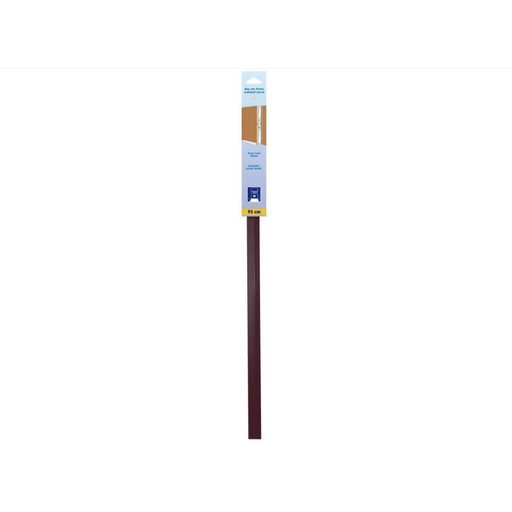
Why this choice suits this profile: At 93 cm, with adhesive fixing, this model is suitable for simple installation on smooth flooring in a bedroom, home office or hallway.
Its product details state that it is compatible with smooth surfaces and can cover a gap of up to 15 mm. A safer choice than a model described as universal.
A rigid PVC profile with a flexible lip, high-tack 3M adhesive and a length that can be trimmed to suit your needs.
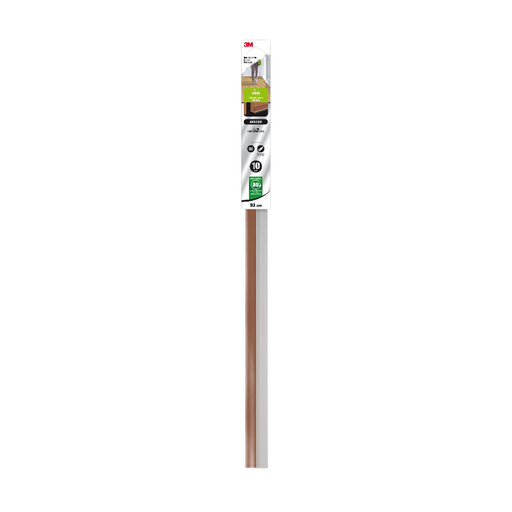
Why this choice suits this profile: This model is ideal for anyone looking for a discreet finish and adhesive installation on an even floor, with no visible screws.
Its suitability for smooth floors is clearly stated, as is its advertised coverage of up to 15 mm. This helps avoid a risky installation on a very uneven threshold.
A brown housing with a transparent flap, a 93 cm length that can be trimmed and adhesive designed for durable fixing, according to the product details.
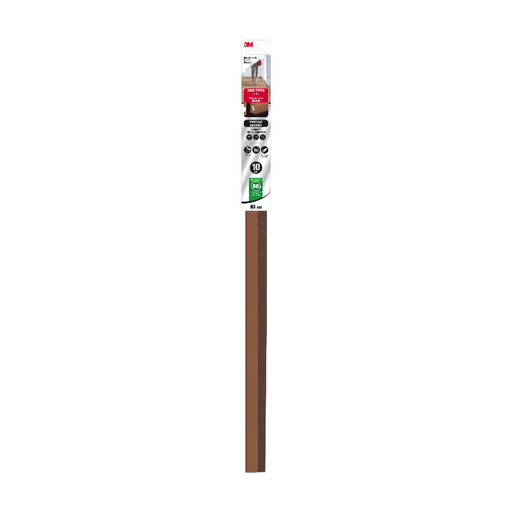
Why this choice suits this profile: Its design is intended for entrance doors, garages and workshops exposed to very uneven floors, dust or moisture.
It is designed to compensate for a gap of up to 25 mm and follow an uneven surface, unlike a simple lip intended for flat floors.
A brush profile that can be trimmed, with adhesive fixing. The product details state that it can withstand up to 75 000 opening and closing cycles.
For adhesive fixing, avoid flaky paint, damp surfaces and heavily textured materials. If you are a tenant, also check that removing the adhesive will not leave marks on the door or floor.
We have put together a comprehensive, regularly updated selection of products that meet these exacting selection criteria and European safety standards.
Check three things: the door width, the height of the gap and the type of surface. An adhesive model is generally suitable for a smooth floor that is clean and dry. For unfinished concrete, uneven stone or a heavily textured surface, choose a brush profile designed for this type of floor.
A correctly sized seal can limit the passage of air, dust and light beneath the door. It can also reduce some noise coming through the bottom of the door. However, the result depends on the door assembly as a whole, the quality of the walls and the installation. Any percentages mentioned in product details are based on the manufacturer’s data and do not constitute a guarantee applicable to every home.
Service life depends on the material, frequency of use, friction against the floor and maintenance. Depending on the version, the featured models claim a service life of at least five to ten years or a specified number of cycles. Inspect the lip or brushes regularly: if they become deformed, come away or no longer make proper contact with the floor, you may need to replace the door seal.