
Same-day & Next-day Delivery

Quality Guaranteed

Unlock Your Welcome Offers: FREE Delivery | Up to 80% OFF | Free 30-day JoyPlus trial
Download the APP
A poorly chosen door bottom seal can let almost as much air through as an unprotected door, while rubbing against the floor every time the door opens. For an entrance door, garage, workplace, or lightly heated room, a screw-on 3M door bottom seal provides a durable fixing solution—provided you check a few key points before ordering.
This 2026 selection is intended for homeowners, tenants, and DIY enthusiasts looking for a 93 cm 3M door bottom seal, which can be trimmed to fit their door width and cover a gap of up to 15 mm, depending on the model.
A simple flexible strip can work perfectly well on tiles or level wooden flooring. On a floor with grout lines, a slight slope, or other irregularities, however, it may not remain in contact with the entire surface.
In this situation, an insulating door brush seal is more forgiving. Models with two rows of brushes combined with a fine membrane follow changes in floor level more effectively without requiring a perfectly horizontal surface.
A 93 cm door bottom seal will not necessarily fit every door as supplied. Start by measuring the usable width, then check that the profile can be trimmed with a saw. Cutting it too short would leave gaps at the sides, allowing air and dust to continue to enter.
Before ordering, measure the lower section of the door, taking into account any door frames, skirting boards, and stops.
Adhesive models are quick to install, but their hold depends heavily on surface cleanliness, the door’s texture, and temperature fluctuations. A screw-on door bottom seal requires a little more preparation, but its mechanical fixing is generally more reliable for everyday use.
Screw fixing must nevertheless be suitable for the door material. For a hollow-core door, use an appropriate fixing method and make sure the selected or supplied screws cannot pass through the panel.
On a smooth floor—regular tiling, level wooden flooring, or correctly installed vinyl—a transparent flexible strip can provide continuous contact. 3M models designed for smooth floors are marketed as suitable for covering gaps of up to 15 mm beneath the door.
If the floor is uneven, choose a model with a double row of brushes, optionally combined with a membrane. This design follows changes in floor level more effectively and helps provide protection against drafts, dust, and certain noises caused by air movement. It cannot, however, turn a standard door into a fully effective acoustic insulation solution.
Measure the gap between the bottom of the door and the highest point of the floor. Take measurements at several locations, especially if the door opens onto older tiling, a threshold, or a slightly sloping floor.
The models presented here are specified as covering gaps of up to 15 mm. This figure represents their design limit: beyond that, you may need to adjust the door or consider another threshold solution.
Aluminium provides a rigid profile that can easily be trimmed with a saw to adjust its length. White versions generally coordinate with light-coloured doors, while a brown screw-on door bottom seal blends more discreetly with dark wooden doors.
Colour primarily affects visual integration. On its own, it does not indicate the product’s insulation performance or service life.
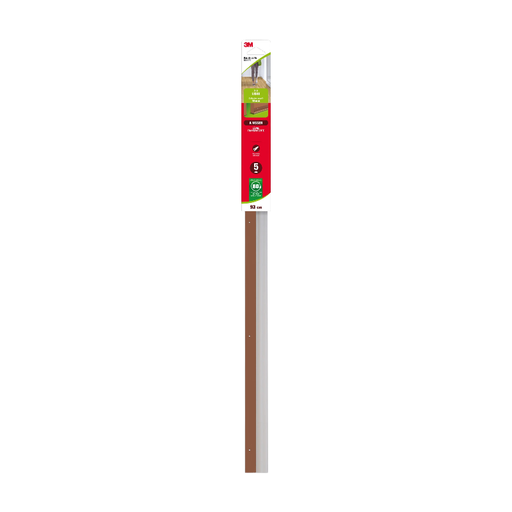
Why this choice suits this profile: this brown model is suitable for doors installed on smooth floors, particularly in entrances, utility rooms, or offices.
It is secured with screws and can be trimmed to the required length, avoiding the need to replace the entire door.
93 cm length, adjustment for gaps of up to 15 mm, and an advertised reduction in airflow of up to 80% according to the product listing.
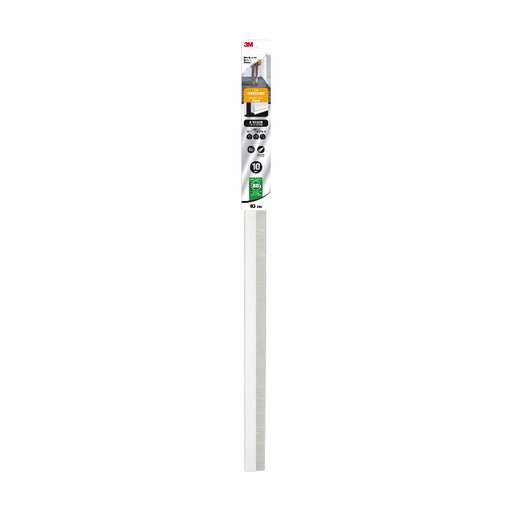
Why this choice suits this profile: its white finish pairs well with light-coloured doors, while its design is intended for uneven floors.
Its two rows of brushes and fine membrane are designed to follow irregularities more effectively than a simple rigid strip.
Aluminium profile, concealed screw fixing, saw-trimmable length, and advertised coverage of up to 15 mm.
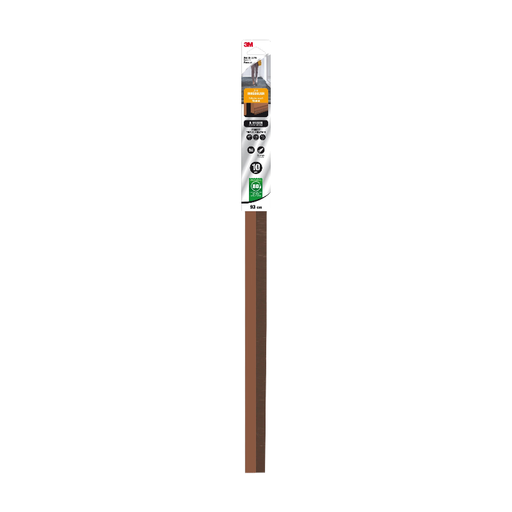
Why this choice suits this profile: its brown colour complements wooden doors and areas with frequent foot traffic.
The combination of brushes and membrane is suited to uneven floors, while the screw fixing helps prevent the profile from shifting.
0.93 m length, coverage of up to 15 mm, and a service life of more than 10 years stated in the manufacturer’s product listing.
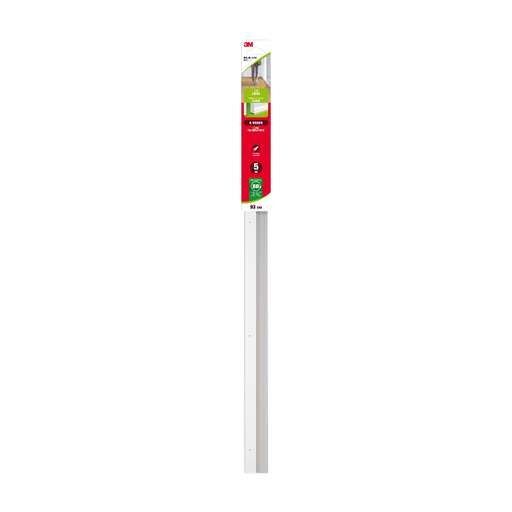
Why this choice suits this profile: this white door bottom seal blends easily with a light-coloured door installed on a regular surface.
It is intended for smooth floors, so there is no need to expect a flexible strip to compensate for an uneven surface.
Transparent strip, can be cut with a saw, screw fixing, and advertised adjustment for gaps of up to 15 mm.
Do not install these products without checking first on a door that opens outwards, especially if the profile could catch on the threshold or floor.
Yes, a 93 cm model is suitable for a door of this width when correctly installed. For a narrower door, most of the models presented can be trimmed with a saw. Always measure the actual width before cutting.
Choose an uneven-floor door seal with a double row of brushes and a fine membrane. This structure is designed to follow changes in floor level more effectively. On a perfectly flat surface, a smooth-floor door seal fitted with a transparent strip will generally be more suitable.
It can help limit the passage of air, dust, and certain noises coming from the space beneath the door. Results nevertheless depend on the height of the gap, the evenness of the floor, the quality of the installation, and the door’s overall condition. This is a targeted solution for protection against dust and noise, not a complete acoustic treatment for the room.