
Livraison le jour même ou le lendemain

Qualité garantie

Débloquez vos offres de bienvenue: Livraison GRATUITE | Jusqu'à -80 % | 30 jours d'essai gratuits à JoyPlus
Téléchargez l'application
Repairing a piece of furniture, attaching fabric, securing a decoration or removing an old layer of paint does not necessarily require a fully equipped workshop. With the right DIY tools, a few suitable accessories and carefully checked specifications, many everyday jobs become much easier to tackle.
Even so, choosing the right tool deserves a little attention. Some devices offer high power without specifying their adjustment options, while others promise generous battery life but use consumables that are difficult to find. Here are the key points to check before placing your order, along with a selection suited to different uses.
For a hot-air gun, high power can speed up heating, but it does not guarantee precise operation. Without temperature or airflow adjustment, the tool may be too aggressive on plastic, vinyl or certain decorative materials.
Conversely, a device with a wide adjustment range is suitable for more tasks, including light paint stripping, fitting heat-shrink tubing and arts and crafts. So check the available temperatures, airflow and supplied nozzles.
A stapler designed for fabric and wood will not necessarily accept every type of staple. Check the format recommended by the manufacturer — here, type 53 — along with the compatible lengths. A staple that is too long may pass through a thin material, while one that is too short may not provide a sufficiently secure hold.
The same principle applies to glue guns. The diameter of the glue sticks must match the loading mechanism. The models featured here use 7 mm sticks, a common size for DIY tools and small craft projects.
A manual tool that is difficult to operate will quickly tire your hand when you are attaching fabric or decorating furniture. With a heated model, check the nozzle temperature, stand stability and automatic shut-off before judging the device by its price or appearance.
You should also use a stable surface, keep your fingers away from the outlet area and allow accessories to cool after use. A child should only use a heated tool under the direct supervision of an adult.
If you want to work away from a power socket, choose a USB-C rechargeable glue gun. In particular, check:
A stated runtime of “up to 60 minutes” will generally depend on how often the tool is used and the working conditions. Treat it as an indicative figure.
For a manual staple gun, the loading system, staple compatibility and force required to operate it are the key priorities. An anti-jamming mechanism and quick-release magazine can also make repetitive tasks easier.
Manual staplers are particularly suitable for attaching fabric, light upholstery, thin panels and certain decorative projects. They are not a substitute for an electric or pneumatic stapler when working with thick materials or handling large quantities.
A 2000 W heat gun can be used for many tasks, provided you can adjust the temperature and airflow. A range from 50 to 600 °C, such as the one stated for the Cecotec model, covers a variety of uses. However, every material must be treated with care.
Nozzles also play an important role: a wide nozzle spreads the heat, a concentrated nozzle directs it at a precise area, and a reflector nozzle can assist with certain jobs involving particular shapes. Wear suitable protective equipment and work in a properly ventilated area.
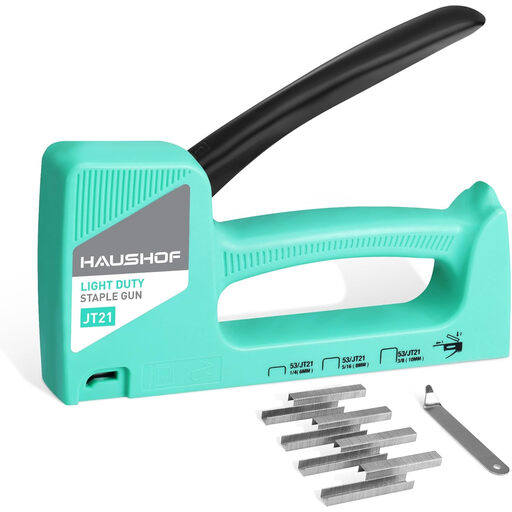
Why this choice suits this profile : This ready-to-use kit is ideal for small decorating, fabric and woodworking projects, and includes 800 8 mm staples.
Compatibility with type 53 staples is clearly stated, helping you avoid buying unsuitable consumables.
PC and ABS construction, anti-jamming mechanism, quick-release magazine and staple remover included.
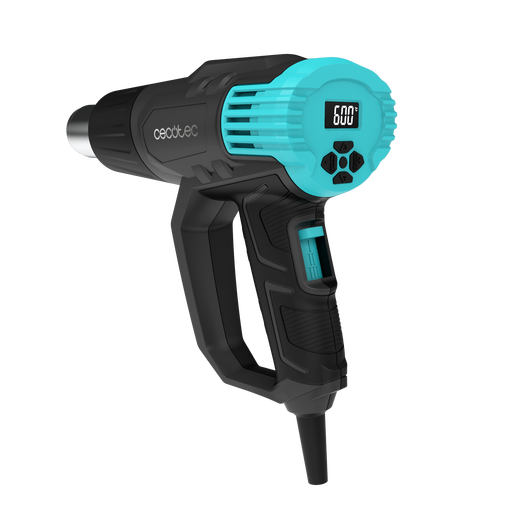
Why this choice suits this profile : Its digital display and separate controls are designed for users who want to adjust their hot-air gun precisely.
The temperature can be adjusted from 50 to 600 °C and the airflow from 200 to 500 l/min, according to the product information.
Stated power of 2000 W, four interchangeable nozzles, LCD screen and carry case.
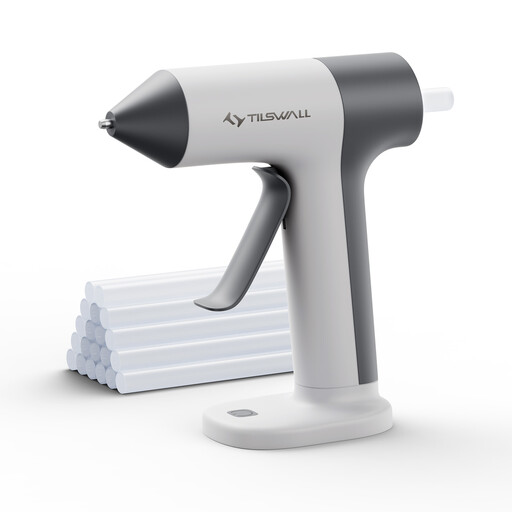
Why this choice suits this profile : Cordless, compact and rechargeable, it makes it easy to move between different work areas or work on projects away from a power socket.
Its 2000 mAh battery, five-minute inactivity shut-off and safety base meet the demands of regular use.
Warm-up stated at 30 seconds, runtime of up to 60 minutes, anti-drip nozzle and 20 7 mm sticks supplied.
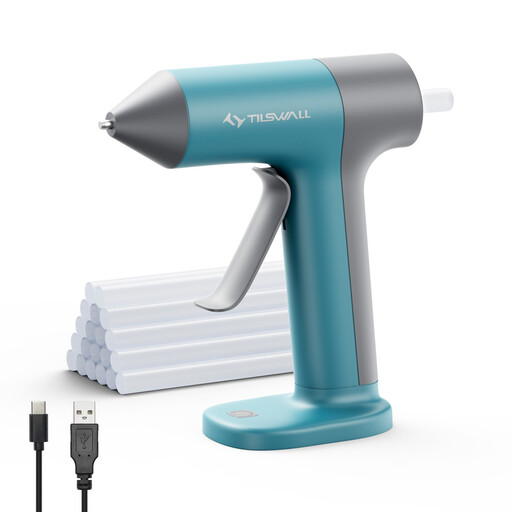
Why this choice suits this profile : Its lightweight design and USB-C charging make it ideal for scrapbooking, seasonal decorations and small household repairs.
The 7 mm diameter, included USB-C cable and stated automatic shut-off after five minutes are clearly specified.
Warm-up stated at 30 to 60 seconds, runtime of up to one hour, precision nozzle and 20 sticks included.
Before each use, check the condition of the cable, battery, charger and moving parts. For heated tools, remove residue from the nozzle while it is still warm, using a dry cloth, and never touch it directly with your skin. Never immerse a rechargeable device in water.
Store glue sticks, staples and DIY accessories in a dry place. With a stapler, empty the magazine before storing it for a prolonged period. For a cordless tool, follow the manufacturer’s charging recommendations and avoid leaving it switched on unattended.
A cordless glue gun is suitable for light assembly, decorations and quick repairs. For fabric or upholstery, a type 53 manual stapler will be more suitable. The right choice therefore depends above all on the material you are working with, rather than the number of advertised features.
The cost of use depends mainly on the price of the glue sticks and the quantity consumed. An anti-drip nozzle can help reduce waste, while a model supplied with several sticks lets you get started without needing to buy more straight away. USB-C charging also avoids the need to buy disposable batteries when the integrated battery is designed for this purpose.
Start with the lowest setting suitable for the task, keep the tool moving and test it on an inconspicuous area. Paint, plastic, vinyl and heat-shrink tubing do not all react in the same way. The stated maximum temperature should therefore not be used as the default for every project.