
Livraison le jour même ou le lendemain

Qualité garantie

Débloquez vos offres de bienvenue: Livraison GRATUITE | Jusqu'à -80 % | 30 jours d'essai gratuits à JoyPlus
Téléchargez l'application
A glue and glue gun can make many repairs, decorating tasks and creative activities much simpler. But you need to choose the right equipment. A poorly thought-out purchase can quickly lead to messy drips, disappointing adhesion, or a glue gun that’s unusable because of incompatible sticks.
Before you place your order, start by identifying your needs: quick bonding of lightweight materials, a repair requiring high strength, use away from a power socket, or attaching labels to clothing and other textiles.
A 7 mm hot glue stick won’t fit every glue gun. Standard electric models often use 11 mm sticks. The length affects how long you can work between refills, but it never lets you off checking the diameter.
Buying a bulk pack of hot glue sticks without checking this point could leave you with a completely unusable supply.
Hot-melt adhesive is quick and convenient for paper, cardboard, certain decorations, wood, and assemblies that aren’t under much strain. However, it isn’t necessarily suitable for a part exposed to water, oils, temperature changes, or significant force.
For uneven surfaces or a repair that needs to last, a clear epoxy glue can be a better choice. Just check its compatibility with the material and follow the curing time carefully.
A cordless hot glue gun is easier to move around, but its battery life depends on the battery capacity, the heating time, and how quickly you work. A rechargeable model is handy for occasional decorating or a repair in a room without a socket. In a workshop where you’re working in one spot for a long time, an electric glue gun will often be simpler and more comfortable.
Also look out for an automatic shut-off, a stable stand, and a nozzle designed to minimise drips.
Hot glue is generally suitable for craft projects, cardboard, paper, certain types of wood, cork, and decorative items. Surfaces must be clean, dry, and free from any dust or grease.
A two-part epoxy resin can be considered for glass, ceramic, metal, stone, wood, and some plastics. The LOCTITE products shown here state they are incompatible with polyethylene (PE), polypropylene (PP) and PTFE. You must check this restriction before application.
A glue gun isn’t for labelling clothes. In a shop, warehouse or stockroom, a textile tagging gun uses a needle and fasteners to attach a label to a garment, shoe or other textile item. Check the fineness of the needle, the smoothness of the mechanism, and the availability of replacement needles.
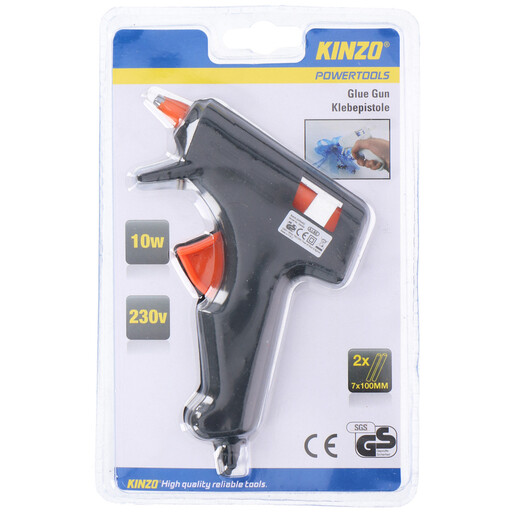
Why this choice suits this profile: This corded 10 W model is ideal for everyday small repairs, decorations and craft activities carried out near a socket. Two sticks of 7 × 100 mm are included.
The power, voltage and kit contents are clearly stated, reducing unpleasant surprises from the very first use.
A compact design, 230 V power supply and stated compatibility with several common DIY materials.
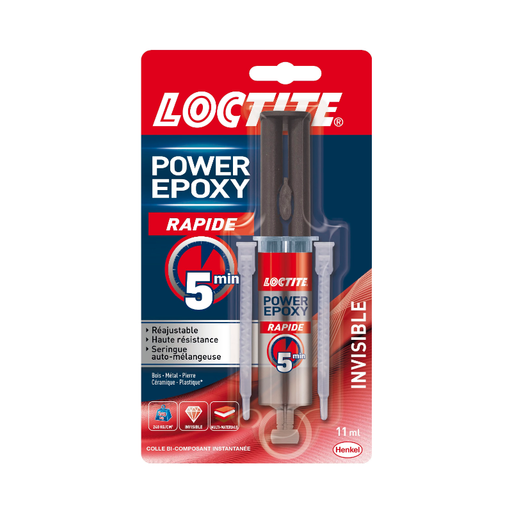
Why this choice suits this profile: Its 11 ml self-mixing syringe is ideal for precise repairs, assemblies that need to fill gaps, and projects where a clear finish is desired.
The product page specifies the 5-minute setting time and the incompatible materials: PE, PP and PTFE.
A clear epoxy formula, automatic mixing during application, and the stated ability to fill certain gaps.
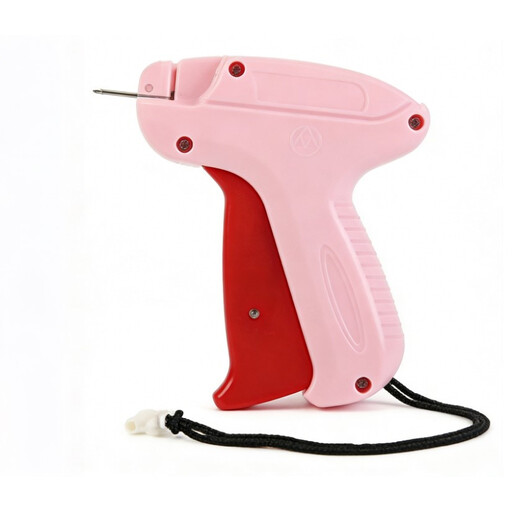
Why this choice suits this profile: This textile tagging gun is designed for shops, workshops, warehouses and users who regularly attach labels to clothing or other textiles.
It does not replace a glue gun: its purpose is clearly for attaching labels with compatible nylon needles.
A trigger mechanism, a steel needle stated to be rust-resistant, and a pack including 1,000 tagging needles.

Why this choice suits this profile: Rechargeable via USB-C, it’s perfect for creations, repairs and packaging done in multiple rooms or away from a power socket.
The stated battery life, preheat time and 7 mm stick size are all specified before purchase.
A 2,000 mAh battery, preheat stated at 30 seconds, automatic shut-off after 5 minutes of inactivity, and 20 sticks included.
We’ve put together a comprehensive, real-time updated selection of products that meet these demanding criteria, while complying with European safety regulations.
Hot glue bonds quickly, but the time varies depending on the amount applied, the materials used and their temperature. Hold the pieces in place for a few moments, then avoid putting them under significant strain until they have cooled completely.
Hot glue is melted by the gun, then cools to form a bond. 5-minute strong glue, usually epoxy-based, relies on mixing two components and requires a setting time, followed by a longer curing period. It can be suitable for filling a gap between two surfaces, provided you check compatibility with the materials.
They are generally best stored away from heat, humidity and direct light. Before using them, make sure they are not deformed or covered in dust, and that they match the diameter of your glue gun.