
Livraison le jour même ou le lendemain

Qualité garantie

Débloquez vos offres de bienvenue: Livraison GRATUITE | Jusqu'à -80 % | 30 jours d'essai gratuits à JoyPlus
Téléchargez l'application
A constantly wet countertop, a teetering pyramid of dishes, that permanent mess that takes over the sink area... Choosing a dish rack seems simple, but the wrong model can quickly turn this daily chore into a real headache. As a product specialist at Joybuy, I sift through customer reviews to identify the flaws that cause daily frustration and guide you toward the right choice.
Before you decide, watch out for these three common traps that can render a dish rack useless in just a few months:
To avoid falling into these traps, focus on a few technical criteria that truly make a difference.
A good dish rack must be practical, durable, and suited to your kitchen. Here are the essential points to check before you buy.
The choice of material has a direct impact on your dish rack's durability and maintenance.
This is the most overlooked detail, yet it's crucial. A good drainage system is active, not passive. Forget flat trays where water stagnates. The best-performing models integrate one of these two solutions:
The size of your household and your habits will determine the ideal configuration.
Rather than an endless list, we've selected specific models for concrete needs. Find the one that's made for you.
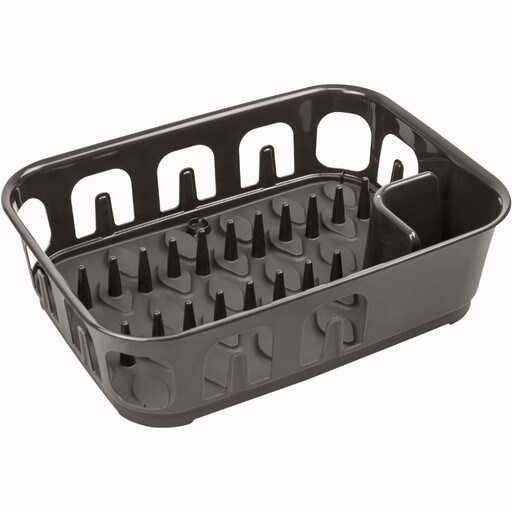
Why this model works: Perfect for a student or a single person. Its square and compact design (39.1 x 29.0 cm) fits easily on the smallest countertops without sacrificing the essentials: space for plates, cups, and an integrated cutlery holder.
Made of plastic (polypropylene), it completely eliminates the risk of rust, a classic pitfall of low-end metal models. Its single-piece structure ensures good stability for a small load of dishes.
Compact and functional design. Dishwasher-safe for simplified maintenance.
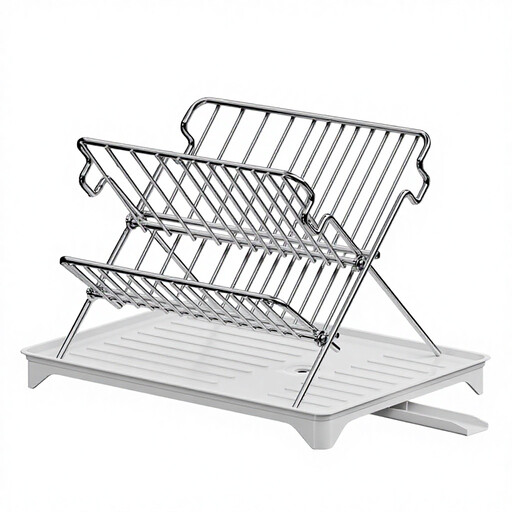
Why this model works: Its two-tier structure maximises drying capacity without cluttering the countertop, ideal for a family's worth of dishes. It's also foldable, a real plus for freeing up space when needed.
It counters two major problems: instability, thanks to its reinforced structure, and drainage, with an integrated pipe that channels water directly into the sink. The combination of stainless steel and PP plastic ensures its resistance to moisture.
Large vertical capacity and a foldable function for optimal space-saving.

Why this model works: For those who make no compromises on hygiene. This single-tier model is designed around its drainage system, featuring a removable tray and a rotating drainage spout to adapt to your sink's configuration.
It brilliantly solves the stagnant water trap with its active drainage system. The PP tray can be removed and cleaned in a flash, preventing limescale buildup. Its single-piece stainless steel structure ensures perfect stability.
Ultra-efficient rotating drainage system and a removable tray for simplified cleaning.
Discover our complete selection of dish racks that tick all the right boxes: quality, durability, and safety.
A weekly cleaning is ideal. Use hot, soapy water or a diluted white vinegar solution, which is highly effective against limescale. For a stainless steel dish rack, avoid abrasive sponges that could scratch the surface and promote rust. If your plastic model is compatible, a run through the dishwasher is the easy solution. The golden rule: if your dish rack doesn't have automatic drainage, remember to empty and dry its tray every day.
Absolutely. The term "stainless" means it resists oxidation, not that it's immune to it. The quality of the alloy makes all the difference. Low-grade steel, fragile welds, or simple scratches are all entry points for corrosion, especially in an environment as humid as a kitchen. That's why the 304 stainless steel designation is a true guarantee of durability.
A countertop dish rack, with one or two tiers, is placed on the work surface to dry a large quantity of dishes. A sink organiser, on the other hand, is a small accessory (basket, holder) that fits directly in or on the edge of the sink. Its role is to keep your cleaning supplies (sponge, brush, washing-up liquid) within reach to declutter the countertop. Its drying capacity is therefore minimal. The two are actually very complementary.