
Livraison le jour même ou le lendemain

Qualité garantie

Débloquez vos offres de bienvenue: Livraison GRATUITE | Jusqu'à -80 % | 30 jours d'essai gratuits à JoyPlus
Téléchargez l'application
An always-damp countertop, stubborn limescale stains, a precarious pile of dishes... Choosing a dish rack might seem trivial, but the wrong model can quickly turn this everyday accessory into a real headache. Many promise a perfectly tidy kitchen but hide design flaws that only become apparent with use.
To avoid making the wrong choice, it's best to know the most common pitfalls. Some racks rust despite being labelled "stainless steel," others drain poorly and lead to stagnant puddles, and some are simply too flimsy to support the weight of your plates. This guide breaks down the essential criteria for choosing a dish rack that is both functional and durable, helping you maintain a clean and organised kitchen.
To avoid disappointment, focus on the features that truly make a difference in the performance and longevity of a dish drainer.
The choice of material is crucial for your dish rack's lifespan and maintenance.
Good water drainage is the secret to a countertop that stays dry and clean. The dish rack with a drainboard is a classic, but not all drainboards are created equal.
The ideal capacity will obviously depend on the size of your household and the amount of dishes you use daily.
We have selected a few models that stand out for their smart design and durability, each catering to a specific need.
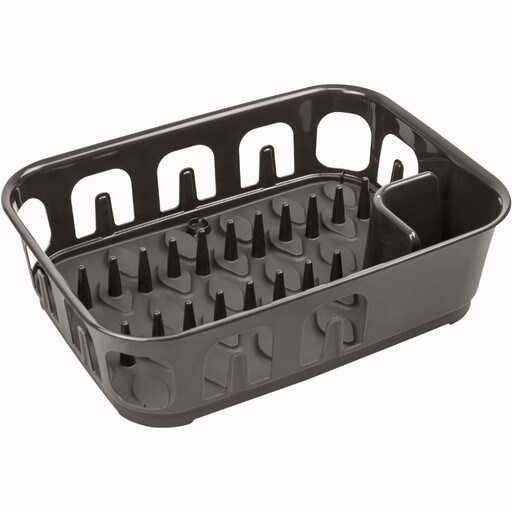
Why it's a great choice: Perfect for a single person or a couple, its compact size fits even on the smallest countertops. It holds daily dish essentials without ever feeling cluttered.
Made of polypropylene, it will never rust. Its simple yet effective single-piece construction ensures perfect stability for the dishes it's designed to hold.
Compact, lightweight, and dishwasher-safe for effortless cleaning.
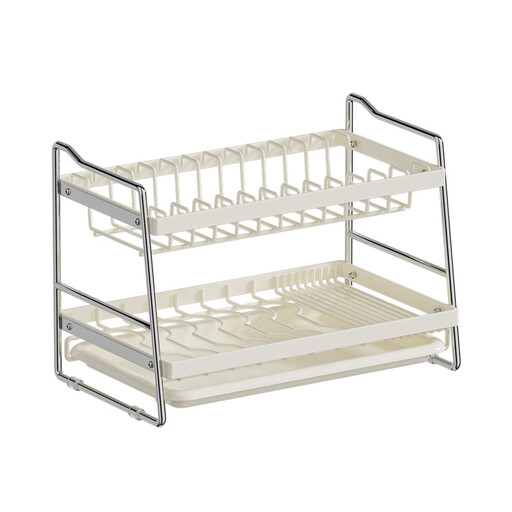
Why it's a great choice: Its generous two-tier capacity is ideal for handling dishes from family meals. It centralises everything (plates, bowls, glasses, cutlery) and frees up valuable countertop space.
Its vertical structure is the answer to limited space. The integrated drip tray channels and drains water, preventing puddles from forming on the countertop.
Maximum vertical drying space and a countertop that stays perfectly dry thanks to the integrated drainage.
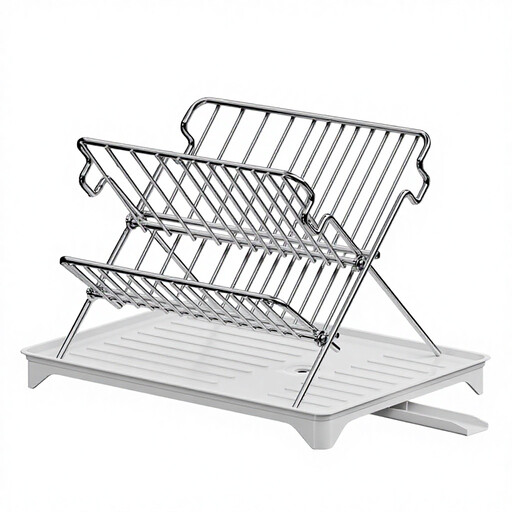
Why it's a great choice: It combines the durability of stainless steel with a clever foldable design. The perfect solution for those who want a quality product without permanently sacrificing their countertop space.
Its high-quality stainless steel frame is designed to resist rust. It's foldable to free up space when not in use, and its adjustable drainage system keeps the countertop dry.
The best of both worlds: the sturdiness of stainless steel and a foldable design for maximum space-saving.
For a plastic model, a weekly wash with soapy water or a cycle in the dishwasher (if compatible) is sufficient. For a stainless steel rack, a soft cloth soaked in diluted white vinegar will tackle limescale. Rinse and dry thoroughly to prevent water spots. Remember to empty and clean the drip tray very regularly.
A good plastic dish rack can last for several years, but it may stain or become brittle. A high-quality stainless steel model is a true long-term investment: with proper care, it's nearly indestructible. Beware, as low-end stainless steel models can show signs of rust in less than a year.
The stability of a 2-tier dish rack depends entirely on its design. Favour models with a wide base, non-slip feet, and a structure that feels solid. A golden rule: always distribute the weight evenly, placing the heaviest items (pans, large plates) on the bottom tier.