For a film, start by choosing what matters most to you: clearly stated cocoa content, comparable nutritional information or a pack that’s easy to share. The words ‘dark chocolate’ and the percentage of chocolate in the biscuit don’t, by themselves, tell you the cocoa content of the chocolate. Check the allergens and pack weight too.
Who is this guide for?
Fans of a rich cocoa flavour
If chocolate intensity guides your choice, look for a clearly stated minimum cocoa content for the product you’re buying. The percentage of chocolate in the biscuit tells you something different: how much of the recipe is made up of that ingredient.
Shoppers who compare labels
Nutritional values per 100 g let you compare sugar, fat and salt on a like-for-like basis. The pack weight then helps you work out how much you’ll be serving.
Anyone planning to share
Before putting a pack out for everyone, check its size and the label for the variant you’ve chosen. The products reviewed mention wheat and milk; other allergens and ‘may contain’ warnings vary by recipe.
What should you look for first?
When choosing dark chocolate biscuits to snack on during a film, consider three separate questions: how much cocoa the chocolate contains, what the nutrition table says and how you’ll share the pack.
| What to consider |
What to check |
Who it matters to |
| Cocoa intensity |
Look for a stated minimum cocoa content for the chocolate. Don’t confuse it with the proportion of chocolate in the biscuit. |
If I’m looking for a pronounced cocoa flavour, I want to know what the percentage printed on the pack means. Around 36% of shoppers put this clearly stated intensity first. |
| Nutritional information |
Compare the values per 100 g, particularly sugar and fat, then check the pack weight. |
When choosing between recipes before a film, I prefer to compare their labels on a like-for-like basis. This is the priority for around 36% of shoppers. |
| Sharing and allergens |
Check the allergens, ‘may contain’ warnings and the quantity in the pack. |
When several people are snacking together, I need to take their dietary requirements and the amount to serve into account. Around 28% of shoppers put this need to share first. |
What should you watch out for?
-
Don’t assume dark chocolate means a high cocoa content
A product listing may state the proportion of dark chocolate in the biscuit without specifying the cocoa content of that chocolate. These percentages refer to different ingredients at different levels of the recipe.
If cocoa intensity is important to you, look for a stated minimum cocoa content for the exact product, either on its listing or packaging.
-
Don’t expect every pack to show a Nutri-Score
In France, the DGCCRF says that prepacked foods must carry a nutrition declaration, while the Ministry of the Economy explains that displaying a Nutri-Score is optional. So if it’s missing, you’ll still need to read the nutrition table.
Compare the values per 100 g. If the pack shows a Nutri-Score, use it as an additional guide, but don’t assume on that basis alone that a biscuit meets your needs.
-
Don’t choose the pack size before checking allergens
A pack that’s convenient for sharing may contain ingredients a guest needs to avoid. Ingredients lists and ‘may contain’ warnings vary between products.
Read the label on the pack you’re going to serve, and provide a separate option if needed.
Brands to compare
LU
Joybuy listings include Petit Écolier dark chocolate biscuits and Mikado dark chocolate sticks: two different ways to snack during a film.
- The Petit Écolier listing states that its dark chocolate contains at least 45% cocoa. This is different from the proportion of chocolate in the biscuit.
- For Mikado, check the cocoa content on the pack if that figure will determine your choice.
Carrefour
Carrefour offers Carrefour Bio petit-beurre biscuits with dark chocolate.
- The Carrefour listing states that the biscuit contains 48% dark chocolate.
- That figure alone doesn’t tell you the cocoa content of the chocolate. Also check the ingredients and allergens for the variant you’re buying.
E.Leclerc
An E.Leclerc listing features ECO+ biscuits topped with a square of dark chocolate.
- The recipe on this listing contains 37% dark chocolate in the biscuit.
- To assess cocoa intensity or compare ingredients, check the cocoa information, ingredients list and nutritional values separately.
Dark chocolate biscuits on Joybuy
These two pack styles suit different ways of snacking during a film: a biscuit topped with dark chocolate or sticks to nibble on gradually.
 Image unavailable
Petit Écolier dark chocolate 150 g
This style, topped with a square of dark chocolate, is a good choice if you want clear cocoa information before picking biscuits for your film. The Joybuy listing states that the dark chocolate contains at least 45% cocoa; the pack weighs 150 g. If you’re sharing, check the allergens on the packaging and compare the nutritional values per 100 g according to what matters to you.
View on Joybuy
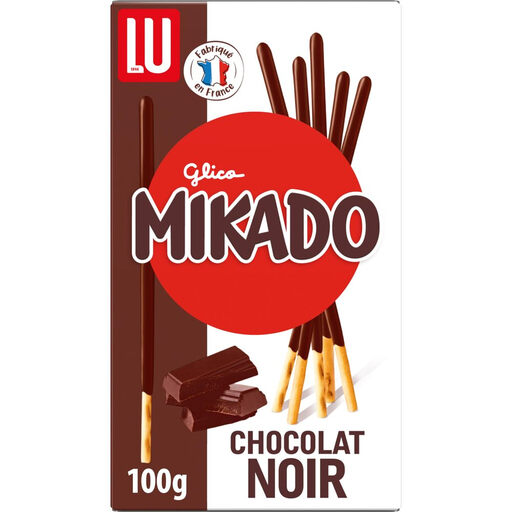 Image unavailable
Mikado dark chocolate 100 g
These sticks are a good option if you prefer to nibble gradually rather than serve biscuits topped with chocolate. The pack weighs 100 g. If cocoa intensity is your top priority, look for a stated minimum cocoa content on the packaging. Check the allergens before sharing, too.
View on Joybuy
Frequently asked questions
Is Nutri-Score compulsory on chocolate biscuits in France?
No. The Ministry of the Economy says that the Nutri-Score logo is optional. However, the DGCCRF states that prepacked foods must carry a nutrition declaration, so check it even when there’s no logo.
Does the tax on sugary drinks apply to chocolate biscuits?
No, not to solid biscuits as such. Article 1613 ter of the General Tax Code, published by Légifrance, applies to drinks and liquid preparations for drinks. When comparing biscuits, look instead at their sugar content in the nutritional values per 100 g.
Does a biscuit labelled as containing 48% dark chocolate contain 48% cocoa?
No. In the listing for Carrefour Bio petit-beurre biscuits, 48% refers to the proportion of dark chocolate in the biscuit. To find out the cocoa content of that chocolate, look for a separate statement of the minimum cocoa content for the product you’ve chosen.
What should you check before sharing these biscuits?
Read the ingredients and ‘may contain’ warnings on each pack, as allergens vary by recipe. The DGCCRF notes that allergenic ingredients must be highlighted on the label. Also check the pack weight against the number of people you’re serving.


