
Livraison le jour même ou le lendemain

Qualité garantie

Débloquez vos offres de bienvenue: Livraison GRATUITE | Jusqu'à -80 % | 30 jours d'essai gratuits à JoyPlus
Téléchargez l'application
A robotic lawn mower without boundary wire can make lawn maintenance much easier. But ‘without a wire’ does not mean every garden can be mapped in the blink of an eye. Trees, walls, slopes, narrow passages or separate areas: the navigation technology you choose will have a direct impact on everyday use.
Before buying an autonomous robotic lawn mower, take the time to avoid three common pitfalls.
A capacity of 600, 1 000 or 1 500 m² generally refers to the maximum recommended area under favourable conditions. A fragmented garden with lots of trees or narrow passages will require more travel time and more charging.
For a 600 m² garden, make sure the mower has sufficient capacity to spare. A product described as a robotic lawn mower for gardens up to 600 m² may be perfectly suitable for an open plot, but show its limitations on a garden made up of several areas and cluttered with obstacles.
A robotic lawn mower without boundary wire relies on positioning or perception technology: RTK, camera, GNSS, LiDAR or a combination of several systems. The charging station must be installed on a stable surface. With some RTK models, the reference antenna must also have a sufficiently clear view of the sky.
High walls, dense trees and covered areas can disrupt the signal. Mapping via the app is often still required to define no-go zones, passages and areas to be mown separately.
An AI-enhanced camera or 3D sensor can recognise many objects, but no system removes the need to prepare the lawn. Thin hoses, flat cables, toys or small objects with little contrast may go unnoticed depending on the lighting conditions.
Even an obstacle-avoiding robotic lawn mower should therefore be used on a lawn cleared of loose objects. Children and pets must stay at a safe distance while mowing, in accordance with the manufacturer’s instructions.
A robotic lawn mower with RTK navigation uses corrected satellite signals to achieve highly accurate positioning. This solution is particularly suitable for open gardens and complex layouts, but it requires careful installation of the station or antenna.
Models equipped with a camera, LiDAR system or vision technology do not all work in the same way. A robotic lawn mower with an AI camera may interpret certain obstacles more effectively, while navigation based mainly on vision may be more sensitive to low light, fog or particularly dense vegetation.
Also check whether the app allows you to manage multiple zones. This is useful for a lawn at the front and back of the house, or for areas separated by a driveway.
Manufacturers often state the slope as a percentage, sometimes with an equivalent value in degrees. These two units are not interchangeable. As a guide, a 45% slope corresponds to approximately 24 degrees.
Also check whether the stated value applies to the entire mowing area or only to a consistent slope. Edges, turns and wet ground can reduce grip. Wider wheels or an all-terrain tread pattern may help, but they cannot eliminate the limitations imposed by the layout of the garden.
The cutting width determines how many passes are required. An adjustable cutting height of 20 to 80 mm or 25 to 75 mm allows you to adapt mowing to the needs of your lawn, particularly after a period of rapid growth.
You should also compare:
IPX6 protection indicates resistance to powerful water jets under the conditions specified by the standard. It does not mean that the mower or its station can be submerged.

Why this choice suits this profile : This wire-free model is designed for lawns of up to 150 m². Its straightforward set-up may suit anyone looking to replace a manual mower with an autonomous solution for a small residential garden.
The recommended area reduces the risk of paying for capacity you do not need. The product details also specify that it is wire-free and features obstacle detection.
Recommended area of 150 m², rechargeable battery operation and installation advertised as wire-free.
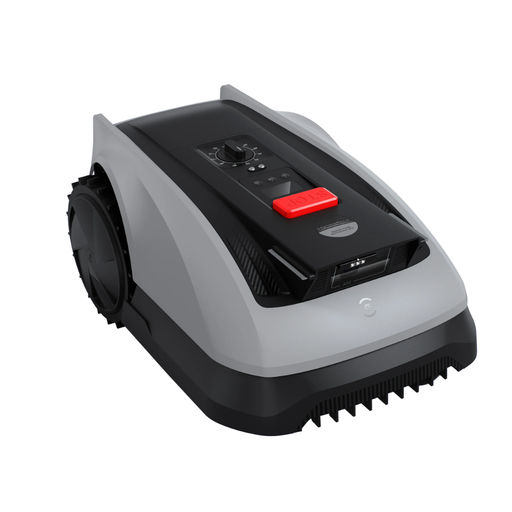
Why this choice suits this profile : Designed for lawns of up to 600 m², this connected robotic lawn mower combines RTK navigation, an AIVI camera and app control, with zone planning and mowing schedules.
The coverage area, 19 cm cutting width and slope capability are clearly specified. However, the RTK station must be installed correctly.
Adjustable cutting height from 30 to 80 mm, slopes of up to 45 %, noise level of 50 dB(A) and IPX6 protection according to the product details.
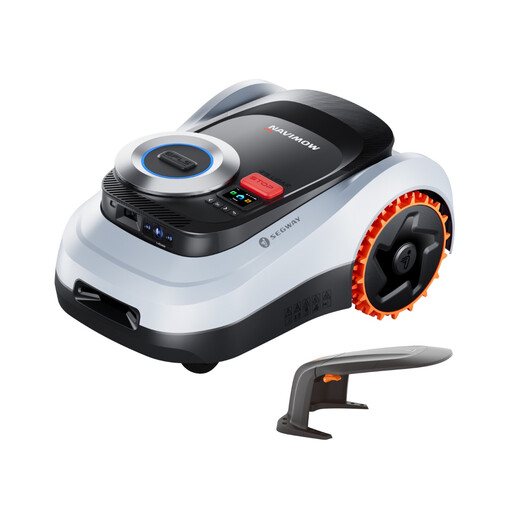
Why this choice suits this profile : For gardens of up to 1 500 m², this model uses satellite-free navigation combining LiDAR and vision, as well as app-based management of a large number of zones.
The lack of an antenna and one-touch mapping can make installation easier. Nevertheless, you will need to configure the mowing boundaries carefully.
LiDAR and vision systems, slopes of up to 45 %, management of 20 zones according to the description and advertised edge mowing to within 5 cm.
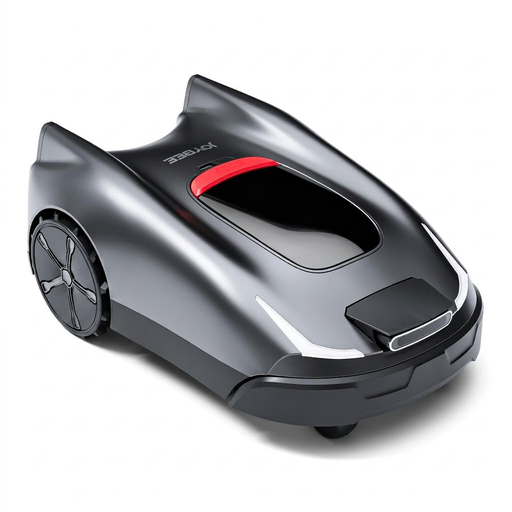
Why this choice suits this profile : With a stated coverage of up to 3 000 m², RTK and vision navigation, and multi-zone management, this model is aimed at large gardens with slopes and separate areas.
The specifications distinguish between battery life, charging time, slope-climbing capability and obstacle clearance height. It is still essential to check edges and narrow passages.
Cutting width of 22 cm, advertised battery life of 90 minutes, slopes of up to 45 % according to the product details and IPX6 protection.
We have put together a complete, real-time-updated list of products that fully meet these strict selection criteria and European safety regulations.
It depends on the technology used. An RTK model may require a reference station or antenna, while a device using vision or LiDAR may work without a dedicated antenna. In all cases, the charging station must be positioned correctly and the garden map checked in the app.
Running costs include electricity, blades, long-term battery replacement and any navigation accessories. Consumption depends on mowing time and how often the mower needs to recharge. Before buying, check the price of compatible parts and the applicable warranty terms in France.
It depends on the number of cycles, exposure to the weather, maintenance and storage conditions over winter. Clean the sensors and chassis regularly, replace the blades when they become worn and remove the battery or store the device according to the manufacturer’s instructions. Choosing a model correctly sized for your lawn will also help prevent unnecessary operating cycles.