
Livraison le jour même ou le lendemain

Qualité garantie

Débloquez vos offres de bienvenue: Livraison GRATUITE | Jusqu'à -80 % | 30 jours d'essai gratuits à JoyPlus
Téléchargez l'application
A cordless robot mower can take the hassle out of mowing and keep your lawn looking immaculate without you having to give it a second thought. But the absence of a boundary cable doesn't mean every garden is compatible with every model. The actual area of grass, slope, obstacles, signal quality and machine maintenance all have a direct impact on the results.
Before ordering a robot mower, it's also worth taking some marketing claims with a pinch of salt – they're often presented without explaining their limitations.
RTK improves positioning accuracy using a reference station. This technology suits those who want to precisely define their terrain and manage multiple zones. However, the station must be installed in a sufficiently open location.
A robot mower with an AI camera analyses what lies ahead. This approach can simplify obstacle detection and mapping, but its performance depends on light levels, fog and the visibility of the grass.
Models that combine vision, GNSS, distance sensors or LiDAR offer more comprehensive navigation. Even so, you should check their operating conditions, particularly in covered passages and shaded areas.
Choose the capacity based on the area of grass to be mown, not the total size of your property. For a segmented garden, look for a multi-zone robot mower function, the ability to create no-go zones and automatic resumption of mowing after recharging.
Also remember to check:
A generous cutting width reduces the number of passes. An adjustable height, meanwhile, lets you adapt maintenance to the season and grass type.
The slope stated as a percentage or in degrees should be compared with the actual layout of your garden. A limit of 45%, for example, doesn't guarantee the same behaviour on wet, bumpy grass or near a border.
For use in the UK, consider in particular:
An IPX6 rating indicates resistance to powerful water jets. It doesn't, however, exempt you from following the manufacturer's instructions for cleaning and storage.

Why this fits the profile: This model covers up to 150 m² and works without a cable. It's therefore suitable for a small, simple lawn, allowing you to gradually move to automated maintenance.
Its clearly stated capacity prevents you from choosing an oversized machine for a small plot.
Automatic operation, self-propelled movement and obstacle detection according to the product specification.
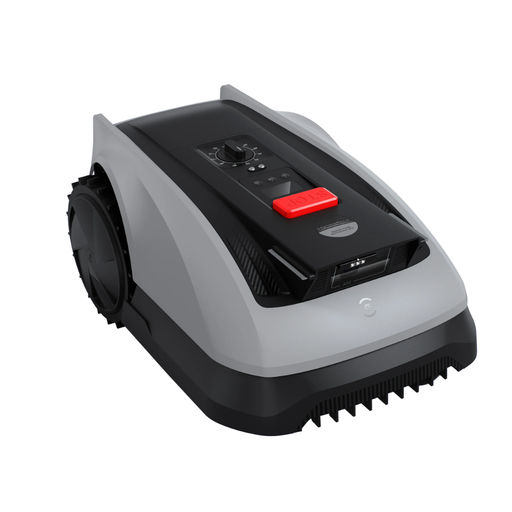
Why this fits the profile: Designed for gardens up to 600 m², this robot combines cable-free RTK navigation with an AIVI camera, plus app control and zone scheduling.
The specification details the covered area, a stated slope of up to 45% and an adjustable cutting height from 30 to 80 mm.
19 cm cutting width, IPX6 rating, stated noise level of 50 dB(A) and management via the app.
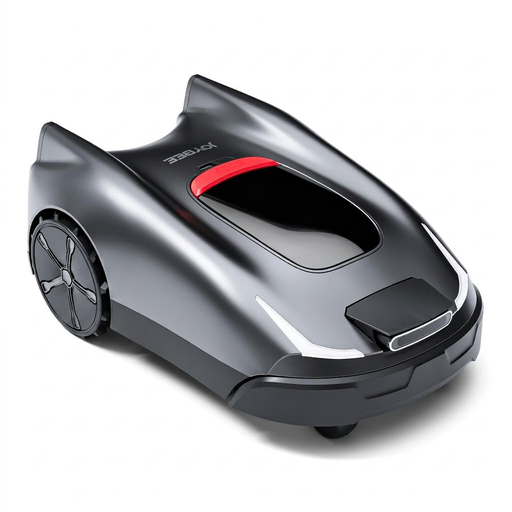
Why this fits the profile: With a stated area of up to 3,000 m², virtual multi-zone management and the ability to handle slopes of up to 45%, this model targets large, well-structured gardens.
The specification details the 22 cm cutting width, a stated battery life of 90 minutes and mapping of different zones.
RTK and vision navigation, mobile app, anti-theft alarm and stated IPX6 protection.
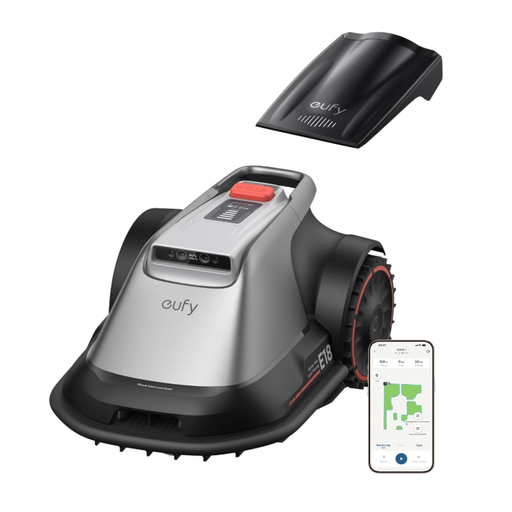
Why this fits the profile: This model targets lawns up to 1,200 m², with cable-free navigation, app control and vision-based obstacle detection.
The limitations are clearly stated: very thin objects may not be detected and the machine may stop if multiple signals are lost simultaneously.
20.3 cm cutting width, stated slope of up to 40%, IPX6 rating and programming from a smartphone.
We've put together a comprehensive, real-time updated selection of products that meet these demanding criteria and European safety standards.
It all depends on the technology on board. An RTK robot mower generally requires a reference station, whereas a model that relies mainly on vision can operate without a dedicated antenna. In both cases, initial mapping and boundary setting are still essential.
Electricity consumption varies depending on the area to be maintained, the frequency of cycles and the charging time. You also need to budget for regular blade replacement, sensor cleaning and, after several years, battery replacement depending on usage and storage conditions.
Battery life depends on the battery itself, the slope, the height of the grass and the programme selected. For large areas, choose a model that can return to its station on its own and then resume mowing once recharged. Also check the charging time and the ability to manage multiple zones from the app.