
Livraison le jour même ou le lendemain

Qualité garantie

Débloquez vos offres de bienvenue: Livraison GRATUITE | Jusqu'à -80 % | 30 jours d'essai gratuits à JoyPlus
Téléchargez l'application
Choosing a cooker hood? It can be a daunting task. Between the marketing jargon, indecipherable spec sheets, and a jungle of designs, it's easy to make a mistake. Our mission: to help you cut through the noise and identify the criteria that truly matter for equipping your kitchen with an effective, built-to-last ventilation solution.
Before you even start comparing models, let's review the classic mistakes that lead to disappointment and unnecessary expense.
To make the right choice, three technical characteristics must be scrutinized. This trio will determine the efficiency, comfort, and compatibility of your future hood.
A hood's performance is, above all, a matter of balance.
Here, everything depends on your home's layout.
Golden rule: the hood must be at least as wide as your hob to effectively capture fumes.
To illustrate these criteria, here are a few models that meet specific needs.
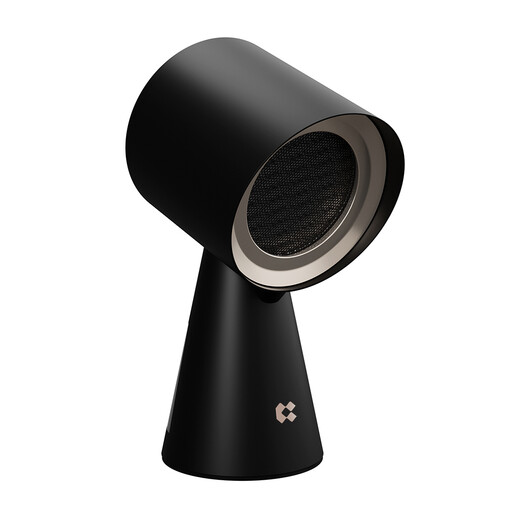
The Editor's Verdict: Perfect for students, renters, or RV owners. This portable air extractor requires no wall installation, making it the perfect ally for kitchens where construction is off-limits. Simply place it next to the cooking area.
It cuts right through the ducted/recirculating dilemma by operating exclusively as a recirculating hood. Its compact, portable format eliminates any risk of choosing the wrong design or size for a small space.
Total Flexibility: Use it anywhere there's a power outlet. Multi-layer Filtration: Captures grease and odours with washable, reusable filters.
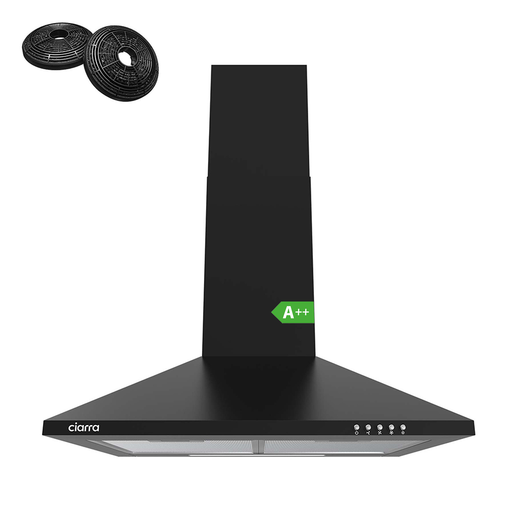
The Editor's Verdict: The ultimate versatile option for families renovating their kitchen. Its standard 60 cm hood width and understated black design fit in anywhere. An excellent balance of performance and price.
This model strikes the right balance between airflow (367 m?/h) and noise level (63 dB), avoiding the deafening hood trap. Its dual compatibility (ducted and recirculating) is a real plus for a hassle-free installation.
A++ Energy Class: Very low annual consumption (9 kWh/year). Washable Aluminium Grease Filters: Simple and cost-effective maintenance.
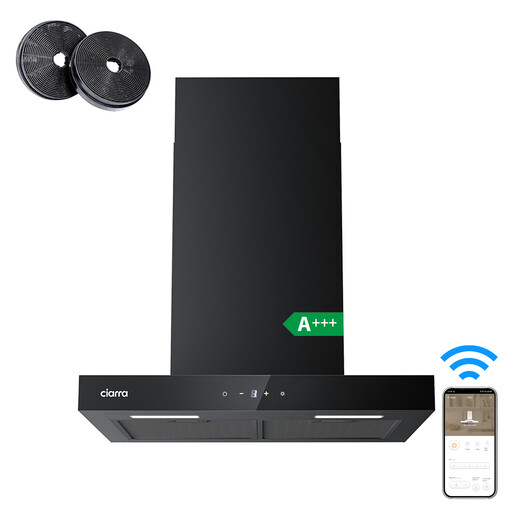
The Editor's Verdict: For those who want the best of kitchen technology. This smart hood combines high extraction power (650 m?/h) with smartphone control, a sleek design, and exemplary energy efficiency.
Despite its raw power, it remains discreet with a contained noise level of 59 dB, making it an ideal candidate for an open-plan kitchen. Its A+++ class ensures that performance doesn't come with a steep electricity bill.
Wi-Fi Smart Control: Operate the hood from your smartphone. A+++ Energy Class: Negligible annual consumption (12 kWh/year). Booster Mode: A power boost for the most intense cooking sessions.
Discover our full selection of products that meet our strict selection criteria and local safety standards.
1. What power (m?/h) should I choose for my cooker hood? The rule is simple: measure your kitchen's area (m?), multiply it by the ceiling height, then multiply this volume by 10 (for a closed kitchen) or 15 (for an open-plan kitchen). The result gives you the minimum required airflow in m?/h for effective air renewal.
2. When should I change the charcoal filters on a recirculating hood? For a recirculating hood, changing the charcoal filters is crucial for neutralising odours. Generally, it is recommended to replace them every 3 to 6 months. This frequency varies with your usage: frying and grilling, for example, saturate the filters much faster.
3. Is installing a cooker hood mandatory? In new constructions, regulations (such as the UK's Building Regulations Part F) mandate a general ventilation system, including the extraction of stale air from the kitchen. While a cooker hood isn't explicitly mandatory everywhere (especially in renovations), it remains the most effective solution for locally treating cooking pollutants. It is therefore highly recommended for maintaining indoor air quality.