
Livraison le jour même ou le lendemain

Qualité garantie

Débloquez vos offres de bienvenue: Livraison GRATUITE | Jusqu'à -80 % | 30 jours d'essai gratuits à JoyPlus
Téléchargez l'application
A cooker hood should not be chosen solely for its appearance or the promise of « exceptional power ». In a small French kitchen, the available connection options, hob width and noise level often matter more than an isolated figure on the packaging.
Before placing your order, three common pitfalls are worth bearing in mind:
For a standard hob, a 60 cm cooker hood is a very common configuration. However, width is not everything. Measure the cooking area and check the appliance's depth too.
The installation height must comply with the manufacturer's instructions and the requirements specific to your cooking appliance. For example, the COMFEE’ KWH-SLIF17B-60 recommends an installation height of between 650 and 750 mm.
Extraction rate is measured in m³/h. A high figure can be useful for frying, frequent cooking or an open-plan kitchen, but it does not by itself guarantee more effective extraction. The duct diameter, its route and the hood's position also play a part.
In a small kitchen, focus primarily on:
The product specifications in this selection quote extraction rates of approximately 184 to 650 m³/h, depending on the model. These figures should be considered alongside the corresponding noise level, not in isolation.
A quiet cooker hood is above all one whose noise level remains acceptable at the speed you use every day. Technical specifications generally state a maximum decibel rating. Some models therefore quote 58 to 64 dB at maximum power, while a small tabletop unit remains below 65 dB.
When it comes to filtration, two components need to be distinguished:
A hood fitted with a charcoal filter does not expel air outside: it filters the air before returning it to the room. This solution avoids the work involved in creating a duct, but it does not replace general ventilation in the home.
Remember to check the energy label and the stated annual consumption too. The supplied specifications indicate, for example, 9 to 16 kWh/year for some Ciarra models, while others display a different energy class. For a fair comparison, consider the class, extraction rate and the functions you will actually use.
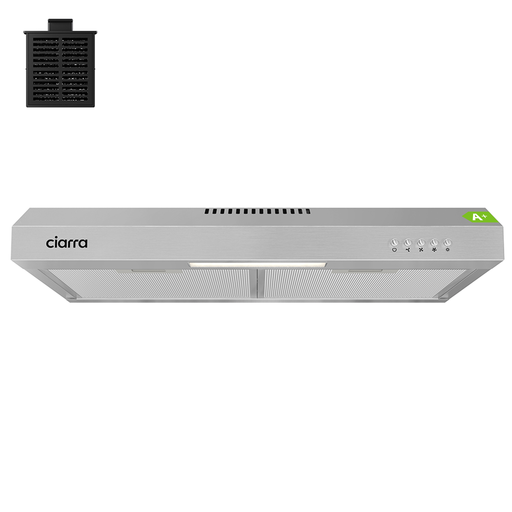
Why it suits this type of user : its 596 mm by 85 mm format can be installed under a cabinet or against a wall, while its mechanical controls remain simple to use.
It offers both extraction and recirculation modes, so an external connection is not required from the outset.
A+ energy rating, washable aluminium filter, integrated lighting and a quoted maximum extraction rate of 184 m³/h.
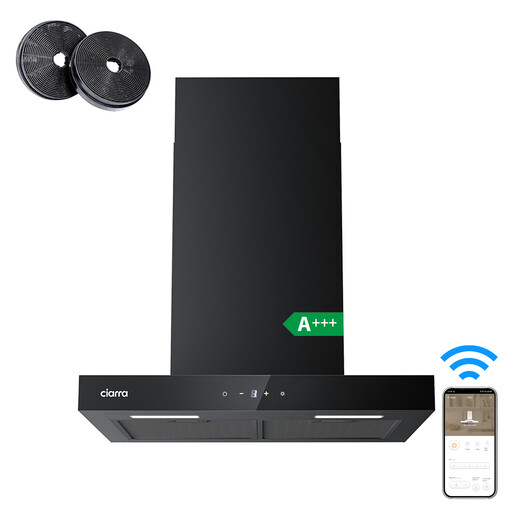
Why it suits this type of user : it combines a black finish, connected touch controls and flexible installation in a contemporary kitchen.
The specifications clearly distinguish the maximum extraction rate, maximum noise level of 59 dB and quoted annual consumption of 12 kWh.
Quoted extraction rate of up to 650 m³/h, three speeds with an intensive function, washable aluminium filters and charcoal filters included for recirculation.
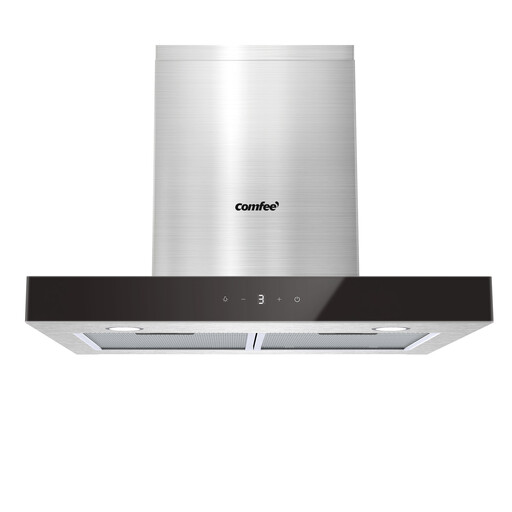
Why it suits this type of user : its four speeds and quoted extraction rate are suitable for repeated cooking, greasy preparations and open-plan kitchens.
The specifications distinguish between the motor, the four power levels and the quoted maximum noise level of 59 dB.
Reusable five-layer aluminium filter, LED lighting, adjustable chimney and a choice of extraction or recirculation.
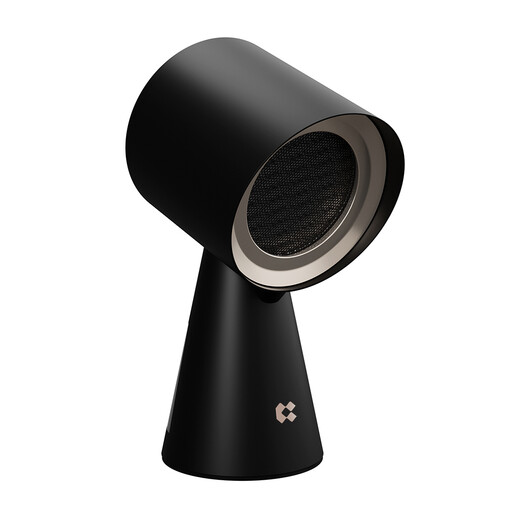
Why it suits this type of user : this standalone 1.5 kg unit can be placed next to an electric grill, a tabletop plancha or in a space without ducting.
It requires neither wall drilling nor external ducting, helping to minimise alterations in a rented or temporary home.
Two speeds, quoted power of 24 W, extraction rate of up to 108 m³/h and multilayer filtration with a collection tray.
We have put together a complete, real-time updated list of products that meet these demanding selection criteria and European safety standards.
Switch the hood on a few minutes before intensive cooking, then leave it running briefly after turning off the hob. Clean the grease filter regularly, generally every two to four weeks, depending on how often you use it. In recirculation mode, also check the condition of the charcoal filter.
Before securing a wall-mounted cooker hood, check the strength of the mounting surface, the electrical connection and the route of the ducting. For external extraction, the duct diameter and length must comply with the instructions. Always unplug the appliance before cleaning it and never leave cooking unattended, particularly when using hot oil.
Yes, a recirculating hood can be perfectly suitable when no duct is accessible. It uses a grease filter and a charcoal filter. However, it requires regular maintenance and does not remove the need to ventilate the room.
A width of 60 cm generally suits common domestic hobs. Nevertheless, measure the hob and the available wall space before buying. A 90 cm hood may be a good option for a large cooking area or an open-plan kitchen, provided there is enough room to install it.
Consumption depends on the motor power, energy class, lighting and length of use. To compare models, check the annual consumption stated in kWh/year. Replacing charcoal filters is also an ongoing cost to consider, unlike a washable metal filter, which can be reused after cleaning.