
Livraison le jour même ou le lendemain

Qualité garantie

Débloquez vos offres de bienvenue: Livraison GRATUITE | Jusqu'à -80 % | 30 jours d'essai gratuits à JoyPlus
Téléchargez l'application
A kitchen cooker hood needs to capture smoke, steam and cooking odours without turning your room into a machine room or becoming a chore to maintain. Yet some purchases disappoint after just a few weeks: the airflow rate advertised is measured in boost mode, the dimensions don't fit your cabinet, or the charcoal filters are extortionate to replace.
Before you compare a 60 cm cooker hood, a wall-mounted hood or an integrated hood, check three things: the extraction mode, the airflow rate you'll actually use, and the installation constraints.
A figure like 650 m³/h or 670 m³/h may refer to 'Boost' mode, which can sometimes only be used for a limited time. The noise level then often rises noticeably. In an open-plan kitchen, look at the values given for each speed rather than relying solely on the maximum airflow rate.
A 60 cm cooker hood usually matches a hob of a similar width. A 90 cm hood can suit a large cooking surface, but it needs more wall space and appropriate fixings. For an integrated or telescopic hood, measure the width, the available depth and the internal space of the cabinet precisely.
A washable metal filter cuts down on consumables, provided you clean it regularly. In recirculation mode, the hood returns filtered air to the room: a charcoal filter becomes essential and must be checked or replaced according to the manufacturer's recommendations. Even the best filtration doesn't replace the need to air your home.
An external extraction hood pushes air outside through a duct. This setup works well when an outlet already exists, provided you comply with the rules of your building, your home and the electrical installation. The duct should be as short and straight as possible to minimise airflow loss.
A recirculation hood is better suited to flats and kitchens without an external duct. It's simpler to install, but its effectiveness depends directly on the condition of the charcoal filter. Check whether one is supplied, note the reference number, and make sure it remains readily available to buy.
Respect the minimum distance stated in the manual between the hood and the hob, taking into account the type of cooking: electric, gas or induction. The wall fixing must also support the weight of the appliance, particularly for glass models and 90 cm hoods.
To decide between two models, look at the airflow at each speed, the noise level in dB(A), the energy rating and the stated annual consumption. A quiet cooker hood isn't just about one number: you need to compare the noise produced with the actual airflow achieved.
Washable metal filters, LED lighting and simple controls make daily life easier. Touch controls, a timer or a Wi-Fi connected hood can add welcome convenience, but none of these features will compensate for an appliance that's the wrong size.
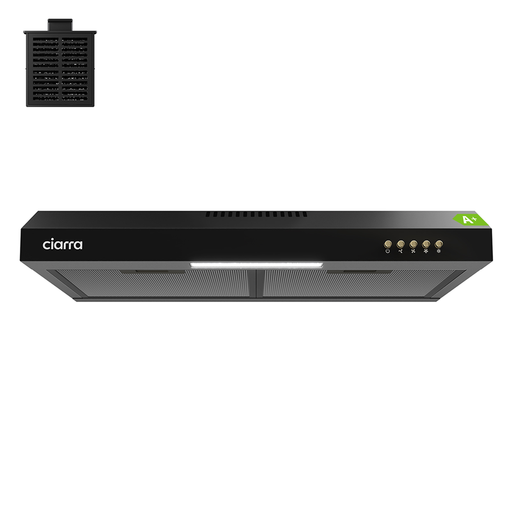
Why this choice suits this profile: At 596 mm wide, this compact hood fits easily into a small kitchen and offers both external extraction and recirculation.
Its two aluminium filters are dishwasher-safe, avoiding the need for frequent replacements. Its moderate maximum airflow is also easier to match to real-world needs.
Under-cabinet format, push-button controls, integrated lighting, A+ energy rating and a maximum noise level of 61 dB.
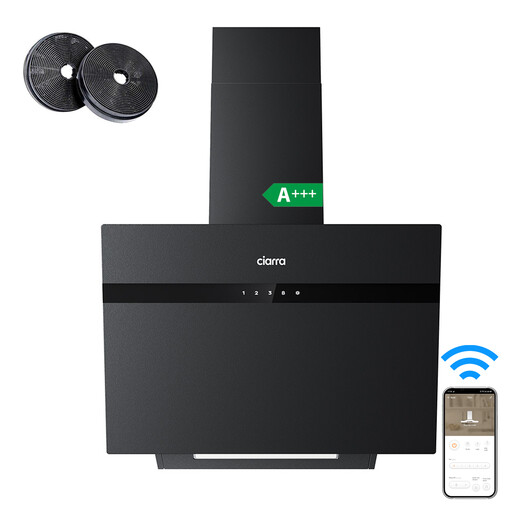
Why this choice suits this profile: Its matt black glass front, adjustable LED lighting and app control blend perfectly into a contemporary kitchen.
The spec sheet clearly separates the maximum airflow of 650 m³/h from the stated noise level of 58 dB(A). Recirculation is possible with charcoal filters.
Three speeds with Boost function, Wi-Fi, app, two light intensity levels and A+++ energy rating according to the product sheet.
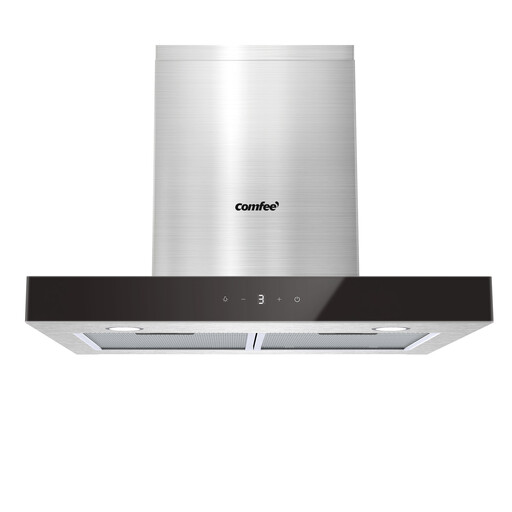
Why this choice suits this profile: Its four speeds, five-layer metal filter and touch or gesture controls are built for frequent use.
The spec sheet distinguishes the stated airflow of 650 m³/h from the noise level of 59 dB. The filter is removable and stated as dishwasher-safe.
BLDC motor, LED lighting, installation for extraction or recirculation and an adjustable chimney from 485 to 820 mm.
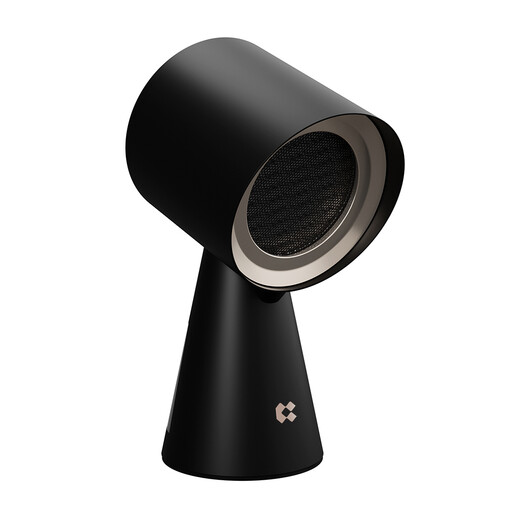
Why this choice suits this profile: This standalone model sits on your worktop and requires neither wall drilling nor a fixed duct.
It works in recirculation mode with filtration, avoiding the need to install a wall-mounted hood that's incompatible with a rented property or temporary kitchen.
Two speeds, compact dimensions, 24 W power and removable filters to clean after each use.
We've compiled a full, real-time updated selection of products that meet these demanding criteria as well as European safety standards.
Compare the airflow stated at each speed and take your home's layout into account. An open-plan kitchen or frequent cooking may justify a higher capacity, but the noise level and the possibility of installing an extraction duct should be considered at the same time.
Yes, if it's designed to operate in that mode. It uses a charcoal filter in addition to the grease filter. This filter must be cleaned or replaced according to the manual, and airing the room remains essential.
Use the speed appropriate for your cooking, clean the filters and check that the duct isn't crushed or unnecessarily bent. In an open-plan kitchen, compare the noise level at normal speed rather than just the figure given for Boost mode.