
Livraison le jour même ou le lendemain

Qualité garantie

Débloquez vos offres de bienvenue: Livraison GRATUITE | Jusqu'à -80 % | 30 jours d'essai gratuits à JoyPlus
Téléchargez l'application
A kitchen extractor hood isn't chosen purely for its looks or price. In a UK home, factors like the presence of a duct, the width of your hob and the noise level can turn a tempting purchase into an impractical everyday appliance.
Here are the main pitfalls to avoid:
The airflow, measured in m³/h, indicates the volume of air the appliance handles under set conditions. For a small kitchen, a compact model may be enough for moderate daily use. However, frequent frying, grilling or wok cooking generally calls for more capacity.
A ducted extractor hood pushes air outside through a duct. This means you need an external wall outlet, a suitable duct diameter and permission to install it in your home. If you live in a flat or rented property, it's wise to check any restrictions before reaching for the drill.
A recirculation hood, on the other hand, filters the air before returning it to the room. This solution works well for homes without a duct, but the charcoal filter must be fitted if the manufacturer specifies one. It doesn't neutralise odours indefinitely: you'll need to check its condition as recommended in the manual.
A 60 cm hob is often paired with a 60 cm cooker hood. However, a wider model can better cover a larger cooking area. In a small room, a built-in or telescopic hood helps preserve visual space under a wall cabinet.
A wall-mounted extractor hood – whether angled or decorative – is installed visibly and can also free up headroom. Before choosing, remember to measure:
The recommended distances vary by manufacturer and hob type. So the model's manual should always take priority over any general rule, especially with a gas hob or a mixed cooking surface.
The noise level in dB(A) is especially important in an open-plan kitchen. Compare the sound at an equivalent speed, because the maximum level often corresponds to the most powerful setting. A quiet extractor hood isn't necessarily silent: the key is that it remains pleasant at low or medium speed.
A washable aluminium filter cuts down on consumables, provided you clean it regularly. In recirculation mode, the charcoal filter is a wear-and-tear item: check whether it's included, sold separately or reusable depending on the appliance's design.
Finally, a hood with LED lighting can improve visibility over the cooking area. Look at the wattage and number of lights rather than just the "LED" label.
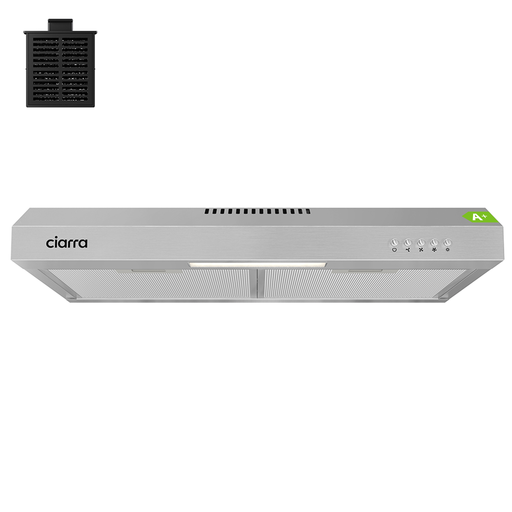
Why this choice suits this profile: With its 596 mm width and under-cabinet installation, it fits easily into small kitchens. It offers three speeds, built-in lighting and two ventilation modes.
The spec mentions a washable aluminium filter and compatibility with both ducted and recirculation modes. So the operating mode can be adapted to your home.
Maximum airflow of 184 m³/h, maximum noise level of 61 dB and A+ energy rating.
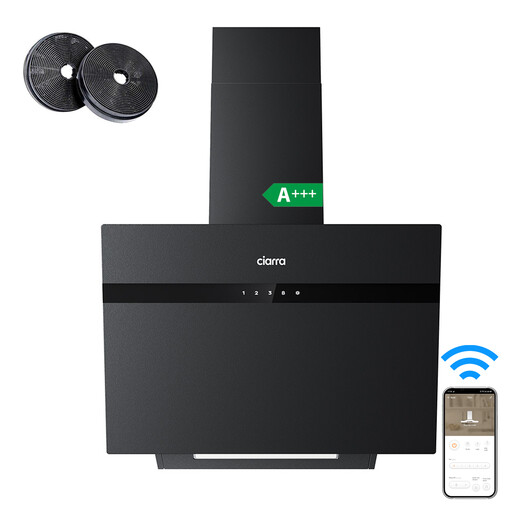
Why this choice suits this profile: This wall-mounted extractor hood combines a matt glass front, touch controls, adjustable lighting and Wi-Fi control via an app.
The specs detail the airflow, noise level and stated energy consumption: 650 m³/h, 58 dB and 10 kWh/year. These figures allow a more concrete comparison than just the smart feature.
A+++ energy rating, three speeds with boost mode, washable aluminium filters and compatibility with recirculation or ducted extraction.
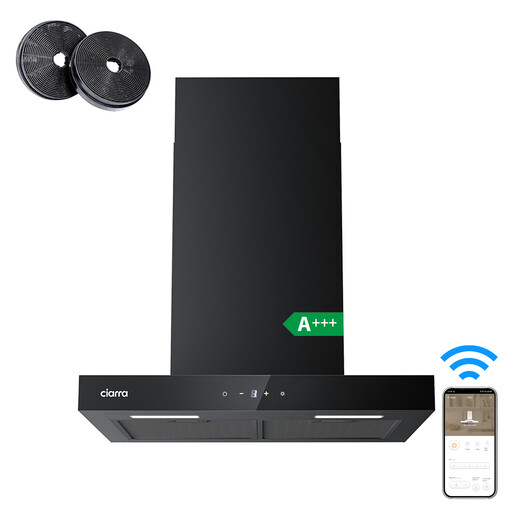
Why this choice suits this profile: With its stated airflow of 650 m³/h, boost mode and app controls, it's well suited to regular cooking in an open-plan kitchen.
The ability to run in recirculation mode or be connected to an external duct helps avoid mistakes linked to a missing outlet. The filters and their part numbers are listed in the spec.
Maximum noise level of 59 dB, A+++ energy rating, washable aluminium filters and touch controls with Wi-Fi.
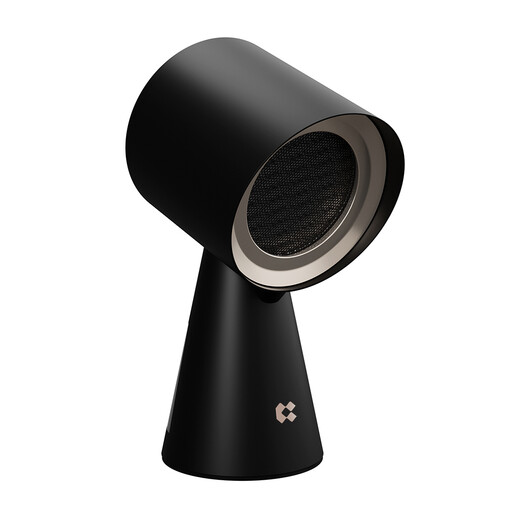
Why this choice suits this profile: This compact extractor sits directly on your worktop, with no duct or wall modifications needed. It's particularly suitable for a portable hob, a studio flat or a rented property.
It works in recirculation mode with filtration and requires no building work. Its stated airflow, from 77.8 to 108 m³/h, should be assessed for close-proximity use.
Two speeds, 24 W power, net weight of 1.5 kg and a maximum noise level of under 65 dB.
We've put together a comprehensive, real-time selection of products that meet these demanding criteria and comply with European safety standards.
Before fitting, check the electrical compatibility, the duct diameter and the strength of the wall fixing. A heavy hood, such as some 90 cm decorative models, must be anchored to a suitable support. For ducted extraction, keep the number of bends to a minimum – they can reduce airflow.
Clean the grease filter regularly, following the frequency stated in the manual. Switch off the power before any maintenance and never run the hood without a filter. Grease build-up increases heat-related risks and reduces air circulation.
Yes, provided the model supports this mode and the required charcoal filter is fitted. The hood then returns filtered air to the room, but it does need regular maintenance. It doesn't replace the home's general ventilation system.
A 60 cm cooker hood is a common choice. However, measure the actual width of your cooking area and the available space. A wider model can better cover the hob, while a built-in hood will make integration into a cabinet easier.
The running cost depends on the electrical power, the energy rating, how long you use it and the lighting. To compare two models, look at their stated annual energy consumption, then add the potential cost of charcoal filters and installation.