
Livraison le jour même ou le lendemain

Qualité garantie

Débloquez vos offres de bienvenue: Livraison GRATUITE | Jusqu'à -80 % | 30 jours d'essai gratuits à JoyPlus
Téléchargez l'application
Choosing a children's play area can quickly become a headache. Between marketing promises and the reality of daily use, it's easy to end up with a disappointing piece of equipment that kids ignore or, worse, that's unsafe. As the Head of Product Curation at Joybuy, I'm here to guide you.
Before we dive into our top picks, let's review the 3 most common pitfalls that turn a promising purchase into a costly mistake.
To avoid these pitfalls, focus on objective criteria. Here is the checklist you should never overlook.
This European standard is your best ally. It guarantees that the product has been designed to minimise risks as much as possible. Specifically, it sets requirements for:
Checking for the EN 71 label isn't optional—it's a must.
The choice will depend entirely on your child's developmental stage and the space you have available.
A large structure is great, but what will you do with it in the winter or if you move? For an indoor play area, opt for foldable or modular models. For the outdoors, an inflatable water play center can be deflated and stored in a flash once summer is over, freeing up your garden. Think practical, think long-term!
Instead of an endless list, here are our targeted recommendations for different profiles.
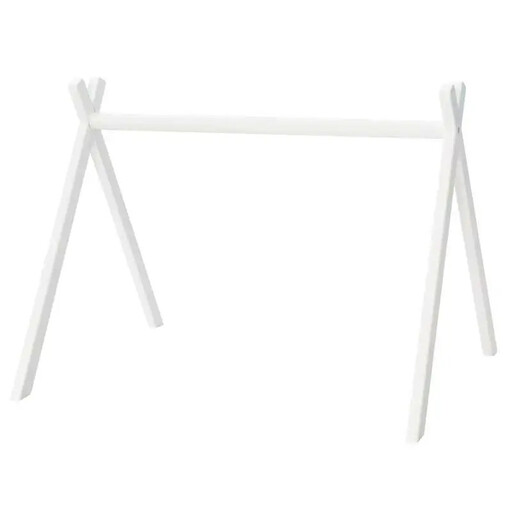
Why it's a great choice: Ideal for babies from 3 months, this gym focuses on sensory development and hand-eye coordination in a safe, accessible frame. Its compact footprint is perfect for a living room or nursery.
This product avoids the "one-size-fits-all" trap. Its function is clear and perfectly targeted for the first few months, ensuring maximum use during this key developmental period.
Inspired by Montessori principles, it promotes the baby's autonomy. Its lacquered wood surfaces can be wiped clean with a sponge, a real plus for parents.
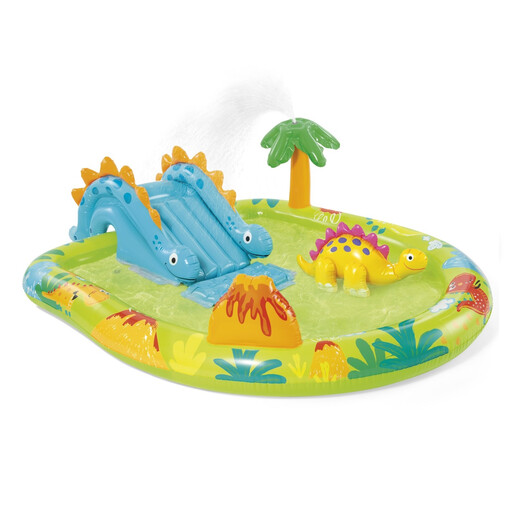
Why it's a great choice: For families with a garden or patio, this inflatable play center is the perfect solution for cooling off and having fun on hot summer days. It combines a small slide and a water sprayer to the delight of children (ages 2 and up).
Its seasonal use and ultra-simple storage solve the problem of clutter and outdoor material wear. The vinyl is perfectly suited for this type of occasional use.
All-in-one and quick to set up. Just connect it to a standard garden hose, and its drain plug makes cleanup a breeze. Simplicity is key!
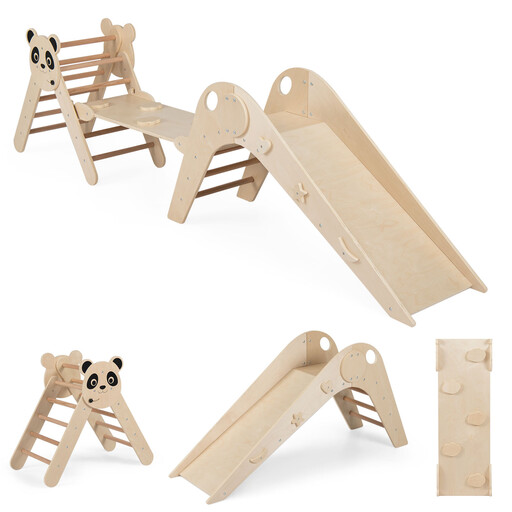
Why it's a great choice: This climbing structure is designed for kids from 3 years old who are bursting with energy and need to climb, slide, and explore safely. It's perfect for developing strength, balance, and coordination at home.
Its foldable design solves the number one problem with indoor toys: clutter. The solid beech wood ensures far greater durability than entry-level plastics.
Its versatility (triangle, slide, tunnel) and sturdiness guarantee years of play. A child can constantly reinvent their adventures as they grow.
Explore our full collection of products that meet our strict selection criteria and current safety standards.
The general rule is to provide a safety zone free of any obstacles of at least 1.5 to 2 metres (5 to 6.5 feet) around the entire structure. For equipment with moving parts like a swing, this distance should be even greater in the direction of the swing's path. Always read the manufacturer's instructions, which specify the required clearance space.
For a wooden structure, check the condition of the wood annually and apply a coat of stain or sealant suitable for outdoor use to protect it from moisture and UV rays. Retighten screws as needed. For plastic or vinyl structures (like an inflatable play center), regular cleaning with soapy water is sufficient. Be sure to dry it thoroughly before storing to prevent mould and mildew.
Pikler triangles are generally recommended for children who are starting to pull themselves up and want to climb, often around 12 to 18 months, always under adult supervision. The key is to let the child use it at their own pace, without prompting. Some more complex models with slides are indicated for children from 3 years old. Always follow the manufacturer's age recommendations.