
Livraison le jour même ou le lendemain

Qualité garantie

Débloquez vos offres de bienvenue: Livraison GRATUITE | Jusqu'à -80 % | 30 jours d'essai gratuits à JoyPlus
Téléchargez l'application
Choosing a new camping tent should be an exciting moment—the first step towards adventure. Yet, the process can quickly become a headache. Between marketing jargon and overwhelming spec sheets, it's easy to end up with unsuitable gear that can turn a dream getaway into a total nightmare.
As a product expert at Joybuy, my mission is to help you cut through the noise. Let's break down the common pitfalls to avoid and the criteria that truly matter, so you can make the right choice, whether you're a seasoned trekker or a weekend camper.
The 3 Classic Mistakes When Buying a Tent:
To avoid falling into these traps, you need to understand a few technical concepts. These are the details that make all the difference between a reliable shelter and a source of frustration.
A tent's waterproofness is measured by its hydrostatic head rating (in millimetres, noted as mm or PU). This rating assesses the fabric's resistance to a column of water.
Beyond the numbers, the presence of sealed seams (using heat-taped strips) is non-negotiable. Without them, even the best fabric will eventually leak at the joints.
For a hiking tent, weight is enemy number one. Every gram counts. Conversely, for family car camping where the vehicle does the heavy lifting, the priority shifts to durability and space.
A good tent must be breathable to manage condensation. The presence of large mesh panels on the inner tent is therefore essential. For summer comfort, an anti-UV tent with a blackout fabric can lower the internal temperature by several degrees and block out early morning light. A true luxury for those who love to sleep in!
The one-size-fits-all tent doesn't exist. The secret is to find the one that matches your specific needs. Here is our selection for three distinct profiles.
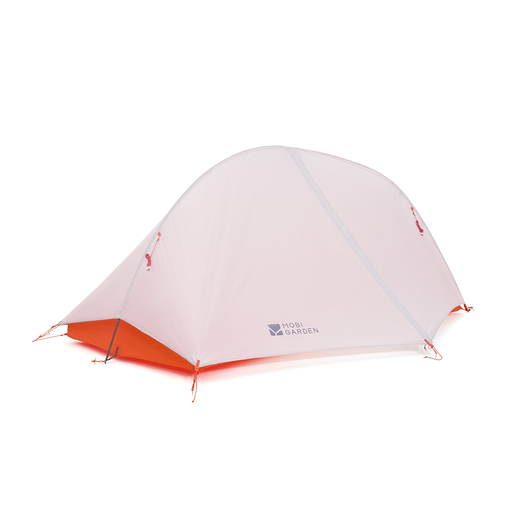
Profile: Ideal for multi-day treks and bivouacs where every gram counts. Its design is entirely focused on performance and a featherlight weight in your backpack.
This model doesn't sacrifice performance for false simplicity. It embraces a classic pole setup to guarantee a featherlight weight (around 1.18 kg) and a record-breaking packed size (48 × 11 cm), the opposite of often heavy and bulky instant tents.
Cutting-edge technical materials: silicone-coated 20D ripstop nylon fabric and ultralight aluminium alloy poles. Its dual entry (front and rear) is a real bonus for ventilation and access.
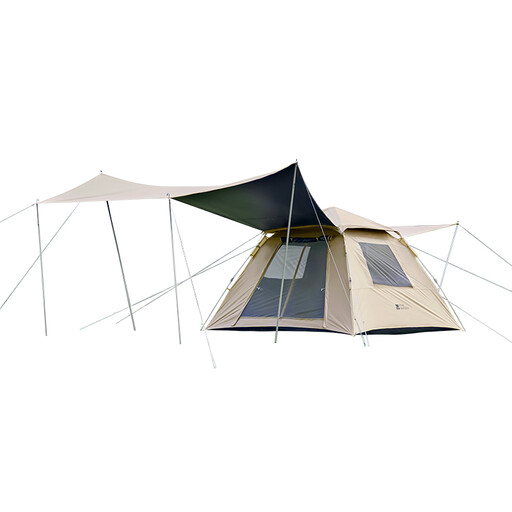
Profile: Perfect for families or trips with friends where you travel by car. Here, the priority is speed of setup, living space, and comfort, especially protection from the sun and heat.
No more space-related headaches! With its generous footprint and a height of 155 cm, you can almost stand up inside. The instant tent system delivers on its promise during setup. The included tarp allows you to create a practical awning, expanding the outdoor living area.
Its UV-blocking (UPF50+) blackout fabric effectively blocks light and heat. Ventilation is maximised with openings on five sides (all equipped with mosquito nets). Its fibreglass structure is designed to withstand Force 6 winds.
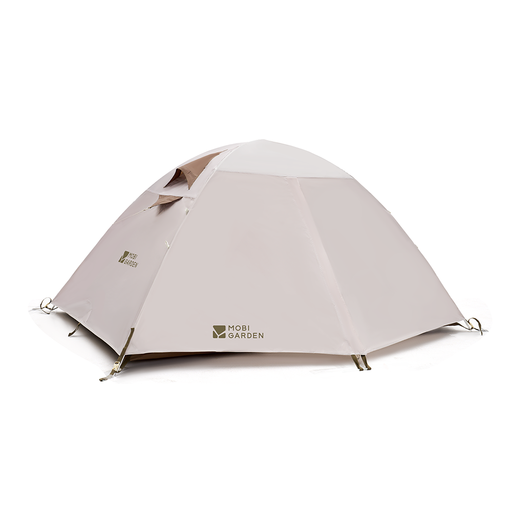
Profile: The perfect balance for couples or friends who switch between weekend hiking and more stationary car camping. It's not a featherweight, but it remains light enough to be carried while offering excellent durability.
This model strikes the perfect middle ground: it has neither the fragility of extreme ultralight tents nor the excessive weight of family models. Its 2.64 kg weight is manageable for multi-day hikes, and its 4000 mm (PU 4000) groundsheet provides peace of mind against ground moisture.
Its freestanding dome structure with crossed aluminium poles is a time-tested classic known for its stability. The 68D polyester fabric is a great compromise between durability and weight. Ventilation is handled by a mostly mesh inner tent and a double door.
Explore our full selection of products that meet our quality criteria and current safety standards.
A tent's lifespan depends primarily on its care. Three golden rules to follow scrupulously:
A simple and almost infallible guide is the "N+1 rule". Are there two of you? Choose a three-person tent. This extra space is not a luxury: it will allow you to store your bags and gear inside, while still having a comfortable sleeping area, which is crucial in bad weather.
It's an excellent choice for casual family camping, when speed of setup is the top priority. Its number one advantage is its nearly instantaneous deployment. On the downside, packing it away requires a certain knack, and its packed shape (a large, flat disc) makes it impossible to attach to a backpack. For hiking, a classic pole tent remains the most versatile solution.