
Livraison le jour même ou le lendemain

Qualité garantie

Débloquez vos offres de bienvenue: Livraison GRATUITE | Jusqu'à -80 % | 30 jours d'essai gratuits à JoyPlus
Téléchargez l'application
A waterproof camping tent needs to keep you dry in the rain, but that one criterion alone isn't enough to make the right choice. On a product page, a promise like "weather-resistant" can hide a fabric that doesn't breathe well, a groundsheet that's too thin, or a structure that's far too heavy for hiking.
Before you order, there are three pitfalls worth paying close attention to:
The value given in millimetres, such as PU2000 mm, refers to the water pressure the fabric can withstand during a laboratory test. It's a useful benchmark for comparing products, but it doesn't guarantee absolute protection against all weather conditions.
For regular use camping or hiking, check each of these separately:
A floor rated at PU3000 or PU4000 mm, like on some hiking models, offers enhanced protection against ground moisture. However, it's still essential to pitch the tent on a flat surface, cleared of stones and sharp branches.
For a hiking tent, a trekking tent or an ultralight tent, every gram counts once the trail gets long. A model weighing 1.18 kg can work well for a multi-day route, while a 2.64 kg tent focuses more on space and stability.
Aluminium alloy poles generally offer a good balance between lightness and rigidity. Fibreglass frames are more common on instant-pitch models, designed for camping, picnics or trips where you travel by car.
Also compare the internal dimensions. A tent advertised for two people can offer very different widths depending on its design. Dimensions of 200 × 130 × 100 cm, for example, suit a compact sleeping space, but leave little room for bags.
A very covering fabric can limit light and heat, but it needs to be paired with sufficient openings. Mesh panels help air circulate and reduce condensation, especially during damp nights.
A UV-resistant tent or a blackout tent can be a great choice for summer camps. However, UPF ratings and UV-blocking percentages should be seen as features stated by the manufacturer, not as universal protection in all circumstances.
Finally, choose the type of pitch based on your priority:
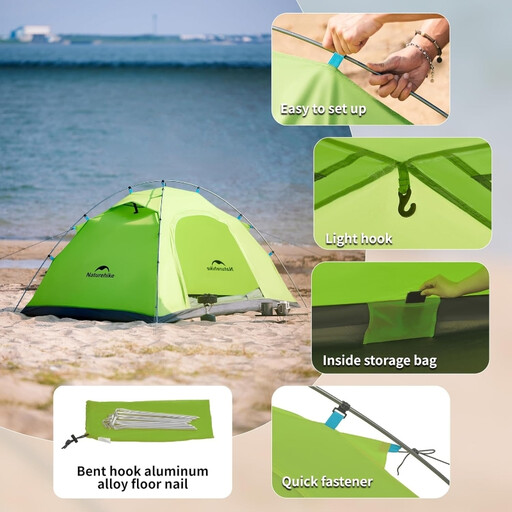
Why this choice suits this profile: Its dimensions of 200 × 130 × 100 cm and its stated weight of 1.65 kg offer an interesting compromise for couples and campers looking for a versatile model.
The product page mentions a waterproof polyester fabric with UV protection, plus a set of pegs included to stabilise the pitch.
A contained weight, aluminium poles and a design stated for four seasons. However, avoid using it beyond its structural limits.
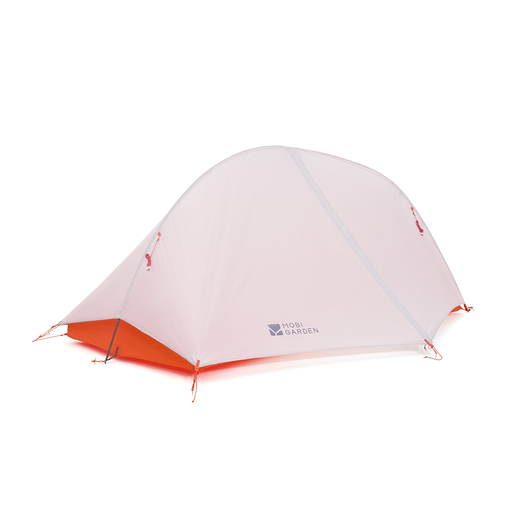
Why this choice suits this profile: At around 1.18 kg, a packed size of 48 × 11 × 11 cm and ultralight aluminium poles, this model is aimed at long-distance hikes for two.
Its 20D nylon rainfly benefits, according to the product page, from a silicone treatment and a waterproof rating of PU2000 mm. This tent is still classified as three-season.
Two doors, two vestibules and mesh that promotes ventilation. Its reduced weight means you need to handle the fabric with care.
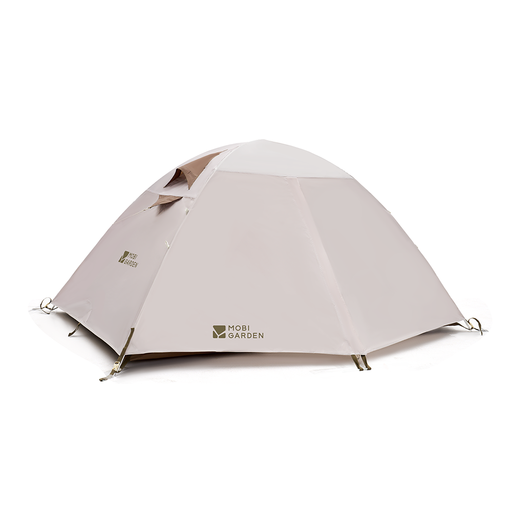
Why this choice suits this profile: This two-person model at 2.64 kg focuses on a more spacious build and a reinforced groundsheet for regular trips.
The rainfly is rated at PU2000 mm and the floor at PU4000 mm, with protected seams. These figures don't replace the need to pitch the tent correctly and tension it properly.
Crossed aluminium poles, double doors and mesh ventilation. Its weight needs to be considered on routes with elevation gain.
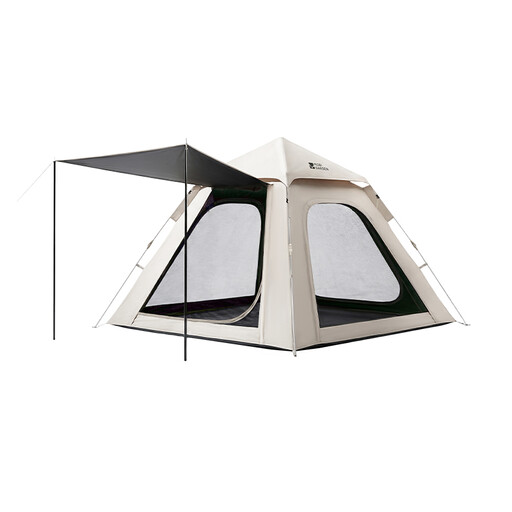
Why this choice suits this profile: Its space of 240 × 240 × 155 cm can accommodate two to five people. Its automatic-opening frame is well suited to frequent set-ups at the campsite.
The pitch, stated to take just seconds, is completed with pegs and guy lines. The tent must still be firmly secured to the ground, especially when the wind picks up.
Blackout fabric, stated UPF50+ protection, ventilation on multiple sides and PU2000 mm waterproofing. At around 7.8 kg, it's more suited to motorised transport.
We've put together a comprehensive, real-time updated selection of products that meet these demanding criteria, while complying with European safety regulations.
Even a well-designed tent can lose its effectiveness if it's used incorrectly. Choose a spot away from water run-off and dead branches. Tension the rainfly so it doesn't touch the inner tent directly, then adjust the guy lines to avoid creases that could hold water.
After each trip:
A rating of PU2000 mm is a common benchmark for the rainfly. For the floor, a higher value can offer extra margin on damp ground. Also check the seams, the groundsheet design and the quality of the pitch.
No. The 4-season label indicates a more versatile design, but it doesn't guarantee safe use in a storm, heavy snowfall or winds exceeding the stated limits. Always consult the manufacturer's warnings.
Ventilate the inner tent using the doors and mesh panels, avoid drying wet clothes inside, and leave a gap between the rainfly and the inner tent. A correctly tensioned pitch also helps air circulate.