
Livraison le jour même ou le lendemain

Qualité garantie

Débloquez vos offres de bienvenue: Livraison GRATUITE | Jusqu'à -80 % | 30 jours d'essai gratuits à JoyPlus
Téléchargez l'application
Watching birds in your garden is a simple pleasure, and technology is now transforming it into a fully immersive experience. A camera bird feeder opens a window into the secret lives of your feathered visitors, right on your smartphone. But in an increasingly crowded market, marketing traps abound. This guide is here to help you cut through the noise and make an informed decision, steering clear of empty promises.
The smart feeder market is filled with tempting features. Be careful, as some of them hide flaws that can quickly ruin the daily experience. Here are the main things to watch out for.
solar bird feeder is an excellent solution to this problem.AI recognition bird feeder is a key selling point. The problem: some systems struggle to correctly identify species. Worse, key features are sometimes locked behind a costly monthly subscription—an unpleasant surprise that is often not clearly disclosed at the time of purchase.To ensure your smart bird feeder lives up to its promises, rely on objective technical criteria rather than marketing hype.
Battery life is the crucial factor. Check the battery capacity, expressed in milliampere-hours (mAh). Aim for at least 5000 mAh for decent endurance. For complete peace of mind, models with an integrated solar panel are an option worth serious consideration. They provide continuous charging during the day and drastically reduce manual recharges—a real bonus if the feeder is installed up high.
A good garden bird camera must deliver a crystal-clear image.
Instead of a simple list, we've selected models that meet specific needs. It's up to you to find the one that's right for you.
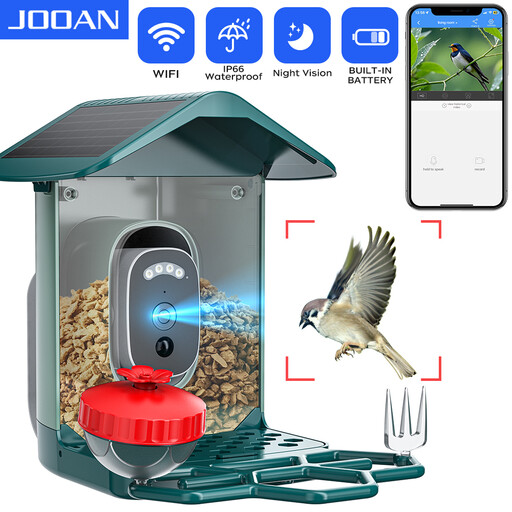
Why it's a match: Ideal for those who want the best image quality and record-breaking battery life. The ultimate "set it and forget it" solution.
The integrated solar panel directly solves the problem of limited battery life. Its 2K Ultra HD resolution guarantees ultra-detailed images, far surpassing a simple 'HD' label.
The combination of 2K resolution and solar power ensures continuous, high-quality monitoring. A major plus: its large 2-litre capacity.
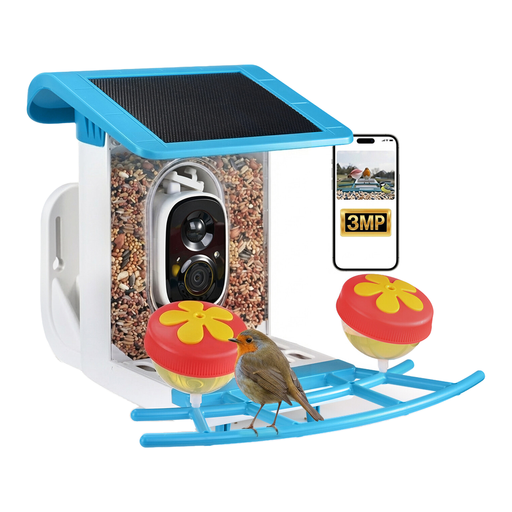
Why it's a match: Perfect for anyone seeking a complete experience, day or night. An excellent `birder's gift` that combines technology with a love for wildlife.
This model tackles the pitfall of poor night quality with its colour night vision. Here, AI is a central feature for identifying birds, not just a gimmick.
The colour night vision and two-way audio provide an immersive and interactive experience, even after sunset.
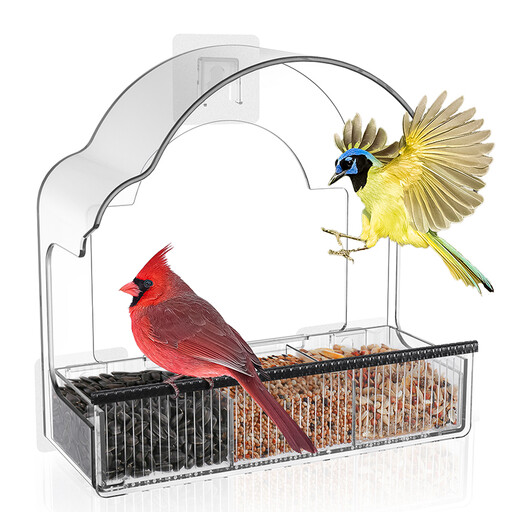
Why it's a match: For those who want to watch birds up close from their window, without the complexity of a smart device. Ideal for apartments or for families with children.
This model bypasses all the tech pitfalls (battery, Wi-Fi, AI) to focus on the essential: direct, unfiltered observation through its transparent wall.
Maximum simplicity and unmatched proximity. Its 6 suction cups ensure a stable attachment for peacefully watching the show from your sofa.
Most feeders operate on the 2.4 GHz Wi-Fi band, known for its good range. Generally, a distance of 10 to 15 metres from your router is sufficient, but thick walls or obstacles can weaken the signal. Our advice: test the signal strength with your smartphone at the exact spot where you plan to install the feeder before mounting it.
No, installation is usually very simple. The models come with mounting kits for a tree, pole, or wall. Just fully charge the device, connect it to your Wi-Fi via the dedicated mobile app, and then securely mount it outside. The app guides you step-by-step.
It all depends on the manufacturer. Some models include basic identification for free, while others require a paid subscription to unlock advanced features (complete visit history, cloud video storage, etc.). It is therefore crucial to check this point carefully before you buy.