
Livraison le jour même ou le lendemain

Qualité garantie

Débloquez vos offres de bienvenue: Livraison GRATUITE | Jusqu'à -80 % | 30 jours d'essai gratuits à JoyPlus
Téléchargez l'application
Do you leave early in the morning, come home late, or travel regularly? An automatic pet feeder can help you maintain regular meal times without having to ask a neighbour. But not all devices meet the same needs: dry or wet food, cat or dog, simple portions or remote programming.
Before buying, it’s best to avoid three common pitfalls: a poorly suited capacity, an app that’s too dependent on the network, and a device that’s difficult to clean. Here are the criteria to consider, followed by a selection of models for different profiles.
A 4-litre tank doesn’t guarantee several weeks of autonomy. The duration depends on portion size, the number of meals, and your pet’s appetite. An adult cat and a medium-sized dog obviously don’t have the same needs.
So check the usable capacity, the maximum number of programmable meals, and the diameter of kibble accepted. Some mechanisms are designed for dry food up to 12 mm, while a wet food dispenser generally works with separate compartments.
A connected feeder can be used to programme meals, receive alerts, or check history from a mobile app. However, you need to check the usage conditions: compatible Wi-Fi network, mains power, backup battery, and offline operation.
For a short absence, a standard programmable feeder can be perfectly adequate. If you want to keep an eye on meals remotely, choose a device whose essential functions remain accessible in the event of an internet outage.
Leftover wet food requires special attention. An airtight seal, easy-to-remove compartments, and a cooling function can be useful, but they don’t replace regular cleaning.
For kibble, look for a lid that limits moisture and insect access. For water, a cat water fountain requires filter replacement and frequent cleaning of the tank. Any promise of freshness should be assessed against the conditions specified by the manufacturer.
An automatic kibble dispenser uses a tank and a dosing mechanism. It’s suitable for owners who want to schedule several dry meals. A cat food dispenser with compartments is better suited to wet food and portioned meals, especially when your pet eats small amounts at different times of the day.
Treat dispensers are a separate category. They shouldn’t replace main meals and may require a compatible camera.
Compare the following points:
A stainless steel bowl can be practical for daily use, while an anti-gulping bowl with ridges slows down eating. However, it doesn’t replace veterinary advice in the case of digestive issues or eating behaviour problems.
A mains-powered device is generally suitable for fixed installation. A built-in battery offers more flexibility, but its autonomy depends on the number of distributions and connected features. Also check whether batteries or the adapter are included.
The motorised base must not be submerged. Removable parts should be washed according to the instructions, and fountain filters replaced regularly. Before your first absence, run several tests to check the dosage and your pet’s reaction.
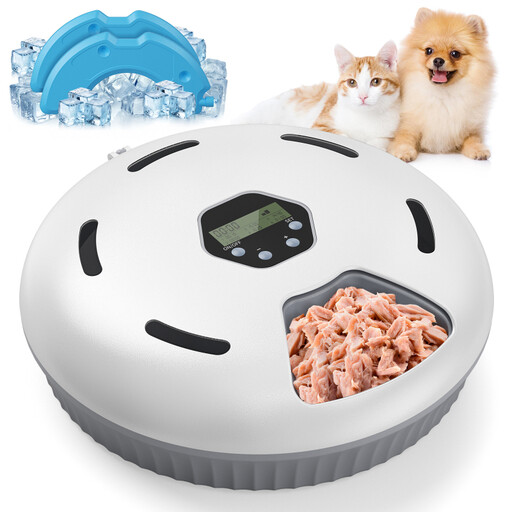
Why this choice suits this profile: Its 6-meal format and battery operation let you get started with automating wet meals simply, without having to configure an app.
Meals are divided into dedicated compartments, which prevents leaving all the food out at once. Batteries are not included: remember to buy them before setting up.
6 compartments, battery power, and a cooling function as stated on the product sheet.
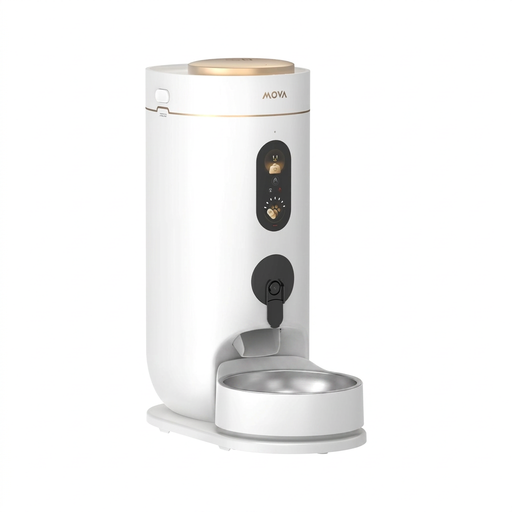
Why this choice suits this profile: This model combines programming, a camera, a screen, and a separate compartment for dietary supplements. It’s aimed at households that want to centralise several functions in one device.
The product sheet mentions several dispensing modes as well as manual operation, which avoids relying on a single automation function.
4-litre tank, 1080p camera, 4.2-inch screen, and a 7-section compartment.
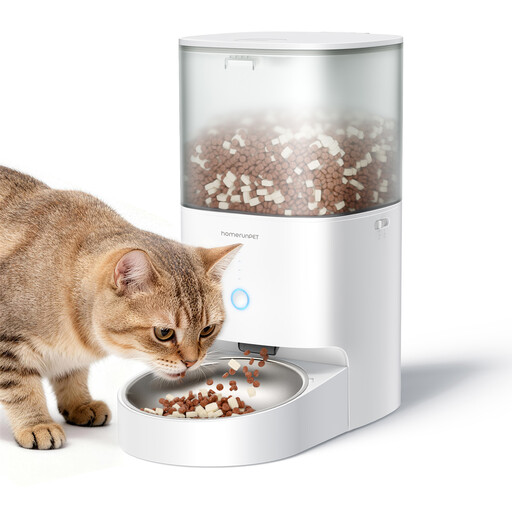
Why this choice suits this profile: It’s aimed at people who are often away and want to set schedules and quantities from a mobile app.
The anti-jam dispensing system and the closure stated after the meal address the risks of blockages and moisture.
4-litre capacity, app with meal history, and a choice between a ceramic or stainless steel bowl.
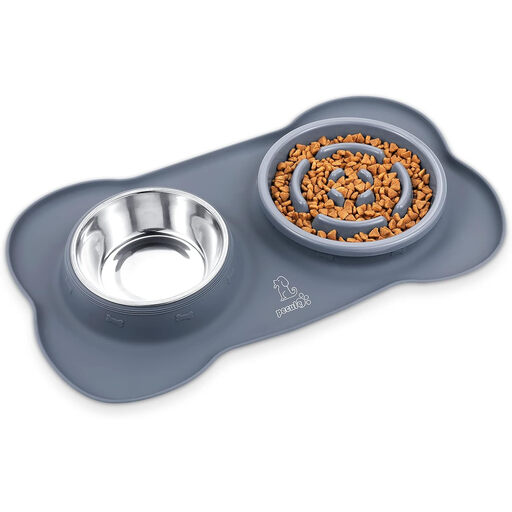
Why this choice suits this profile: Without a motor, this solution complements an automatic feeder when your pet eats too quickly or when you’re travelling with its accessories.
It doesn’t depend on a battery or Wi-Fi. The silicone base limits slipping, while the collapsible design makes it easy to store.
3-in-1 set, 400 ml anti-gulping bowl, stainless steel water bowl, and dishwasher-safe parts according to the product sheet.
We’ve put together a comprehensive, real-time updated list of products that fully meet these strict selection criteria and European safety regulations.
Before leaving your pet alone, test the dog food dispenser or cat feeder for several days. Check the actual amount dispensed, the motor noise, and access to the bowl. Place the device on a stable surface, away from water and heat sources.
Clean the bowl regularly and remove any leftover food. For a fountain, rinse the tank and change the filter according to the instructions. Finally, keep a backup solution — a manually given portion or a trusted person — in case of a breakdown, low battery, or connection problem.
It all depends on the capacity, portion size, and kibble diameter. Many models are designed for cats and small or medium-sized dogs. Always check the manufacturer’s instructions and monitor the first few meals.
An app is useful for changing schedules remotely, receiving alerts, and checking distribution history. However, it’s not essential for simple use. If your home has unstable Wi-Fi, check that local programming or offline operation is still possible.
In addition to the purchase price, you may need to factor in batteries, electricity, filters, and, for some connected services, a possible storage subscription. Before choosing, compare what’s included in the box, the stated autonomy, and how often consumables need replacing.