
Livraison le jour même ou le lendemain

Qualité garantie

Débloquez vos offres de bienvenue: Livraison GRATUITE | Jusqu'à -80 % | 30 jours d'essai gratuits à JoyPlus
Téléchargez l'application
A 2K security camera delivers a more detailed image than a Full HD model, which can make all the difference when monitoring an entrance, a patio or a distant room. But resolution isn't everything. An unstable connection, disappointing night vision or limited storage can quickly spoil the day-to-day experience.
Before you head to the checkout, take the time to compare the features that really matter for your situation in the UK: location, power supply, WiFi network, image storage and alert management.
The term 2K primarily refers to image definition. On its own, it says nothing about the quality of the lens, the video compression or the performance when the scene lacks light. A 2K camera installed behind reflective glass, facing a light source or too far from the area you want to monitor can produce images that are difficult to use.
Also check:
A wireless outdoor camera typically runs on battery, sometimes with an optional solar panel. This solution avoids having to run a network cable, but battery life depends on the number of detections, temperature, signal quality and how often you access the feed remotely.
For continuous monitoring, a mains-powered camera is often more suitable. Conversely, a battery-powered model is practical for a garden, an outbuilding or a hard-to-wire façade, provided you're happy to recharge it regularly. Also check whether the solar panel is included or sold separately.
Some cameras offer cloud storage with a subscription. Others accept a microSD card for local video recording. In both cases, check the maximum capacity, the type of recording supported and the options for backing up important footage.
Local storage helps keep recurring costs down, but the memory card isn't always included. Continuous recording also uses far more space than motion-triggered capture. For a second home or a small business, a solution combining a memory card with remote backup can offer greater flexibility.
For a WiFi security camera, 2K resolution provides a solid foundation for picking out details in a relatively close area. But you still need to install it in the right spot. A motorised PTZ 360° camera can cover a large room or a garden, but its actual field of view depends on its pan and tilt angles.
Fixed models are generally simpler to install. Motorised versions may offer auto-tracking, but check what this feature actually follows: people, general movement or a predefined zone.
Standard motion detection can be triggered by passing branches, changes in brightness or an animal. A human detection feature attempts to filter out some of these false triggers, but its effectiveness varies depending on the software, distance and lighting conditions.
Before you buy, check whether the app allows you to:
For an outdoor installation, look for a clearly stated ingress protection rating such as IP65, IP66 or IP67, and follow the mounting instructions. This rating doesn't mean the camera can be submerged or exposed to all weather conditions without care.
Indoors, a WiFi indoor camera should be positioned so that it doesn't unnecessarily film private spaces. In the UK, using a camera must respect the right to privacy. In particular, avoid filming public areas or neighbours, and inform anyone who may be recorded where necessary.
Two-way audio lets you easily speak with a family member or visitor, but the microphone should be able to be switched off if the situation requires it.
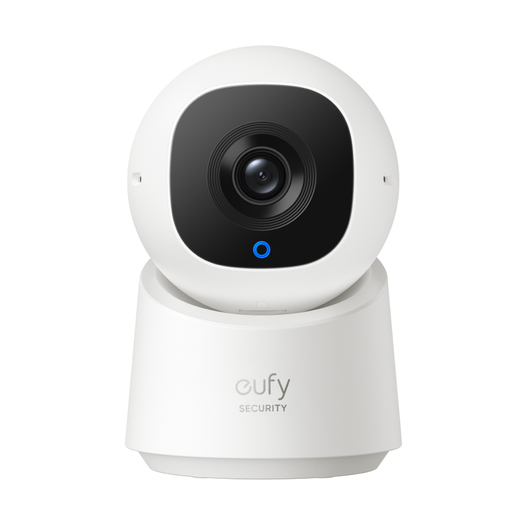
Why this choice suits this profile: Its design is ideal for a living room, bedroom or pet area, with mains power and access via the app.
The spec sheet states local storage on a microSD card up to 128 GB, which can reduce reliance on a cloud subscription.
Advertised 2K resolution, 360° rotation, person detection and motion tracking according to the product sheet.
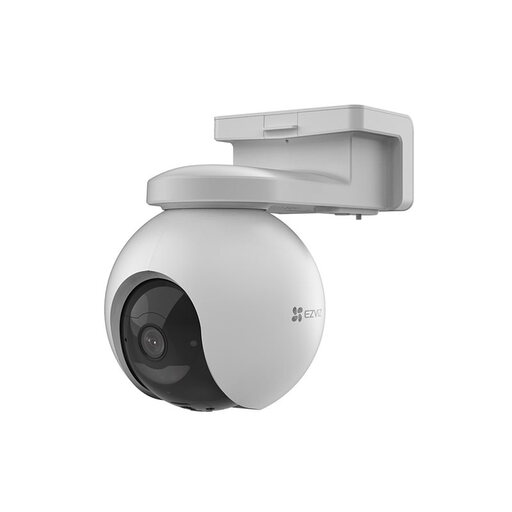
Why this choice suits this profile: The 4G connection is ideal for a garden, plot of land or outbuilding without WiFi.
The spec sheet states that a SIM card and data plan are required, so factor in this running cost before installation.
10,400 mAh battery, built-in GPS, person detection, auto-tracking, two-way audio and microSD card up to 256 GB.
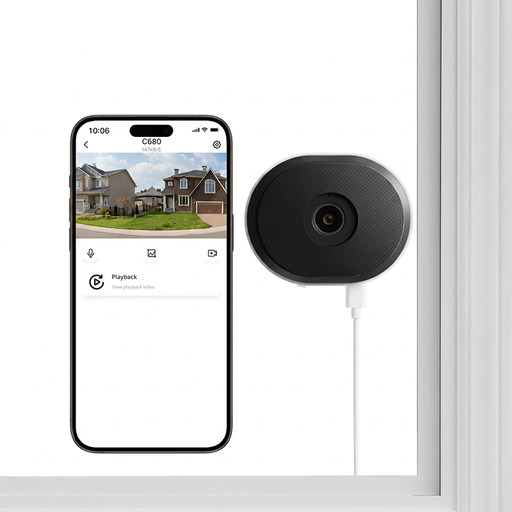
Why this choice suits this profile: Its window-mount design, with no drilling required, may appeal to tenants, flat-dwellers, shop windows or any space needing a reversible installation.
The spec sheet mentions an anti-glare treatment for monitoring through a window. You'll still need to position the camera away from direct light sources.
2.4 GHz and 5 GHz WiFi, advertised colour night vision, person and vehicle detection, microSD card up to 256 GB.
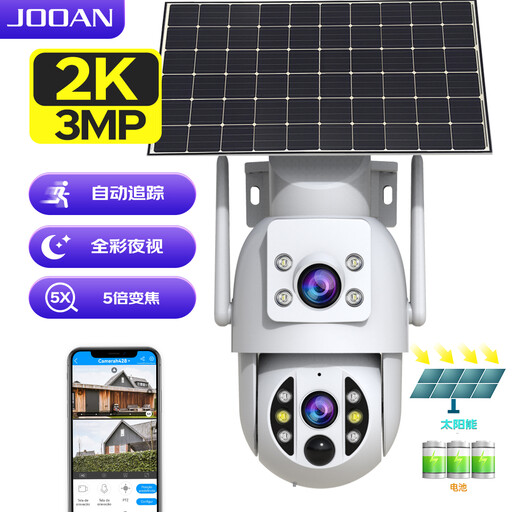
Why this choice suits this profile: It's aimed at those who want to monitor an outdoor space with a built-in battery and the option to add a solar panel.
The spec sheet states that 24/7 continuous recording is not supported and that cloud storage may incur a fee.
Dual 3 MP lens, 9,000 mAh battery, PIR detection, colour night vision, two-way audio and remote access via the app.
Install the camera at a sufficient height to limit tampering, while keeping a clear view of the area you want to monitor. Test the WiFi signal from its final position before drilling or fixing the mount. For an outdoor camera, protect the electrical connections and angle the lens to minimise the field of view towards neighbouring properties as much as possible.
Start with a suitable detection zone and moderate sensitivity. This will help you avoid a flood of notifications. Also remember to change the default password, keep the app updated and use a secure WiFi network.
No. Many models only work on 2.4 GHz WiFi, while some also support 5 GHz. 2.4 GHz generally carries further, but it's often more congested. Check the camera's compatibility with your router as well as the actual coverage in the room or garden.
It all depends on the power supply, the microSD card, data usage and any cloud subscription. A mains-powered camera with local storage can keep recurring costs down. A 4G model, on the other hand, requires a SIM card and a data plan.
No. Battery-powered models often favour motion-triggered recordings to preserve battery life. If you need 24/7 recording, explicitly check that this feature is supported, then check the power requirements and recommended storage capacity.