
Livraison le jour même ou le lendemain

Qualité garantie

Débloquez vos offres de bienvenue: Livraison GRATUITE | Jusqu'à -80 % | 30 jours d'essai gratuits à JoyPlus
Téléchargez l'application
A Bluetooth OBD2 car diagnostic scanner can quickly become an invaluable tool for an independent garage, mechanic, enthusiast or private vehicle owner who wants to understand the cause of a warning light before booking an appointment. However, not all interfaces provide access to the same control units or offer the same maintenance functions.
The main pitfall is buying a basic fault-code reader marketed as a complete diagnostic tool. It may be able to read the engine control unit while remaining unable to access the ABS, SRS, transmission or reset functions.
The OBD2 standard primarily covers emissions- and engine-related data. An OBD2-compatible reader may therefore display or clear certain codes without providing access to all of the vehicle’s electronic systems.
To cover a broader range of functions, look explicitly for full-system diagnostics covering the engine, transmission, ABS, SRS, steering, air conditioning or body systems, depending on the vehicle. Coverage always depends on the make, model year and vehicle configuration.
An advert stating “compatible with 128 brands” or “99 % vehicle coverage” does not mean that every function will be available on every car. Compatibility may vary depending on whether you want to read codes, display live data or perform special operations.
Before ordering, look for :
Some devices have an attractive purchase price, then place functions such as oil-service resets, EPB, BMS or SAS behind an annual subscription. You should therefore calculate the cost of ownership over two or three years rather than looking only at the price displayed at the time of purchase.
A device may advertise lifetime free OBD2 functions while limiting access to certain maintenance functions to a defined period. The distinction is essential : free access to standard OBD2 functions does not necessarily include special services.
A basic car fault-code reader generally focuses on the engine. For a workshop or a newer vehicle, prioritise a device capable of :
Clearing a code obviously does not repair the underlying problem. After carrying out a repair, it is better to confirm that the fault has disappeared and check the live data.
The advertised operations should match the actual needs of your vehicle fleet. Common functions include oil-service reset, EPB reset for the electronic parking brake, BMS reset after battery replacement and SAS reset for the steering-angle sensor.
Depending on the vehicle, the device may also offer injector coding, TPMS reset, DPF regeneration or assisted ABS bleeding. These functions are not universal and should be used in accordance with the procedure recommended by the manufacturer.
An iOS and Android automotive diagnostic tool must be compatible with your phone or tablet’s operating system. In particular, check :
Bluetooth eliminates the need to run a cable between the vehicle and smartphone, but it does not replace a stable power supply or reliable communication with the OBD2 port. During a lengthy diagnostic session, make sure the vehicle battery remains sufficiently charged.
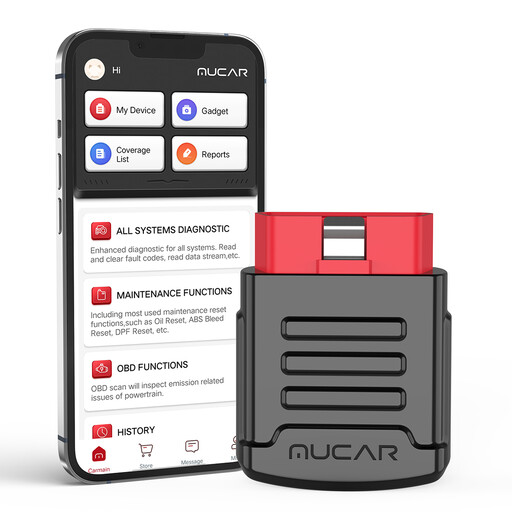
Why it suits this profile : A screen-free solution used with an iOS or Android phone for routine diagnostics at home or in a small workshop.
The product listing states that OBD2 functions and diagnostics for available systems are free for life. The 15 reset functions are advertised with one year of free access, so it is important to distinguish between these two categories.
Bluetooth connectivity, advertised compatibility with more than 128 brands, support for iOS and Android, and 12 available languages.
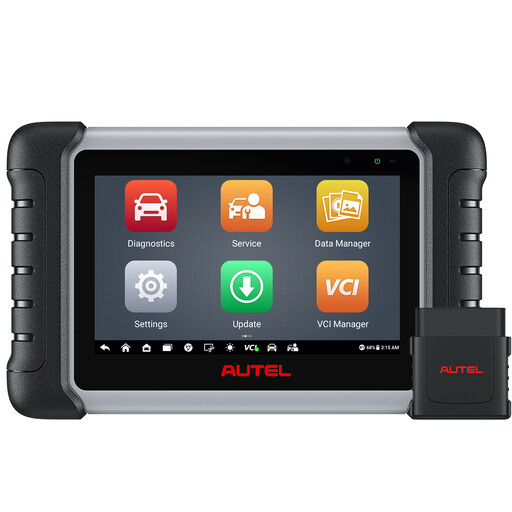
Why it suits this profile : Garage professionals and experienced users looking for a professional OBD2 scanner with a dedicated display and a broader range of special functions.
The listing specifies that one year of updates is included. This should be factored into the budget if you want to maintain up-to-date software coverage afterwards.
Advertised wireless connectivity of up to 10 metres, more than 38 maintenance services, full-system diagnostics and bidirectional controls, depending on the vehicle.
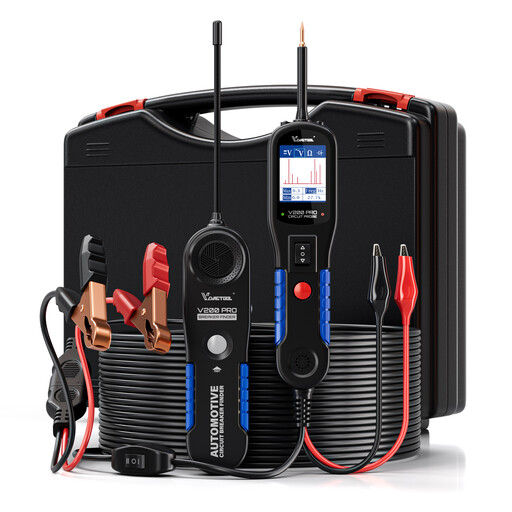
Why it suits this profile : A supplementary tool for troubleshooting 6- to 30-volt circuits, particularly when locating an open circuit, short circuit or poor connection.
It is not presented as an OBD2 diagnostic tool: it is a separate device dedicated to electrical circuits. You therefore should not expect it to read control units.
Voltage, resistance, diode, continuity and polarity tests, component activation, overload protection and an advertised cable length of approximately 6.1 metres.
We have brought together an updated selection of products designed for professional applications and automotive maintenance work.
The OBD2 port is generally located beneath the dashboard, near the steering wheel, although its position varies from one vehicle to another. To get started :
An EPB, BMS or SAS reset can affect the behaviour of a safety-related system. If in doubt, consult the vehicle documentation or contact a qualified professional. Never use a diagnostic function to conceal a fault before a roadworthiness inspection.
No. The port may be standardised, but access to systems and special functions depends on the make, model, year and control unit. Check the compatibility list before buying.
Not necessarily. Standard OBD2 functions, such as reading certain engine codes, may be advertised as free for life. Services such as oil-service reset, BMS, EPB or injector coding may be subject to a free-access period or specific conditions.
The key requirement is to meet the minimum version specified by the app. Also check Bluetooth compatibility, available storage space and connection stability. For regular workshop use, a scanner with its own display can reduce reliance on a phone.