
Livraison le jour même ou le lendemain

Qualité garantie

Débloquez vos offres de bienvenue: Livraison GRATUITE | Jusqu'à -80 % | 30 jours d'essai gratuits à JoyPlus
Téléchargez l'application
By Joybuy, Your Product ExpertPublished: August 26, 2026
There's nothing more frustrating than seeing black mold spots appear on a bathroom seal you thought was brand new. If you're reading this, you're looking for a long-term solution for your sealant joints, whether it's to redo a shower seal or for your kitchen silicone seal.
DIY aisles are overflowing with products promising foolproof protection, but not all are created equal. Before you start, it's best to know the common pitfalls to avoid so a simple DIY project doesn't turn into a nightmare.
The 2 classic mistakes when buying a sanitary sealant:
This guide gets straight to the point: giving you the keys to choosing the right cartridge of anti-mold silicone for a flawless, long-lasting result.
To guarantee the longevity of your watertight bathroom sealant, three technical criteria must be scrutinized before purchase. This is what distinguishes a seal that remains impeccable for years from one that needs redoing after six months.
Antifungal SiliconeA sealant's resistance to mold lies in its formula, specifically the fungicidal agents it contains. Quality products integrate a concentration of protective agents designed for long-term action. A mention of "enhanced protection" or a reference to a proprietary manufacturer technology is often a good indicator. However, keep in mind that even the best product in the world requires good room ventilation to eliminate stagnant moisture, the main cause of mold growth.
There are two main families of sanitary silicone sealants, and the choice depends directly on the materials to be joined.
white sanitary silicone. It releases a vinegar-like odor as it cures. Its key advantage? Excellent adhesion on non-porous surfaces like enamel, porcelain, tile, or glass. It's the classic choice for sinks, showers, and bathtubs.Verifying the product's compatibility with your substrates is a non-negotiable step to ensure perfect adhesion.
For the weekend DIYer, applying the seal is often a source of anxiety. Some manufacturers have therefore developed solutions to simplify the process. Systems like pre-cut nozzles or integrated smoothing applicators help achieve a clean finish without additional tools and reduce waste. An easy-to-smooth sealant guarantees an even joint that won't trap water or dirt.
Rather than an endless list, we've chosen to match products to specific use cases. This will help you quickly identify the solution that fits your project.
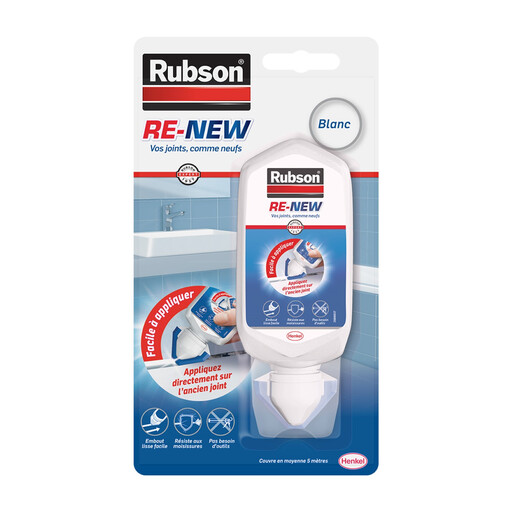
The ideal user: Perfect for refreshing a yellowed or mold-spotted seal without having to remove the old one. An express solution to give your bathroom a quick refresh before guests arrive or for regular maintenance.
This product is applied directly over the existing seal. Say goodbye to the most tedious and messy step: removing the old silicone. Its integrated smoothing applicator ensures a clean finish effortlessly.
2-in-1 application (covers and protects); anti-mold formula; integrated smoother for a perfect finish.
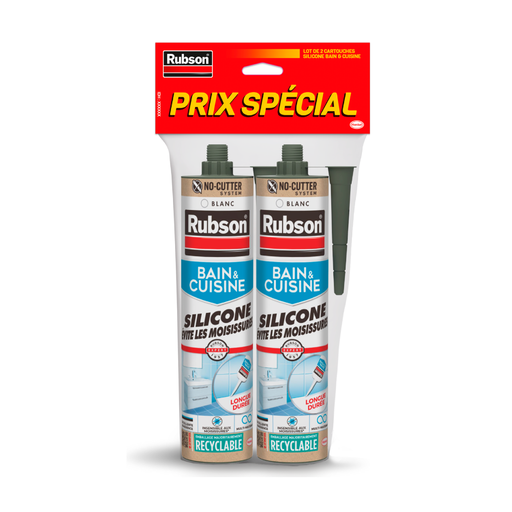
The ideal user: For those renovating their bathroom or kitchen from scratch. This two-cartridge pack offers excellent value and ensures you don't run out mid-project. A reliable choice for a clean, durable job.
By choosing a trusted brand like `Rubson sealant` and its proven formula, you avoid the risk of a merely superficial "anti-mold" product. The "No Cutter" system facilitates a clean and quick application.
Enhanced antifungal protection; cutter-free application system; adhesion on most sanitary materials.
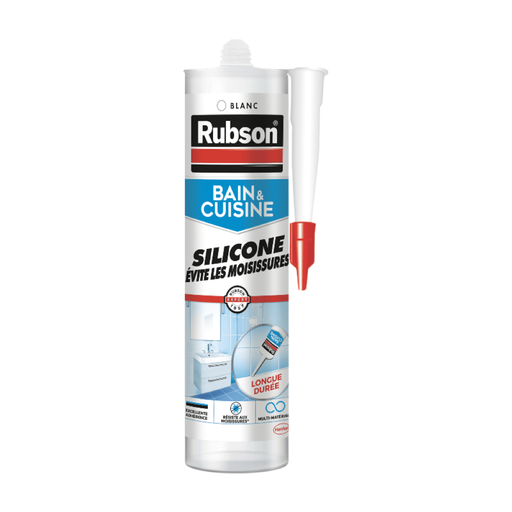
The ideal user: This is the smart choice for a targeted repair: redoing the seal on a sink, kitchen basin, or shower stall. A single cartridge is usually enough, and this product offers all the guarantees for a reliable result.
A classic acetic silicone sealant, but with a formula optimized for humid rooms. It checks all the boxes: antifungal protection, adhesion on traditional sanitary substrates, and no unpleasant surprises.
Balanced formula for durable protection; simplified application with the "No Cutter" system; excellent value for money for small projects.
We have compiled a complete, up-to-date list of products that meet these strict selection criteria and current regulations.
A quality seal, applied correctly in a well-ventilated room, can last 5 to 10 years. However, in a windowless bathroom with limited ventilation, even a high-performance product can start to fail after 2 or 3 years. Regular maintenance (cleaning with mild products) and good ventilation are just as crucial as the quality of the sealant.
No, nearly all sanitary silicone sealants (acetic and neutral) are not paintable. Paint simply won't adhere to their smooth, flexible surface. If you absolutely must paint the joint, you need to turn to specific "paintable" sealants, which are usually acrylic-based. Be aware that these are often less elastic and less water-resistant. They are therefore not recommended for areas in direct and constant contact with water, such as around a bathtub or shower tray.
Good preparation is 80% of the job done right.
anti-mold bathroom silicone sealant.