
Livraison le jour même ou le lendemain

Qualité garantie

Débloquez vos offres de bienvenue: Livraison GRATUITE | Jusqu'à -80 % | 30 jours d'essai gratuits à JoyPlus
Téléchargez l'application
Choosing an AIO (All-In-One) water cooling kit for your processor can transform your PC's performance and acoustic comfort. However, the market is a jungle of marketing promises where it's easy to make a mistake and regret your purchase. An oversized radiator, a whining pump, or a simple incompatibility with your case are all-too-common errors.
As hardware experts, our role is to help you see things more clearly. This guide focuses on the essential criteria for making an informed choice, helping you avoid the most common pitfalls to ensure your investment is a success.
Before diving into spec sheets, it's crucial to debunk the costly misconceptions and oversights.
To select the right liquid CPU cooler, focus on these three fundamental technical aspects.
The radiator's size directly determines the thermal dissipation surface area. The choice depends on your processor, your case, and your overclocking ambitions.
An AIO's performance doesn't just depend on its radiator. The pump's design and the quality of the fans are paramount.
Finally, the practical and visual aspects are the finishing touch to your choice.
Here are a few models that suit different profiles, adhering to our criteria for performance, silence, and design.
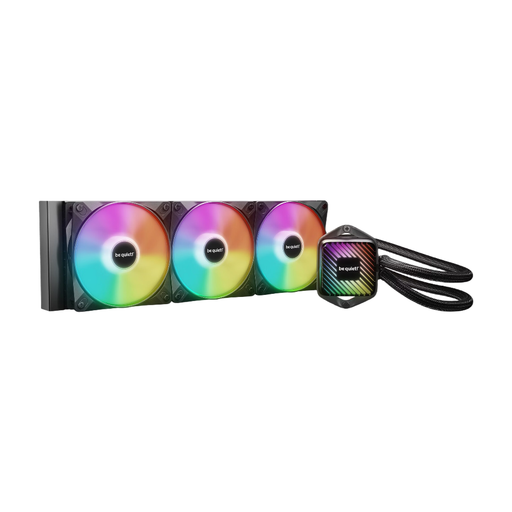
The ideal user : Perfect for those who want a PC that is as powerful as it is visually spectacular. This model combines the power of a 360mm radiator with vibrant ARGB lighting on the fans and water block, offering deep customisation with 10 interchangeable films.
It addresses the noise issue by integrating a PWM-controlled pump and fans, allowing you to strike the right balance between intense lighting and quiet operation under low load.
Very high level of visual customisation (ARGB + films) ; massive cooling capacity for high-end CPUs ; simplified cable management thanks to daisy-chained fans.
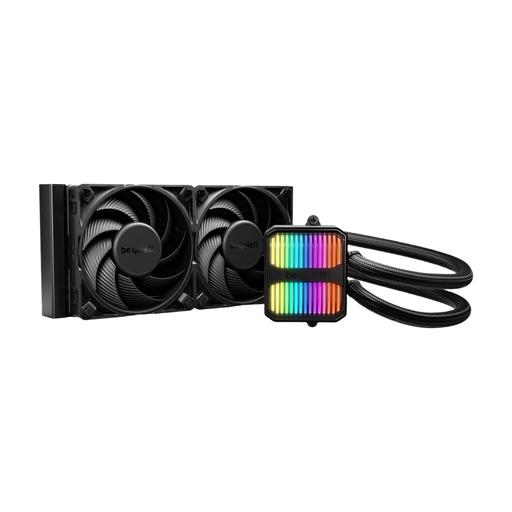
The ideal user : Designed for the user who prioritises silence and raw efficiency above all else. Its all-black design and noise-reduction-focused engineering (3-chamber pump, Silent Wings 4 fans) make it a rational choice for understated, high-performance builds.
It tackles the noise pitfall head-on with pump and fan technology designed for near-silent operation. Its 240mm size is a pragmatic choice that avoids unnecessary oversizing.
Extremely silent operation ; accessible refill port for an extended lifespan ; design and engineering focused on pure performance.
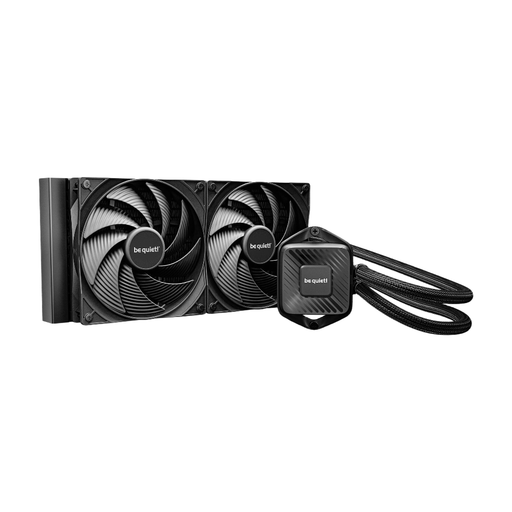
The ideal user : This AIO represents the sweet spot. The 280mm format offers a performance/noise advantage over 240mm models thanks to its larger fans, without requiring the space of a 360mm unit. Its no-frills design and simple installation make it a reliable, straightforward choice.
It avoids the compatibility trap by adopting a format that is increasingly common in modern cases, and the noise trap by using 140mm fans that spin slower for the same amount of airflow.
Excellent performance-to-noise ratio thanks to the 280mm format ; easy assembly and cable management with daisy-chained fans ; refill port for maintenance.
We have compiled a complete, up-to-date list of products that meet our strict selection criteria.
Generally, an AIO's lifespan is between 3 and 6 years. The component most likely to fail is the pump. Some models, like those in the Silent Loop series, include a refill port that allows you to top up the liquid level after several years, thereby extending their lifespan. Regular maintenance, such as dusting the radiator, is also highly recommended.
Yes, in the vast majority of cases. For gaming, content creation, and everyday use without extreme overclocking, a good quality 240mm AIO offers an excellent compromise between cooling performance, noise level, and compatibility. It is a very relevant choice for most mid-range and high-end builds.
Not always. A high-end air cooler can be quieter than an entry-level AIO at idle. The AIO's advantage is most apparent under sustained load: it dissipates heat more effectively away from the processor socket, allowing the fans to run at a lower, more consistent speed for an overall quieter experience. The quality of the pump and fans is the deciding factor in achieving a silent water cooler.