
Livraison le jour même ou le lendemain

Qualité garantie

Débloquez vos offres de bienvenue: Livraison GRATUITE | Jusqu'à -80 % | 30 jours d'essai gratuits à JoyPlus
Téléchargez l'application
An icy draft seeping under your front door? Heating bills that are climbing for no reason? Hallway noises inviting themselves into your living room? These small, everyday annoyances often have a single cause: the infamous gap under the door. The adhesive door bottom is the simplest and most cost-effective solution to fix this. But be warned, not all models are created equal—far from it.
As a Product Expert at Joybuy, my mission is to help you see clearly through this jungle of options. Avoiding the most common pitfalls will not only improve your comfort but also sustainably lower your energy bill. Here are the essential points to check before you head to the checkout.
Don't be tempted by a rock-bottom price; it often hides flaws that will make the product ready for the trash in just a few months. Here are the three most frequent problems:
To put a permanent end to drafts (stop a door draft), you need to look beyond the price. Certain technical features are the only true guarantee of a door weatherstripping's performance.
The secret is to match the seal to your floor type and the height of the gap you need to fill.
Before any purchase, take out your tape measure and measure the space between the bottom of your door and the floor. Each product specifies the maximum height it can seal (for example, "up to 15?mm"). An undersized model will be completely useless.
Also, rely on the adhesive's reputation. Specialised brands are a guarantee of longevity. Finally, remember that even the best glue in the world won't stick to a dirty surface: thoroughly cleaning and degreasing the door is essential for a lasting bond.
To help you visualise how these criteria apply, here are a few recommended options, each suited to a specific need.
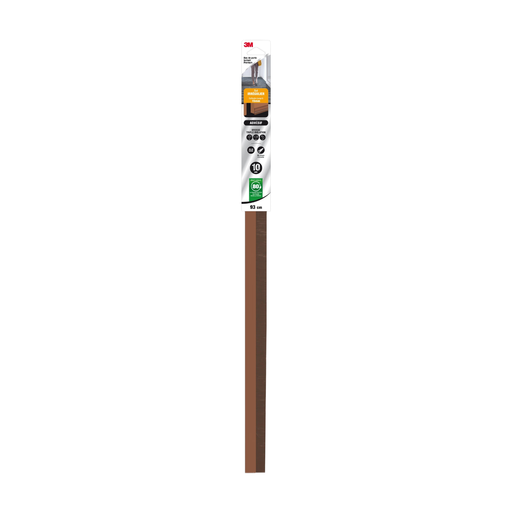
Why we chose it: The perfect solution for homes with tile, terracotta, or old parquet floors. It is specifically designed for non-flat surfaces, a very common scenario.
Its double row of flexible brushes conforms to the slightest unevenness of the floor, where a rigid blade would leave a gap. It thus counters pitfall #2, incompatibility with the floor.
Capable of sealing gaps up to 15 mm on uneven floors. The thin membrane between the brushes optimises thermal and acoustic insulation.
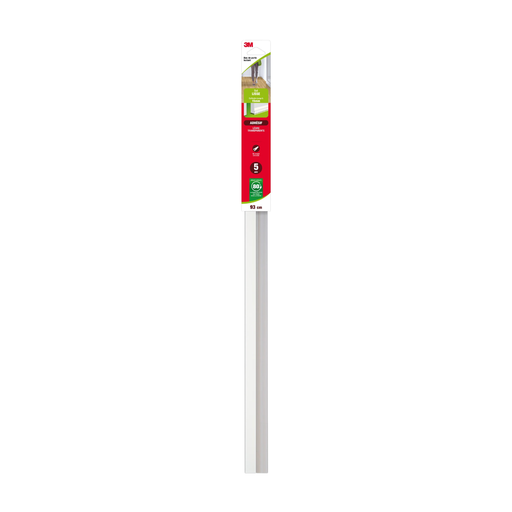
Why we chose it: Flawless in modern interiors with parquet, linoleum, or vinyl flooring. Its white base and transparent lip make it almost invisible, preserving your door's design.
Its PVC is much more robust than simple foam (pitfall #3). Designed specifically for smooth floors, it guarantees perfect contact and excellent longevity.
The transparent lip ensures a discreet seal. The profile can be easily cut with a saw for a perfect fit to your door's width.
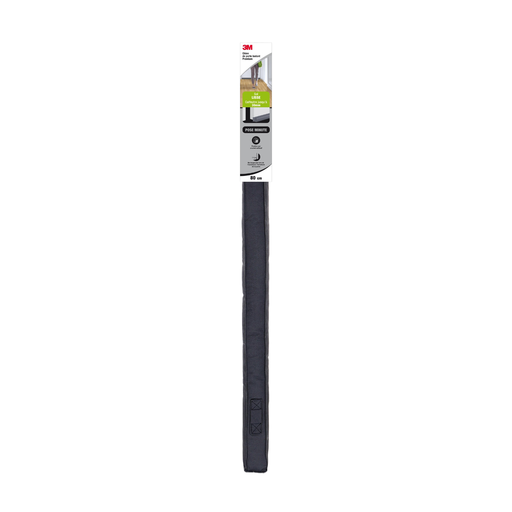
Why we chose it: The dream solution for those in a hurry and for renters. Its adhesive hook fastening system can be installed and removed in the blink of an eye, without leaving a single trace on the door.
This hook system is a foolproof defence against low-end adhesives that peel off (pitfall #1). It won't budge an inch, even with constant comings and goings.
"Quick-fit" installation, with no drill or permanent glue required. Effective for sealing large gaps, up to 30 mm, on smooth floors.
Explore our complete selection of products, all rigorously validated by our experts according to our quality and durability criteria.
A professional-quality installation is the secret to longevity.
Yes, and that's a significant bonus! In addition to thermal insulation, a well-installed door bottom also improves sound insulation. By blocking the passage of air, it also creates a barrier to some sound waves. The effectiveness will depend on the material's density and the perfection of the seal, but the gain in peace and quiet is often very noticeable.
It all depends on the quality! A budget foam model will hardly last more than one season, especially with a lot of foot traffic. Conversely, a quality brush door bottom or PVC model, when properly installed, can last for 5, 7, or even 10 years. Trust the manufacturer's indications, but keep in mind that the quality of the material and the installation makes all the difference.