
Livraison le jour même ou le lendemain

Qualité garantie

Débloquez vos offres de bienvenue: Livraison GRATUITE | Jusqu'à -80 % | 30 jours d'essai gratuits à JoyPlus
Téléchargez l'application
A draught under the door, dust creeping into the hallway, or a room that struggles to warm up – these annoyances are often caused by a poorly sealed gap. A 3M door draft stopper solves the problem at minimal cost, provided you choose a model suited to your floor, your door width, and the type of fixing you prefer.
A seal designed for laminate, tiles or PVC can work perfectly on a flat surface, but will let air through as soon as the floor has bumps or level differences. This is especially true with bare concrete or certain natural stones. Conversely, a very soft brush can be unnecessarily bulky on a perfectly smooth floor.
So the first question to ask yourself is simple: is the floor level across the full width of the door?
The length of the door bottom seal does not correspond to the height of the gap you need to fill. A 93 cm model usually needs to be cut down to fit your door width, while its coverage capacity depends on its design.
Depending on the product, the specifications state a coverage of 15 mm, 25 mm or 30 mm. Measure the gap in several places with the door closed before placing your order.
A self-adhesive door draft stopper can quickly lose its sticking power if the surface is dusty, damp, greasy or covered in cleaning product residue. This step deserves particular attention on front doors, in garages, and in rooms exposed to moisture.
For a long-lasting fit, clean, degrease, then thoroughly dry the area. If the surface is fragile or uneven, a screw-fixed door draft stopper will generally provide a more reliable hold.
A draught excluder sausage can work as a temporary fix, but it tends to move and needs repositioning regularly. A profile fixed directly to the door is more discreet and practical for everyday use.
A self-adhesive door draft stopper is quick to fit, with no drilling required. It is a good option for tenants or anyone wanting to avoid getting out the full tool kit. The downside is that the surface must be perfectly clean, dry and sufficiently smooth.
A screw-fixed door draft stopper requires a bit more preparation, but it is better suited to heavily used doors or surfaces where adhesive might struggle to hold. Invisible fixing screws also help preserve the profile's appearance.
An aluminium profile withstands repeated opening and closing better than a very flexible component. Meanwhile, a nylon brush moulds more easily to floor irregularities. Most models shown measure 0.93 m and can be cut to the required width with a suitable saw.
Measure twice before cutting. With the door closed, also make sure the seal does not obstruct movement or put excessive strain on the fixing. Regular cleaning of the lip or brushes limits dust build-up.
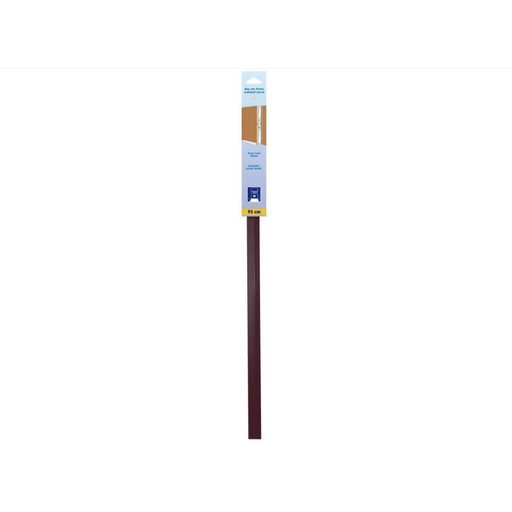
Why this choice suits this profile: This self-adhesive model is ideal for interior doors and smooth floors when you want a simple, discreet installation.
Its specification states compatibility with smooth surfaces and a maximum gap of 15 mm. So it is best to avoid installing it on a very uneven floor.
PVC profile, flexible lip, 93 cm length and 3M adhesive designed for smooth floors.
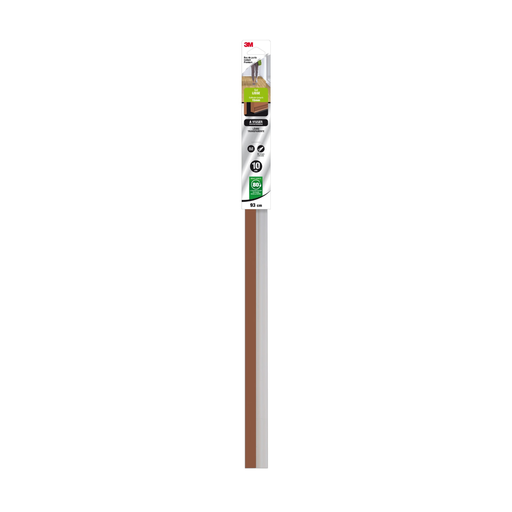
Why this choice suits this profile: Its brown aluminium profile and screw fixing will appeal to homeowners looking for a stable installation on a flat floor.
Screw fixing means you are not relying solely on adhesive. The specification also limits its use to smooth floors and gaps up to 15 mm.
Aluminium, transparent lip, can be cut to size, and a 10-year warranty stated in the product specification.
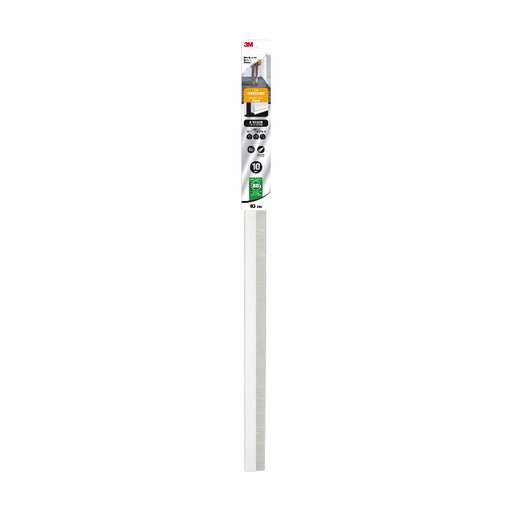
Why this choice suits this profile: Its two rows of brushes and membrane are ideal for doors opening onto an uneven floor or those subject to frequent use.
It does not rely on a simple rigid lip: the specification mentions adaptation to uneven floors and coverage of up to 15 mm.
White aluminium profile, invisible screw fixing, double row of brushes, and can be cut to size with a saw.
We have put together a comprehensive, real-time updated selection of products that meet these selection criteria, as well as European safety regulations.
A door draught excluder limits the passage of air, dust and sometimes noise, but it does not replace full insulation of the door, walls or glazing. Claims about draught reduction, lifespan or energy savings should be taken as stated for the specific product, not as guaranteed results in every home.
Choose a brush or flexible membrane model designed to follow surface variations. Products intended for uneven floors can cover larger gaps than a seal designed for laminate or tiles.
The surface must be clean, dry, degreased and free of all dust. Fit the product without stretching it, press firmly along its full length, then allow the setting time stated in the instructions before using the door heavily.
It can reduce noise and draughts passing under the door, especially when the gap is properly covered. However, the result depends on the door, walls, floor and other openings in the room.