
Livraison le jour même ou le lendemain

Qualité garantie

Débloquez vos offres de bienvenue: Livraison GRATUITE | Jusqu'à -80 % | 30 jours d'essai gratuits à JoyPlus
Téléchargez l'application
Whether for a summer road trip, a campervan getaway, or just your daily professional commute, keeping drinks and food cool is a must. The 12V electric cooler stands out as the go-to solution. But be warned: the market is a jungle where promises aren't always kept. The wrong choice guarantees disappointment: spoiled food, a dead car battery, or a device that fails you at the worst possible moment.
As a Product Specialist at Joybuy, I'm here to help you see things more clearly. Let's break down the pitfalls to avoid and the essential criteria for a successful purchase.
The initial excitement of a purchase can quickly fade. To avoid buyer's remorse, here are the 3 most common mistakes and how to sidestep them.
Confusing "Cooling" with "Refrigerating": The Myth of Budget Freezing. This is the classic trap: buying a thermoelectric cooler and expecting the performance of a true compressor fridge. These models, often more affordable, can only lower the temperature by 15 to 20°C relative to the ambient air. On a 30°C summer day, your cooler will struggle to get below 10-15°C—a temperature that's unsafe for storing meat or dairy products.
Underestimating Power Consumption: The Dead Battery Risk. Picture this: after a peaceful night in the great outdoors, your car won't start. Stranded. Some coolers, especially entry-level models, lack a battery protection system. They will continue to draw power from the battery until it's completely drained, leaving you stranded at the worst possible time.
Ignoring the Actual Footprint vs. Usable Volume. A 40L electric cooler might sound spacious, but its external dimensions can quickly become a headache when trying to fit it into your trunk or a van layout. The insulation and motor take up a significant amount of space. It's crucial to check the external dimensions before relying solely on the capacity in litres.
To avoid these pitfalls, focus on three decisive technical criteria. They will make all the difference in your cooler's performance and suitability.
This is THE number one criterion. Your choice will depend entirely on your intended use.
Versatility is a key advantage. A good model should adapt to any situation.
Think practical. The volume should match your needs, and the design should make your daily life easier.
To illustrate how these criteria translate in practice, here are a few models suited for different user profiles.
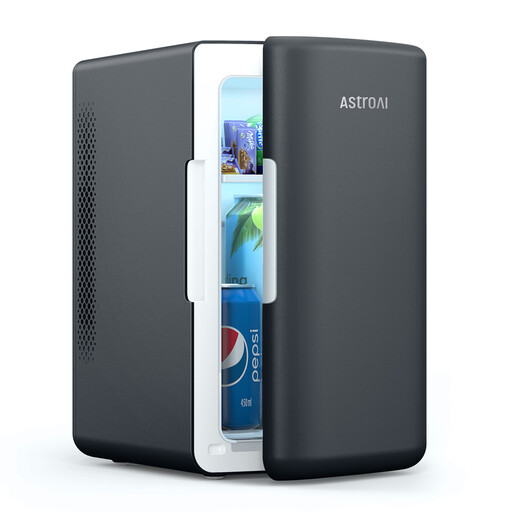
Why this model? Perfect for day trips, daily commutes, or keeping a few drinks cool in the car. Its compact size and dual function (cool/warm) make it a versatile and affordable companion for occasional needs.
This model is purely thermoelectric. It doesn't promise freezing, which prevents any disappointment about its performance. Its mission is to cool, and it does that well for its category.
Power Versatility: Works with a mains socket (AC 220-240V) and a cigarette lighter (DC 12V). Ultra-Portable: Its mini size and light weight mean you can take it absolutely anywhere.

Why this model? Designed for demanding users who need reliable refrigeration over the long haul. Its 12V/24V compatibility makes it perfect for trucks, and its compressor technology ensures true freezing performance, even in the middle of summer.
Equipped with a compressor, it delivers the performance of a true portable fridge-freezer (down to -18°C). It also includes battery protection to eliminate any risk of a dead battery.
True Freezing: Reaches sub-zero temperatures for long-term storage. 12V/24V Compatibility: Automatically adapts to the voltage of both cars and trucks.

Why this model? Its large 49L capacity is perfect for a whole family's groceries. The dual-zone function allows you to store fresh and frozen items simultaneously, offering maximum flexibility for long trips in an RV or converted van.
This model ticks the versatility box. As a dual-zone portable refrigerator, it ends the "fridge or freezer?" dilemma. Its wheels and telescopic handle make it easy to move despite its size, sidestepping the trap of a bulky, cumbersome appliance.
Independent Dual Zone: Lets you have a real fridge and a real freezer at the same time. Large Capacity & Ergonomics: 49L of volume, with wheels, a handle, and app control for maximum convenience.
We've put together a complete selection of coolers that meet our selection criteria and current standards.
Yes, this is a very real risk if your cooler isn't equipped with a protection system. Good compressor models include multi-level battery protection (often H/M/L for High/Medium/Low). This feature monitors your battery's voltage and automatically cuts power to the cooler before the level becomes critical for starting the engine. It's a safety feature you must check for before buying.
The difference is fundamental. A thermoelectric (Peltier effect) cooler simply transfers heat from the inside to the outside. Its cooling power is limited to about 15-20°C below the ambient temperature. This makes it perfect for keeping already-cold items cool. In contrast, a compressor cooler works like a real refrigerator. It actively generates cold using a refrigerant, allowing it to reach freezing temperatures (down to -20°C), even in a heatwave.
Yes, most modern compressor coolers are dual-voltage. They automatically detect whether they are plugged into a 12V (car, van) or 24V (truck, heavy-duty vehicle) circuit and adapt accordingly. However, it is still essential to verify this compatibility on the product's technical sheet before making a purchase.